








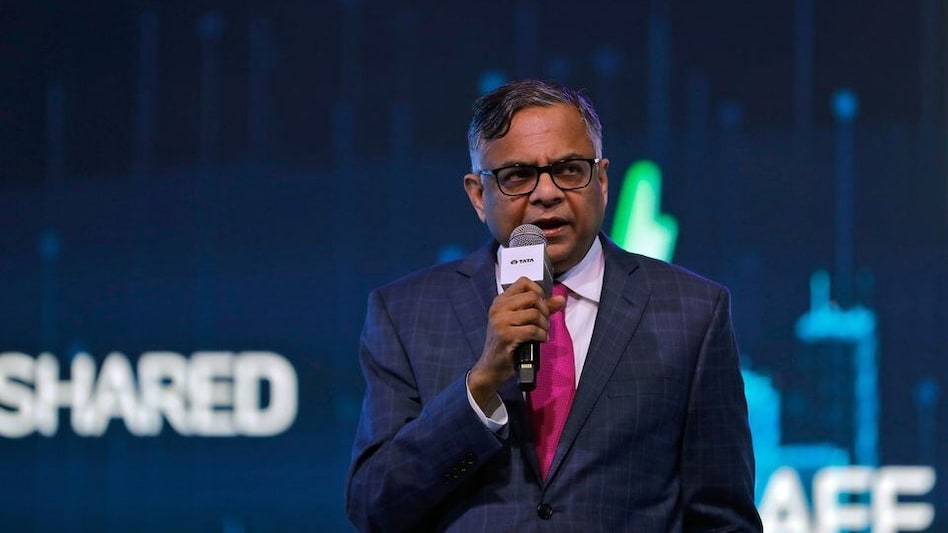
 Tata Sons Chairman N Chandrasekaran

 Tata Sons Chairman N Chandrasekaran
A new Reserve Bank of India norm has reportedly emerged as a hurdle for Tata Sons’ efforts to avoid going public, after the central bank rejected an interpretation that could have allowed the Tata group’s holding company to surrender its financial licence and avoid a mandatory stock exchange listing. In directions published on Wednesday, the RBI said equity received from group companies and associates that have access to debt markets would count as indirect access to public funds. The rules will take effect on July 1.
According to a report in Times of India, the clarification goes to the centre of Tata Sons’ March 2024 application to deregister as a core investment company, a category of non-banking financial company through which large conglomerates hold stakes in group firms. Tata Sons had argued that it did not access public funds because it had prepaid its standalone debt, the report added. But Tata Sons received funds from operating companies such as Tata Steel, Tata Motors, Tata Power, Indian Hotels and Tata Chemicals, all of which have accessed debt markets.
DON'T MISS | New details in TCS case: Burqa and hijab lessons, name change, job in Malaysia
The RBI also rejected a narrower interpretation sought by unnamed market participants. They had argued that equity infused by a group company into a non-banking financial company should not automatically be treated as indirect public funds if the investing company certified that the capital came from its own resources and not from borrowings.
The RBI turned down that proposal, saying companies often use leverage alongside their own capital, funds move through multiple corporate layers, and money is fungible, making it impossible to establish whether an equity investment is entirely free of borrowed funds, the report said.
MUST READ | TCS Nashik case: 'He called me to his desk and...' - Victim shares ordeal at BPO
The latest RBI directions also provide a deregistration route for non-banking financial companies that do not access public funds and have no customer interface, as long as their assets are below Rs 1,000 crore. Tata Sons, with estimated standalone assets of Rs 1.75 lakh crore, is far above that level. The RBI had separately proposed an asset threshold of more than Rs 1 lakh crore for classification as an upper-layer non-banking financial company, a category in which Tata Sons already figures.
Tata Sons remains the only company on the RBI’s upper-layer list, first published in September 2022, that has not met the mandatory listing requirement.
 Adani, Tata, Mahindra, Godrej double down on NCR real estate market
 'It is time to ride this wave': Ex-Infosys CEO Vishal Sikka launches AI startup Hang Ten Systems
 'Remarkable achievement': Vizhinjam welcomes 1,000th vessel, joins world's fastest-growing ports club
 Gold falls to 12-week low; Robert Kiyosaki says he is waiting to buy more
 Now, govt to bring out a monthly Index of Services Production from July 14
 India’s Defence Boom Continues, But Execution Remains The Key Hurdle
 Gautam Adani Says India's Future Cannot Wait, Vows To Keep Building
 Bajaj Auto Hit By Ransomware Attack; Impact On Operations Under Watch
 GE’s Soaring Engine Costs Threaten India’s AMCA Fighter Jet Timeline And Budget Plans
 Software Stocks Led A Revival On The Nifty; Textile Shares Rally
 IRFC OFS oversubscribed 1.86 times on Day 1; government exercises green shoe option
 Vedanta Iron shares surge nearly 51% from listing-day intraday low: What analysts are saying
 Rs 17,000 salary for MD, 40% stock mismatch: ED's explosive findings after raids on Rajesh Exports
 Sensex, Nifty rebound: What's driving the recovery and what investors should watch next
 Adani Power shares: Why Morgan Stanley ups target price by 60% on it?