


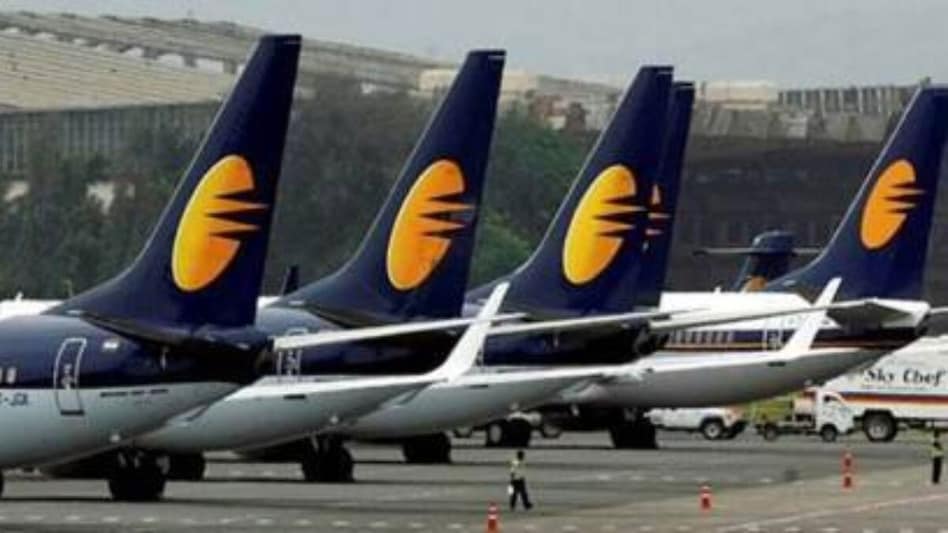
 Jet Airways flew its last flight on April 17, 2019, from Amritsar to Mumbai, concluding nearly 25 years of operations and impacting over 20,000 employees.
The Indian domestic aviation sector was rocked earlier this month when hundreds of IndiGo flights were cancelled following the implementation of new crew rostering regulations, triggering widespread disruption at major airports. Passengers faced long delays, overcrowding and uncertainty, prompting public outrage and renewed debate around operational resilience and passenger care.
On social media, many travellers nostalgically remembered airlines such as Jet Airways and Kingfisher, arguing that the absence of legacy full-service carriers is being felt during periods of stress in the system.
Jet Airways, once regarded as the benchmark for full-service aviation in India, formally reached the end of its turbulent journey in November 2024 when the Supreme Court ordered its liquidation.
Earlier this week, the National Company Law Tribunal (NCLT), Mumbai, rejected a plea by the Jalan-Kalrock Consortium seeking a refund of over Rs 370 crore infused during the insolvency proceedings of Jet Airways Ltd. In an order dated December 15, the tribunal ruled that the amount does not qualify as Corporate Insolvency Resolution Process (CIRP) costs and therefore cannot be returned to the consortium.
The bench, comprising Judicial Member Sushil Mahadeorao Kochey and Technical Member Prabhat Kumar, held that the consortium failed to meet the legal criteria required for such a refund. The ruling comes amid the prolonged and complex insolvency and liquidation process of the grounded airline, which has faced repeated legal and financial roadblocks since ceasing operations.
Taking wings and reaching the top
Founded in 1993 by Naresh Goyal in the wake of India’s aviation liberalisation, the airline began as an air-taxi operator before growing into a dominant private carrier. Its expansion into international routes in 2004 and the acquisition of Air Sahara in 2007 reflected ambitions of building a globally competitive airline.
At its peak, Jet Airways symbolised premium service, punctuality and extensive connectivity.
By 2016, the airline was operating more than 300 daily flights to around 74 destinations across India and overseas. Mumbai served as its primary hub, supported by secondary hubs in Delhi, Bengaluru, Chennai, Kochi and Kolkata. In October 2017, Jet commanded a passenger market share of nearly 18%, ranking second only to IndiGo and cementing its position as one of the country’s largest airlines.
What led to chaos, downfall
However, beneath the surface, structural weaknesses were building. According to a case study by IIT Ropar, Jet Airways began full-scale operations in 1995 and expanded into international services in 2004. The airline went public around the period when it acquired Air Sahara in 2007. In the years that followed, intensifying competition—particularly from low-cost carriers such as SpiceJet and IndiGo—forced Jet to cut fares, squeezing margins and weakening financial performance.
Despite early success, sustained price wars and rising costs took a toll on the airline, eventually pushing it into severe financial distress. The downward spiral culminated in bankruptcy in 2019, leading to the suspension of all flight operations.
A high-cost full-service model in a market increasingly dominated by low-cost carriers eroded Jet’s competitiveness. Intense price competition from IndiGo and SpiceJet forced the airline to slash fares, compressing margins and triggering sustained financial losses. The Air Sahara acquisition, rebranded as Jet Lite, failed to deliver the expected synergies and instead added to the airline’s debt burden.
By early 2019, Jet Airways was in deep financial distress. Liquidity had dried up, negotiations with lenders and aircraft lessors had turned acrimonious, and confidence among key stakeholders was rapidly fading. Lessors began repossessing aircraft, leading to widespread flight cancellations and operational chaos. The airline struggled to pay banks, employees and vendors, while emergency funding options closed off.
On April 17, 2019, Jet Airways operated its final flight—from Amritsar to Mumbai—ending nearly 25 years of operations. More than 20,000 employees were affected, and passengers were left stranded with unrefunded tickets. At the time of grounding, the airline owed over Rs 8,000 crore (about $1.1 billion) to banks, aircraft lessors and other creditors. Managing insolvency was particularly complex, given the airline’s fleet of over 100 largely leased aircraft and the competing claims of lenders, employees, vendors and customers.
Insolvency proceedings
Insolvency proceedings were initiated under Section 7 of the Insolvency and Bankruptcy Code, marking the start of a prolonged legal and financial battle. An insolvency resolution professional was appointed with the aim of reviving the airline. The process faced multiple hurdles, including aircraft valuation and management, regulatory clearances, coordination among stakeholders, and persistent cash-flow constraints.
In 2021, the Jalan-Kalrock Consortium emerged as the successful bidder, raising hopes of Jet’s return. The airline even conducted a test flight in May 2022, a step required for renewing its air operator’s permit. However, repeated delays, missed milestones and disputes with lenders stalled the revival. What was once projected as a comeback gradually lost credibility.
Ultimately, the court intervened and invoked its powers under Article 142. It allowed lenders to encash a Rs 150-crore performance bank guarantee and ordered the forfeiture of Rs 200 crore infused by the Jalan-Kalrock Consortium, concluding that the revival plan was no longer viable.

 Exam reforms: Tech titan Nandan Nilekani picked by PM Modi to fix national public examination system
  'Tax officers struggled for own land': Nirmala Sitharaman slams laidback attitude of govt depts
 CBDT issues new crypto reporting guidance: No new tax, but exchanges must track and report all transactions
 Did Cockroach Janta Party's 'Chalo Sansad' 2.0 threat trigger Dharmendra Pradhan's resignation? What we know so far
 'Will discharge my responsibilities with complete humility': Pralhad Joshi after being appointed Education Minister
 AI Data Centers, Aerospace & Gas Turbines: What's Powering Indo-MIM's Future Growth?
 Best Healthcare Stocks: Gaurang Shah's Outlook On Apollo Hospitals, Fortis & The Manipal Health IPO
 Is Indo-MIM's IPO Valuation Justified? Here's Why The Company Sees Strong Growth Ahead
 Treasury Bills Explained: Why T-Bills Are One Of The Safest Short-Term Investment Options
 FDs vs Markets: Where Should You Keep Your Short-Term Money?
 Gland Pharma stock: Price target of Rs 3,250 likely in medium term, says analyst
  Metal recycling stocks to buy: Gravita, Pondy Oxides, Jain Resource among top picks
 TRIL shares: Should you average the falling stock? Here's 'fixed and final' stop loss
 Adani Power: 45 GW target, Rs 2 lakh crore capex plan among conference call highlights
  ITC Hotels, Chalet, Ventive, IHCL, SAMHI: Hotel stocks to buy despite travel disruptions
 Beyond mutual funds: Why analysts see SBI Funds' alternative asset business as a long-term growth engine
 'Ashamed of it...': Manoj Muntashir calls Adipurush his biggest mistake, seeks country's forgiveness Exam reforms: Tech titan Nandan Nilekani picked by PM Modi to fix national public examination system 'Tax officers struggled for own land': Nirmala Sitharaman slams laidback attitude of govt depts
 Delhi targets traffic bottlenecks on Aruna Asaf Ali Marg with ₹1.97 crore elevated road study









