


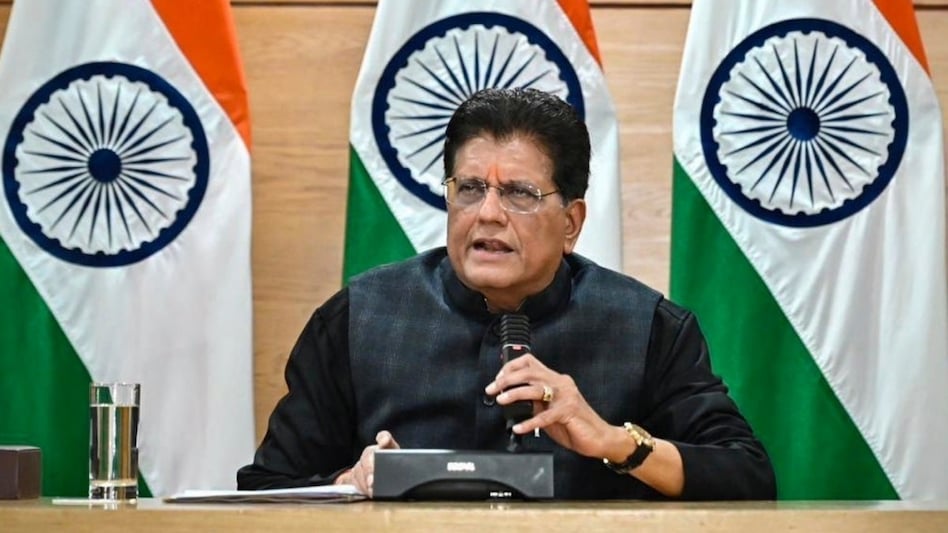
 Piyush Goyal announces $55 billion agricultural export target, defends India’s trade stance
India's agricultural exports are expected to hit $55 billion by 2025, according to a statement made by Indian Trade Minister Piyush Goyal on Tuesday. The announcement marks a significant milestone for India’s agrarian sector, underscoring the growing demand for Indian produce globally.
However, the announcement clearly signals India's stance on agricultural imports. India will not allow any tariff concessions on sugar imports under any trade deal, Goyal confirmed.

 BT Infra Summit 2026: What will power India's next growth spurt?
 BT Infra Summit 2026: How Sagarmala 2.0 is going to steer India's maritime growth
 Why Bloomberg isn't ready to add Indian bonds yet despite sweeping market reforms
 BT Infra Summit 2026: India's energy security needs a new playbook as clean power, storage and grid modernisation take centre stage
 ITR filing 2026: WazirX launches free crypto tax reporting platform ahead of ITR deadline
 Why EV Trucks Are Still Missing From India's Highways | BT Infrastructure Summit 2026
 #BTInfrastructureSummit: Powering India's New Growth Spurt With Infra, Investment & Innovation
 Why Indians Feel Foreign Infrastructure Is Better: Hitachi India CEO Breaks It Down
 #BTInfrastructureSummit: How India Is Building Its Infrastructure Muscle For 2047
 India's Energy Security: Kearney's Gaurav Gulati On Import Dependence, Storage & Logistics Risks
 Maruti Suzuki Q1 results: Profit slips 9% YoY to Rs 3,447 crore; revenue climbs 36%
 ITC Q1 results: Profit slips 16% to Rs 4,394 crore YoY; revenue climbs 28%
 BTTV Exclusive: M&M CEO Rajesh Jejurikar on Q1 earnings, business outlook, order book and more
  Nifty IT stocks rebound in July as semiconductor shares falter; reverse AI trade at play?
 Dixon Technologies Q1 earnings: Net profit at Rs 718 crore, revenue rises 21%Why EV Trucks Are Still Missing From India's Highways | BT Infrastructure Summit 2026#BTInfrastructureSummit: Powering India's New Growth Spurt With Infra, Investment & InnovationBT Infra Summit 2026: What will power India's next growth spurt?
 BT Infra Summit 2026: Experts call for sustainable solutions, technology integration in India’s massive infra pushWhy Indians Feel Foreign Infrastructure Is Better: Hitachi India CEO Breaks It Down










