












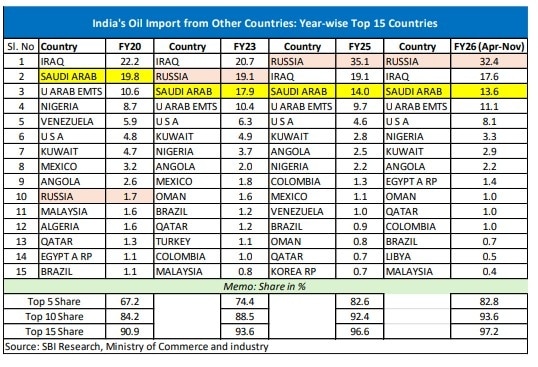



 SBI Research notes that India’s reliance on Russian crude jumped to over 35% in FY25 from negligible levels before 2020, driven by deep post-sanctions discounts.
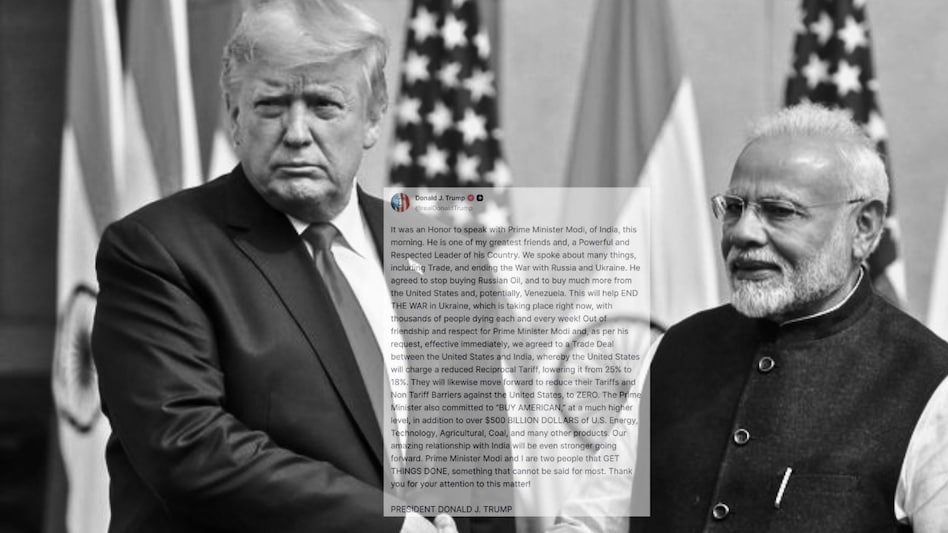
India could reduce its annual fuel import bill by as much as $3 billion by shifting crude oil sourcing away from Russia towards Venezuelan heavy crude, according to an SBI Research report, highlighting a key macroeconomic benefit emerging from the India-US trade deal. The estimate assumes discounts of $10–12 per barrel on Venezuelan heavy crude (Merey 16), which could offset the loss of discounted Russian oil without materially impacting domestic inflation.
The report notes that India’s dependence on Russian crude rose sharply after 2020, driven by deep discounts following Western sanctions on Moscow. Russia’s share in India’s oil imports crossed 30% in FY25, up from negligible levels before the Ukraine war. However, SBI Research argues that India now has the flexibility to diversify its crude basket, with supplies available from nearly 40 countries, including Venezuela, Iraq, Saudi Arabia, the UAE, the US and West Africa.
 FII sentiment shows early signs of turnaround after months of selling: Report
 UPI should remain free: Expert on why MDR could push merchants and consumers back to cash
 Apple job cuts 2026: iPhone maker slashes 200 jobs in Siri, Vision Pro immersive video, gaming teams
 'Last-minute changes unfair, uneconomic': US-Canada trade talks collapse as Trump readies 50% tariffs on Canadian products
 The $1.8 trillion space economy: Who will capture value as the final frontier goes commercial?
 Meta’s $200 Billion Trial: Did Instagram & Facebook Keep Kids Hooked?
 Motor Insurance Explained: Is Third-Party Car Insurance Enough? Know Before You Buy
 Retirement Tax Planning: 5 Ways Senior Citizens Can Reduce Their Tax Liability
 #IndiaAt100 : Adipen Bose Nandhiji On Conscious Capitalism- Can Profit & Purpose Coexist?
 #IndiaAt100 : Hisashi Takeuchi On Driving India’s Manufacturing Revolution
 Gaja Alternative Assets IPO: 3 ways to check application status; allotment odds, GMP, listing dateFII sentiment shows early signs of turnaround after months of selling: Report
 ₹24,800 crore bill: How transaction costs are eating into retail derivatives trading
 Cupid, NTPC Green, NTPC, Raymond Realty, HAL shares: Key technical levels to watch
 Defence stock with Rs 2,654-crore order book hits record high; here's why
  US/UK citizenship and PPF: What happens to your Indian savings after naturalisation?
 The Rs 606 problem: What happens when India puts a price on UPIUPI should remain free: Expert on why MDR could push merchants and consumers back to cash
 'Before 2019, my son had to change school every year': Maharashtra FDA boss Tukaram Mundhe of 25 transfers in 21 yearsMeta’s $200 Billion Trial: Did Instagram & Facebook Keep Kids Hooked?


