


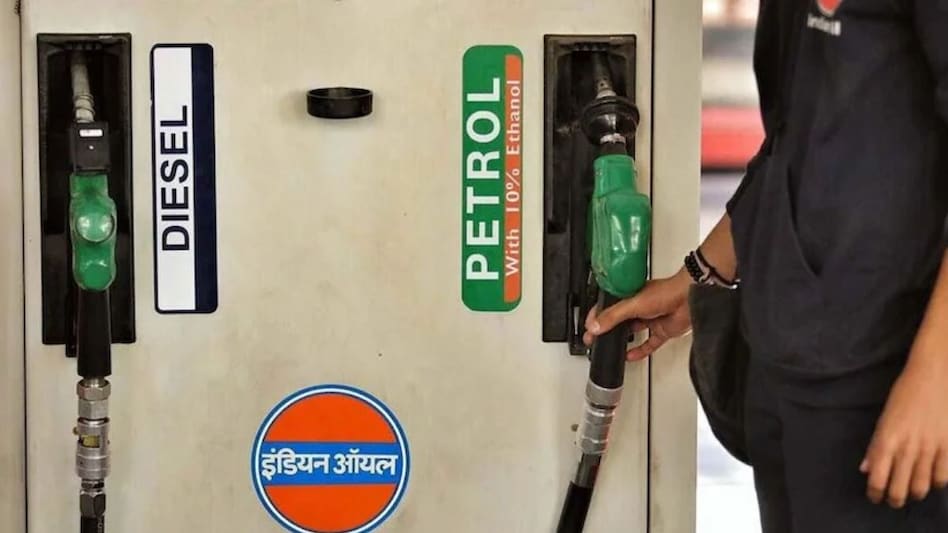
 While retail pump prices remain unchanged, the move effectively shifts the burden onto the exchequer, reducing the Centre’s per-litre tax realisation.
The Centre’s decision to cut excise duty on petrol and diesel by Rs 10 per litre could result in a revenue loss exceeding Rs 1 lakh crore on an annualised basis, significantly impacting the government’s fiscal position even as it seeks to shield consumers and oil marketing companies (OMCs) from a global oil shock, economists told Business Today TV.
The duty reduction, which brings excise on petrol down from Rs 21.90 per litre to Rs 11.90 per litre, comes amid a sharp surge in international crude prices. While retail pump prices remain unchanged, the move effectively shifts the burden onto the exchequer, reducing the Centre’s per-litre tax realisation.

 Highway builders flag risks in revised BOT model, seek changes
 Google to shift Pixel production to India by 2027 to reduce China dependency: All details
  'India was number one': Sergio Gor applauds Indian companies for $20 bn US investment
 Income Tax Dept identifies suspicious entities sending money abroad; 394 entities under scanner
 RBI’s surprise FCNR (B) move leaves banks scrambling as communication concerns grow: Report
 Google Pixel 11 Series First Look: Tensor G6, Gemini Integration & AI Camera Upgrades | Tech Today
 BJP’s New Digital Gameplan: Deepak Mhaskey On Winning The Social Media Battle
 Govt May Cut 100% Sugar Import Duty: Impact On Prices And Sugar Stocks
 Global Bond Yields Surge: Why Rising U.S. Treasury Yields Could Pressure Stock Markets
 Defence Stocks Rally As India Adds 405 Items To Sixth Indigenisation List Worth ₹3,000 Crore
 Maruti, Hyundai shares emerge as top auto picks as four-wheelers eye catch-up rally
 Despite low valuations, HDFC Bank stock still not a buy: Coheron Wealth's Aditya Agarwal
  Nifty falls for fifth session as brent crude price crosses $91 per barrel mark
  From Class 5 dropout to Lalithaa Jewellery IPO: Kiran Kumar builds Rs 11,000 cr empire with 4 gold bangles
 BTTV Exclusive| Gaja IPO: CEO explains valuation, AIF growth, business model and plans after listing
 'No talks or conversations going on with Iran...': Trump denies talks contradicting earlier claimGoogle Pixel 11 Series First Look: Tensor G6, Gemini Integration & AI Camera Upgrades | Tech Today
 NTA overhauls exam team, removes 600 experts and adds four-tier paper checking
 India’s senior living market could Hit ₹1 lakh crore by 2030: What is driving the boom?
 UP-Japan investment meet 2026: ₹3,191 crore projects, 500-acre Japan City, 10,000 jobs in focus












