With regional parties securing significant roles in the new government, rural and welfare initiatives are expected to get a boost. These regional priorities are vital for addressing the diverse needs of India’s population. Moreover, based on the manifestos of NDA members, it appears that IT and investments will also be a focus for the new government. Sectors such as manufacturing, chip-making, communications, and advanced technologies like AI and quantum computing will be treated with great importance, and NDA 3.0 will continue its focus on Digital India programme and attracting investments.
By blending regional and national priorities, the government can foster inclusive growth and innovation. Rural initiatives can be bolstered by leveraging technological advancements, enhancing access to education, healthcare and infrastructure in remote areas through digital solutions. Similarly, the focus on IT and advanced technologies will provide a fillip to economic growth and create new job opportunities, benefitting both urban and rural populations.
Towards Political Consensus
At the same time, the success of NDA 3.0 will be dependent on their ability to drive political consensus for high priority areas, which includes technology and infrastructure, amongst others. The policymaking process will therefore include contributions from allies within the NDA, which means introduction of fresh perspectives and ideas. The Parliament will also see a Leader of Opposition which would mean more deliberations on policies. While this may lead to longer timelines for finalisation and implementation of policies, however, a more consultative approach will make the final outcome holistic.
It will allow for a deeper engagement with a wide range of stakeholders, ensuring that multiple viewpoints are considered. As a result, crucial tech policy bills and policies pending introduction or passage may be reassessed and potentially modified, ensuring they capture the aspirations of both regional and central parties and cater to a wider set of political views. This thorough and inclusive approach is likely to yield policies that not only address immediate concerns but also stand the test of time in a rapidly evolving technological landscape.
Key Expectations from Upcoming Laws
Data Protection
Notifying the Digital Personal Data Protection Rules and establishing the Data Protection Board will be crucial for enforcing and implementing the Data Protection Act. The rules require stakeholder deliberation to ensure a data protection regime that balances state interests, business development, and consumer protection.
New IT Act
As the new government seeks to overhaul the IT Act, it will be critical that the new law preserves safe harbour protections for intermediaries, aligning with the Shreya Singhal jurisprudence, while at the same time, ensuring that intermediaries take responsible action to drive trust and safety on the internet.
Fintech
In the fintech sector, the new government must continue its focus on consumer protection, while addressing financial fraud, especially in UPI and digital lending will be essential to maintain the integrity and trust in the digital financial ecosystem. Emphasis should be placed on revamping cybersecurity policy and preventing financial payment frauds.
Artificial Intelligence
On AI, the new government’s focus must be on supporting India’s startup ecosystem, and providing an enabling environment to make India an AI first nation. Towards this, the new government should engage in multi-stakeholder conversations, bring in a diverse set of perspectives, and ensure that Indian start-ups’ voices are heard in the eventual policy formulation.
Online Gaming
In the online gaming space, implementing a well-defined, uniform regulatory model for the online skill gaming sector, which holds immense potential for India’s digital economy and startup ecosystem, is important. The absence of a legislation has given rise to illegal offshore betting and platforms enticing Indian users with ‘tax-free’ options. This is adversely affecting the skill-based industry which is already reeling with the impact of retrospective tax notices. There is a need to relook at the legislative and fiscal policies for the skill based industry to ensure that they are conducive for both industrial growth and user safety. Moreover, the diverse regional representation in the Cabinet will bring forth states’ point of views to the central policies.
Digital Markets and Competition
The ongoing deliberations for digital market regulation policies, such as the Digital Competition Act, might also receive significant attention from the government. Enhancing the financial and resource capacity of the Competition Commission of India, including its newly established Digital Markets and Data Unit, is critical before introducing new laws. The draft Digital Competition Bill should undergo thorough consultations based on evidence and research regarding its impact on India’s digital economy.
Tech Policy 2.0: Charting a New Discourse
As India stands on the threshold of a new political chapter, the coalition government brings with it the promise of a more deliberative policymaking process. The coming weeks will provide more clarity as ministerial portfolios are assigned and the government’s 100-day agenda is outlined, incorporating insights from regional allies.
Kriti Singh is the Chief of Staff and Lead Online Gaming Policy at The Dialogue. She oversees operations, research, strategic planning, and stakeholder relationships. With a journalism background, she’s dedicated to driving policy changes in the tech sector.
Shruti Shreya is the Senior Programme Manager at The Dialogue. Shruti’s expertise lies in platform regulation, online safety and gender & tech, while leading parliamentary & government outreach and empowerment initiatives.
(Views expressed do not reflect those of Business Today)


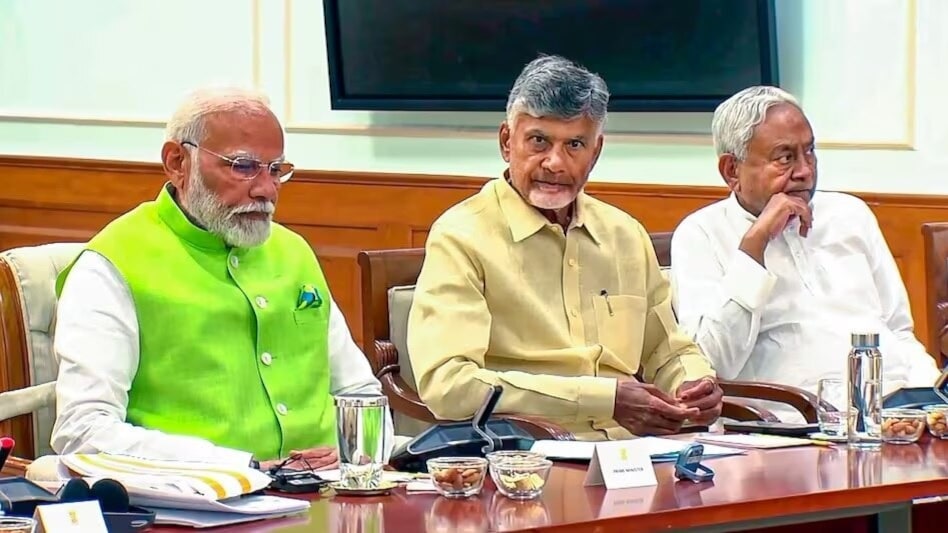 As India stands on the threshold of a new political chapter, the coalition government brings with it the promise of a more deliberative policymaking process.
 RBI's forex swap scheme pulls in record $143.6 billion till Sep 18
  Bank strike next week: Five-day disruption may hit your salary credits
 NSE IPO subscribed 5.7 times as QIBs lead demand; shares to list on BSE on September 24
 Indian Oil, HPCL, BPCL shares rise as brent crude prices fall for fourth day
  Tata Sons power struggle: Who will pay for the next legal battle?
 Burqa Ban In Italy? Meloni Pushes New Rules On Face Coverings
 Tata Trusts-Tata Sons Row: Harish Salve Explains RBI Rules, Singhvi Flags Shareholder Rights
 Top Legal Eagles Flock To Tata Sons & Tata Trusts As Boardroom Clash Heads To Court
 Over Next Three Years Company Expects To Invest ₹15,000 Cr For Deepwater Exploration
 Tata Sons Listing Row: Shapoor Mistry Backs IPO As Noel Tata Pushes ₹25,000-Crore Plan
 Manipal Health clears ₹5,310 crore debt using IPO proceeds, eyes expansion & technology push
 Brokerage sees 96% upside potential in this smallcap stock
 Dr. Reddy’s, Lupin shares among buzzing stocks as pharma sector back in focus
  3 Warren Buffett quotes for Indian stock market investors today
 Ultraviolette X47: The electric adventure bike with a surprising feature list
 350 kmph B35: India’s bullet train plan now meets Japan’s next-gen E10
 BT Big Story: How the FCNR(B) deluge has created two new problems for the RBI
  Ticket rush ahead of festive season: Railways adds special trains linking Delhi, Katra and Varanasi
 Building collapse in India: Will health insurance cover your hospital bills after an accident?












