


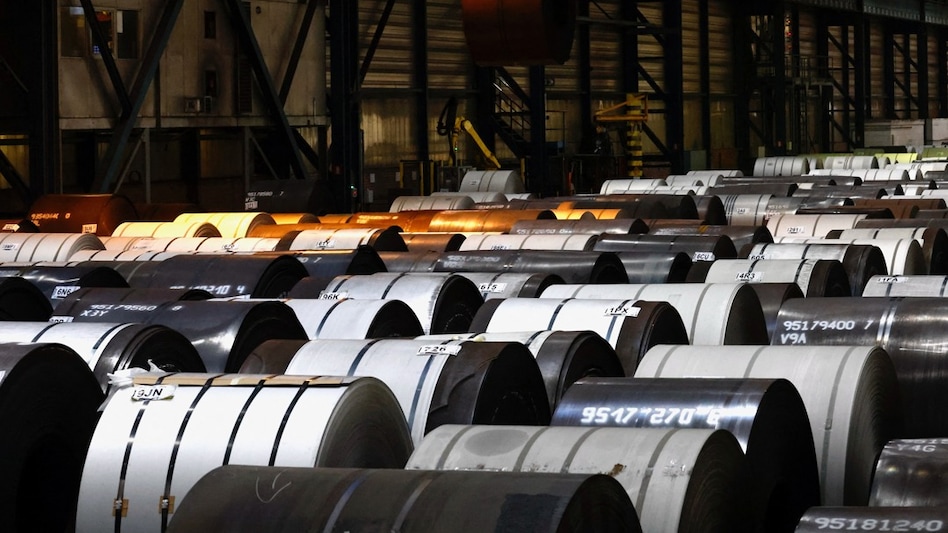
 Nearly $24 billion has been injected into steel decarbonisation projects
Following the global trend, India needs to deploy public capital strategically to bridge the financing gap for green steel projects, which are technically proven but considered risky for private finance, according to a report by the Institute for Energy Economics and Financial Analysis (IEEFA).
It said nearly $24 billion has been injected into steel decarbonisation projects. Virtually every major green steel initiative globally has relied on substantial public finance to reach viability.

 FII sentiment shows early signs of turnaround after months of selling: Report
 Apple job cuts 2026: iPhone maker slashes 200 jobs in Siri, Vision Pro immersive video, gaming teams
 'Last-minute changes unfair, uneconomic': US-Canada trade talks collapse as Trump readies 50% tariffs on Canadian products
 ₹24,800 crore bill: How transaction costs are eating into retail derivatives trading
 The $1.8 trillion space economy: Who will capture value as the final frontier goes commercial?
 Motor Insurance Explained: Is Third-Party Car Insurance Enough? Know Before You Buy
 Retirement Tax Planning: 5 Ways Senior Citizens Can Reduce Their Tax Liability
 #IndiaAt100 : Adipen Bose Nandhiji On Conscious Capitalism- Can Profit & Purpose Coexist?
 #IndiaAt100 : Hisashi Takeuchi On Driving India’s Manufacturing Revolution
 #IndiaAt100 : Manufacturing For Viksit Bharat | Can Industry Power India’s $30-Trillion Dream?
 FII sentiment shows early signs of turnaround after months of selling: Report₹24,800 crore bill: How transaction costs are eating into retail derivatives trading
 Cupid, NTPC Green, NTPC, Raymond Realty, HAL shares: Key technical levels to watch
 Defence stock with Rs 2,654-crore order book hits record high; here's why
  GACM Technologies: FII holding jumps to 29%; penny stock in focus
 Will India’s new labour rules finally give manufacturers room to grow and hire?
 OPPO Reno 16 8GB+128GB model may arrive in India soon at a more affordable price
 ₹1.88 lakh champagne, ₹10,000 salt crusted red snapper: Inside Salman Khan's adopted sister Arpita Khan Sharma’s restaurant Mercii's menu FII sentiment shows early signs of turnaround after months of selling: Report'Last-minute changes unfair, uneconomic': US-Canada trade talks collapse as Trump readies 50% tariffs on Canadian products












