


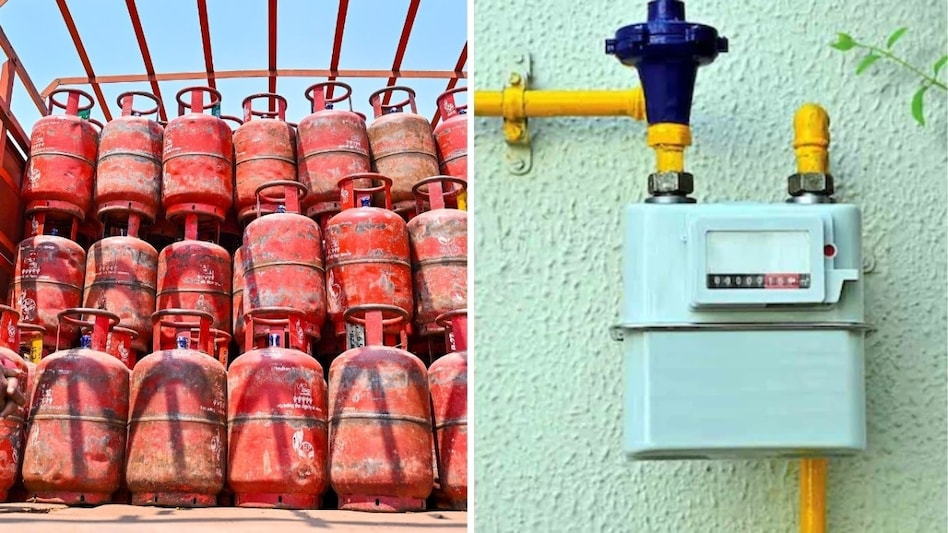
 No more LPG cylinders? Here’s how to get a PNG connection step by step
After the LPG supply crunch triggered by the West Asia war, the government has pushed households and commercial users to shift to piped natural gas (PNG) wherever pipeline connectivity is available.
Households looking to move away from LPG cylinders can now apply for a piped natural gas connection, but the process and cost vary depending on where you live and whether pipelines are already in place.

 Apple launches iPhone 18 Pro, iPhone 18 Pro Max: Brings upgraded performance, camera, and more
 The iPhone folds! Apple unveils its first-ever foldable ‘iPhone Duo’ at Rs 2,99,900
 Apple AirPods 5 launched with best-in-class ANC, Siri AI and Live Translation
 'Comparing apples and oranges': CBIC responds to Subhash Garg's claim on GST growth
 Apple Watch Ultra 4 launched with new health sensing, 45-hour workout battery and AI features
 Tata Curvv EV: First Look At The Tech-Packed Electric SUV
 IDBI Bank Stake Sale: Fairfax Bid, ₹53,000 Cr Valuation & Deal Delay Explained
 Adani Group Plans $2.5 Billion Offshore Loan To Refinance Cement Acquisition Deb
 Sugar Exports Under Pressure: Tight Stocks, Ethanol Diversion & Weather Risks Cloud
 Brent Crude Crosses $100: India’s Oil Basket Hits $108.9; What It Means For Markets
 China, India and Japan drive renewed Asian appetite for gold ETFs; global inflows hit $18 billion in August
 Index manipulation case: Sebi lifts trading ban on JPMorgan unit after Rs 2.96 crore deposit
 Dow considers exit from $20 billion Saudi Aramco chemicals venture Sadara
 Nifty IT tumbles 3%: Near-term trend weak; AI concerns, US rate worries weigh
 Cupid's Aditya Kumar Halwasiya ups stake again; buys 15 lakh shares
 'Time has come for residential REITs': Raymond’s Gautam Singhania seeks GST reforms to boost real estate growthChina, India and Japan drive renewed Asian appetite for gold ETFs; global inflows hit $18 billion in August
 Vande Bharat sleeper completes high-speed Kavach trial, covers 50 km in 40 minutes at 160 Kmph speed
 Maharashtra’s DELTA Act explained: How tokenising land could change property ownership and unlock dormant wealth
 'If mahaprasad has to be stopped, tell us': Ganpati Mandals seek clarity on Maharashtra FDA food safety SOPs












