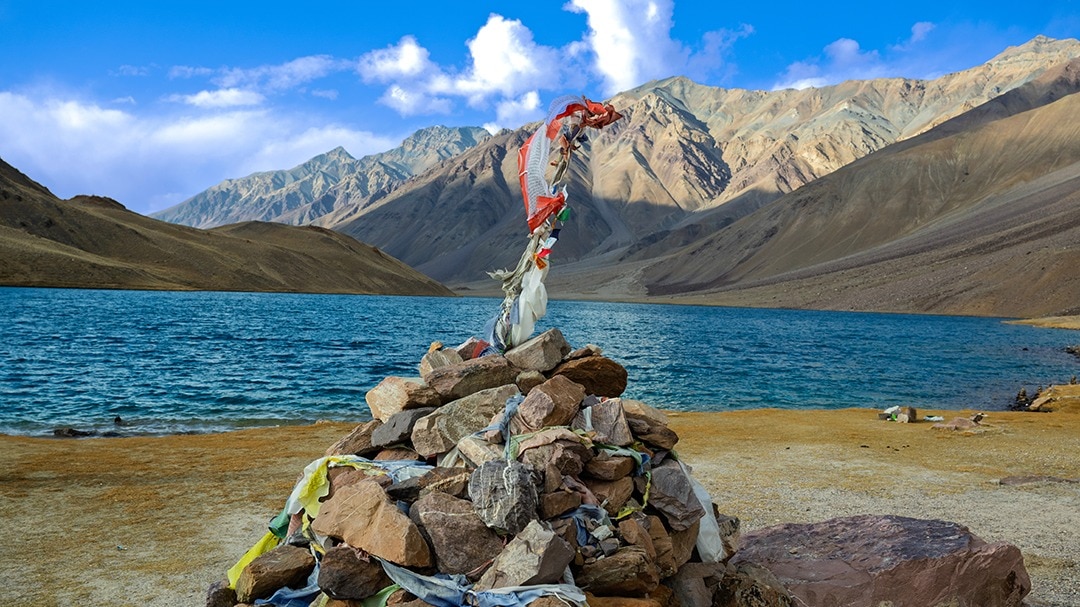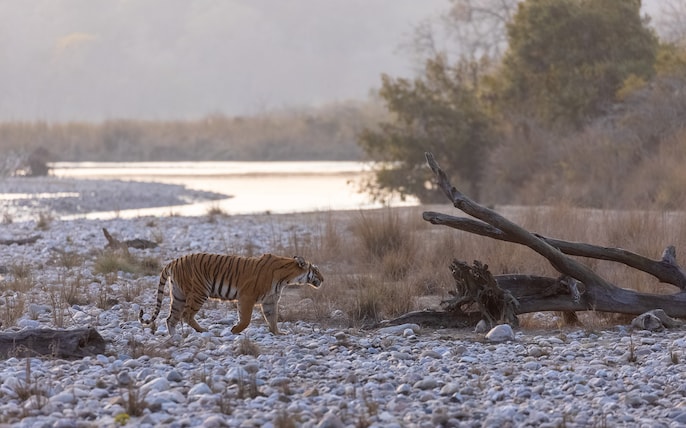
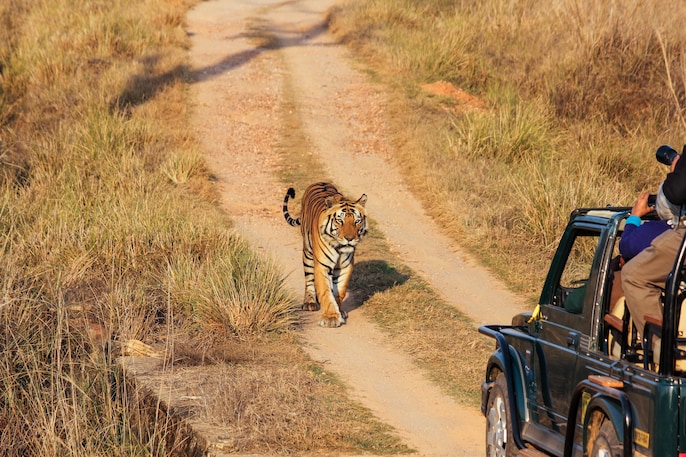
India’s oldest national park isn’t just about jeep safaris. Jim Corbett hides raw trekking routes along rivers, ridges, and thick forests where silence breaks only with bird calls. Walking here feels primal—every step carries the thrill of being deep inside tiger territory without spectacle, only nature.
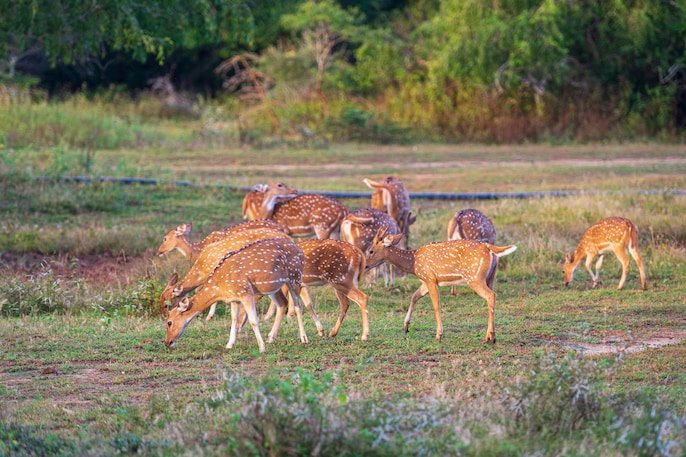
Kanha’s beauty lies in contrast. Trekking shifts from dense sal forests to wide open grasslands where barasingha graze freely. Conservationists often call Kanha one of India’s most balanced ecosystems, making every long walk feel like moving through a living wildlife textbook.
Bandhavgarh treks come with history underfoot. Forest trails rise toward ancient fort ruins, mixing wildlife with centuries-old stone paths. With one of the highest tiger densities in India, every climb carries tension—quiet, watchful, unforgettable.
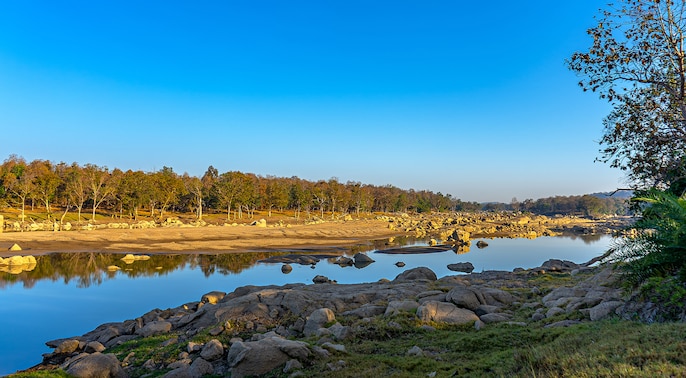
Pench feels less dramatic, more meditative. Trails follow rivers and gentle hills where wild dogs, deer, and birds appear without warning. Many naturalists say Pench teaches patience—trekking here is about observation, not adrenaline.
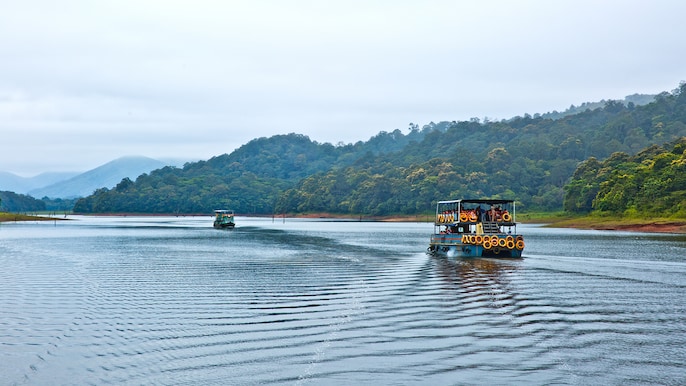
In Periyar, trekking unfolds along misty hills and quiet lake edges in the Western Ghats. Elephant herds cross paths, birds fill the canopy, and humidity slows you down. It’s adventure that humbles rather than overwhelms, blending effort with calm.
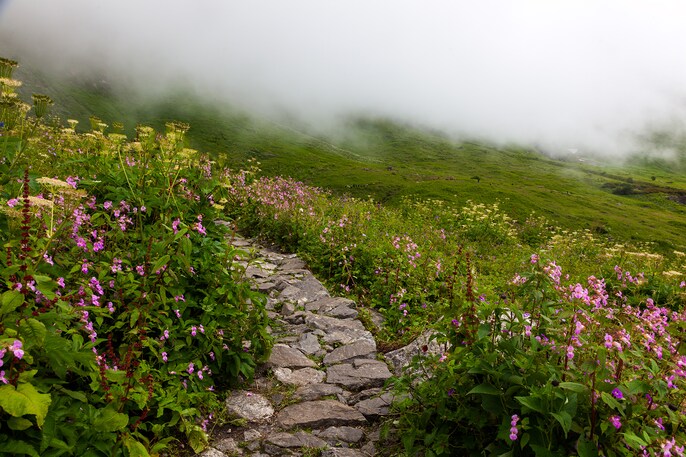
Valley of Flowers isn’t just scenic—it’s physically demanding. High-altitude trails wind through alpine blooms, icy streams, and shifting weather. Scientists have documented rare Himalayan flora here, turning every step into both a trek and a botanical discovery.
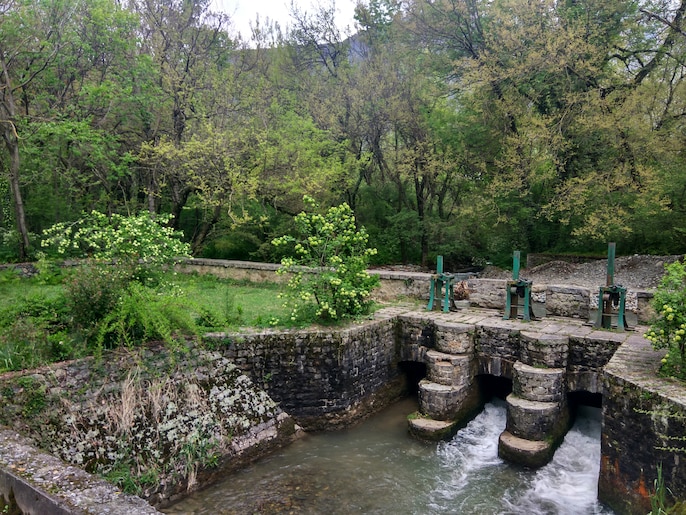
Dachigam’s rugged climbs cut through forests and steep terrain above Srinagar. Trekkers move through habitat critical to the endangered Hangul deer. It’s one of India’s least commercialised park treks—raw, challenging, and deeply rewarding.
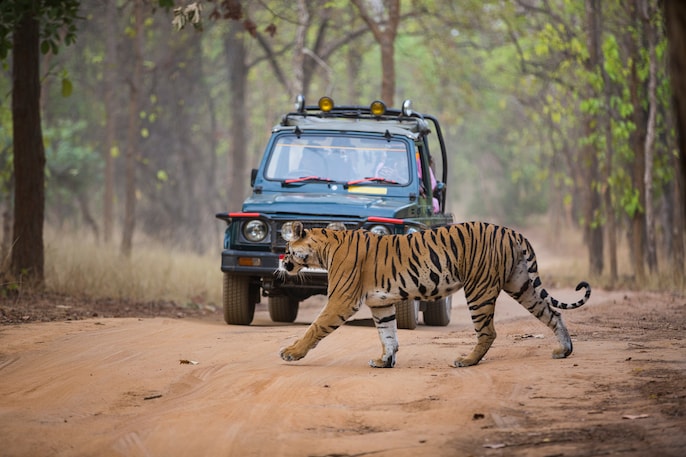
What separates national park treks from regular trails is silence. No shops, no music, no crowds. Studies on nature exposure show reduced stress and sharper focus—here, the forest resets you long before the trek ends.
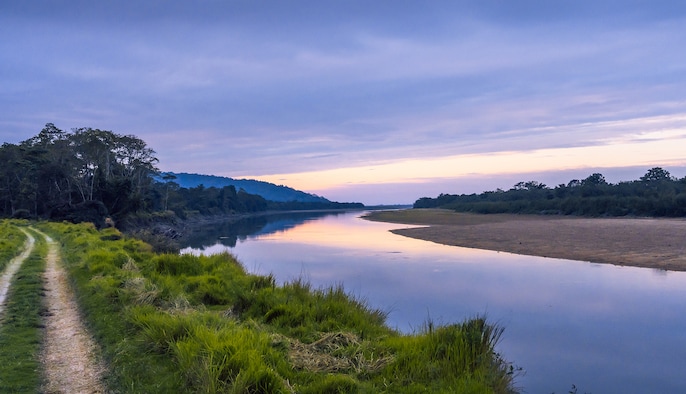
Unlike open mountain treks, these parks balance thrill with protection. Permits, guides, and limits keep ecosystems intact. Adventure exists, but within boundaries—making these treks sustainable, rare, and increasingly valuable.
 TVS Family Dispute Explained: Kapil Sibal On Control, Ownership And Inheritance Law
 Vivo X Fold 6 Review: Is This ₹2.2 Lakh Foldable Worth Buying?
 Tata Group Rift Deepens: Khambata's Letter, Jimmy Tata's Stand Add To Tensions
 Nvidia Q3 Results: Revenue Doubles, Board Rejects Jensen Huang's Return | What's Next?
 Samvat 2083: Which Asset Classes Will Create Wealth This Year?