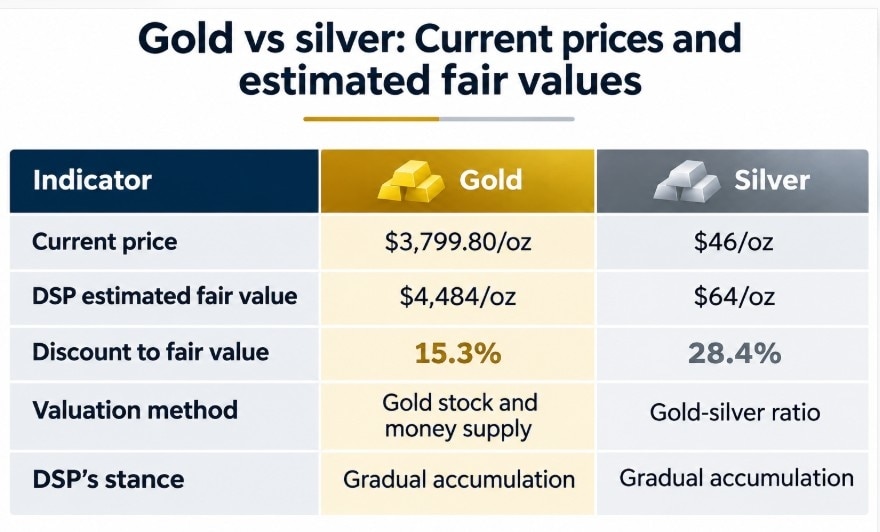



 Gold is trading near $3,799.80 per ounce against an estimated theoretical fair value of $4,484. Silver, meanwhile, trades around $46 compared with an estimated fair value of $64.
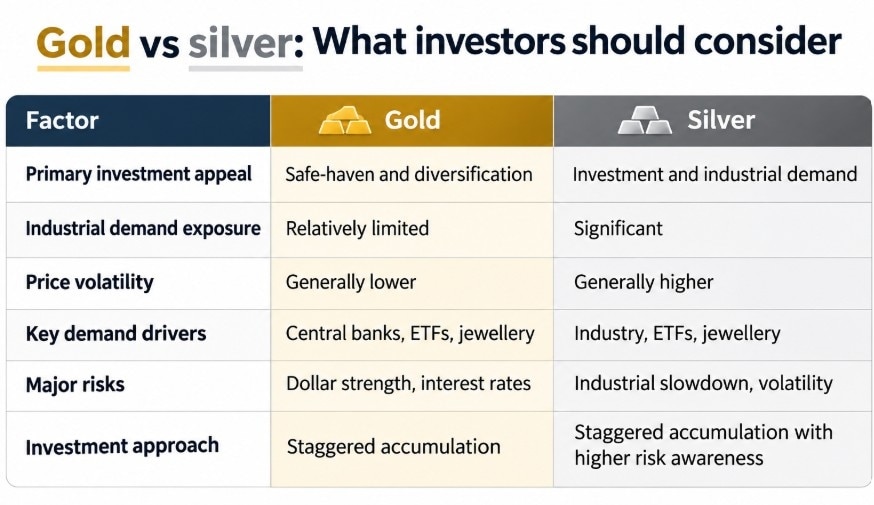
Gold and silver are trading significantly below their estimated fair values, prompting DSP Mutual Fund to begin accumulating both precious metals. While gold is available at a 15% discount under the fund house's valuation framework, silver appears even cheaper at 28%, raising questions about whether investors should use the correction to increase exposure.
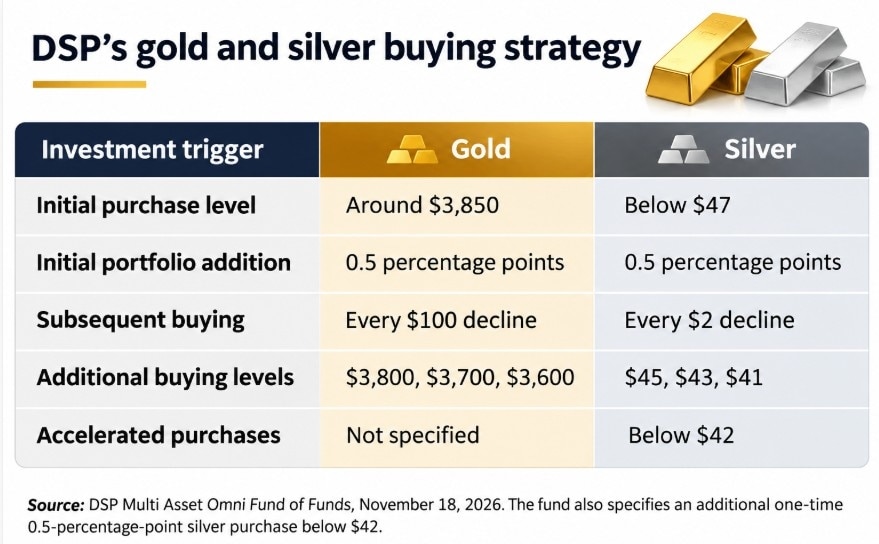
DSP Mutual Fund has announced a systematic, price-based accumulation strategy for gold and silver in its Multi Asset Omni Fund of Funds, reversing its longstanding underweight position.

 BT BIG STORY: For the Tatas, the need is to rebuild trust. But how soon?
 'Venu Srinivasan should step back, ensure equitable distribution': Kapil Sibal on TVS family dispute
 Zepto IPO: From just 31 launch-day orders, 15 by its own team, to a quick-commerce market leader
 India to impose 162.5% duty and tax on bulk Scotch imports amid UK trade pact dispute: Report
 Goldman Sachs sees three more RBI rate hikes; feels rupee's worst is over and Nifty at 28,500
 TVS Family Dispute Explained: Kapil Sibal On Control, Ownership And Inheritance Law
 Vivo X Fold 6 Review: Is This ₹2.2 Lakh Foldable Worth Buying?
 Tata Group Rift Deepens: Khambata's Letter, Jimmy Tata's Stand Add To Tensions
 Nvidia Q3 Results: Revenue Doubles, Board Rejects Jensen Huang's Return | What's Next?
 Samvat 2083: Which Asset Classes Will Create Wealth This Year?

 PSBs' net profit rises 16.9% in H1 FY27; key numbers and stock market trends
 Sensex, Nifty retreat from 9-month highs; why markets fell and what's next?
 Lupin shares: US sales decline priced in; risk-reward favourable; target price
 SpiceJet board approves Rs 5,500 crore fundraise; stock closes 5% higher
 Waaree Energies, Premier Energies, Emmvee shares: Target prices, top pick
 Who is Madison Huang? Why she is in spotlight amid Nvidia leadership crisis
 Delhi to Lucknow in 2 hours 12 minutes? The bullet train corridor’s proposed times, and what’s missing'Venu Srinivasan should step back, ensure equitable distribution': Kapil Sibal on TVS family disputeBT BIG STORY: For the Tatas, the need is to rebuild trust. But how soon?
 135hp power, ₹14.39 lakh price! Triumph's new Street Triple has a surprising twist