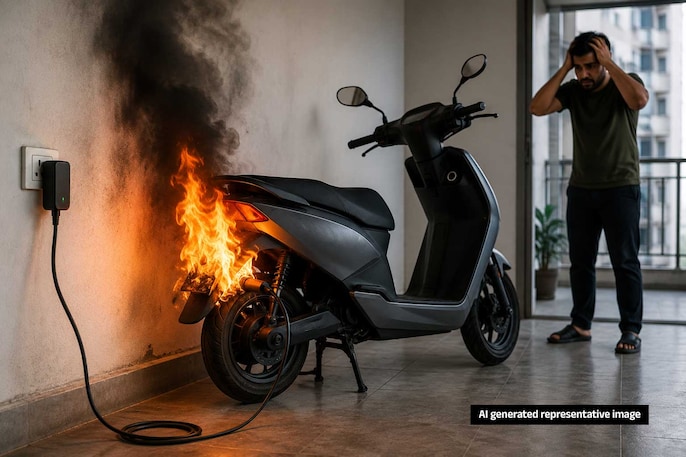
As demand for electric scooters rises across India, confusion about safe home charging persists. A recent fire incident in Noida — where an EV caught fire while charging — has raised serious concerns about EV charging within residential complexes.
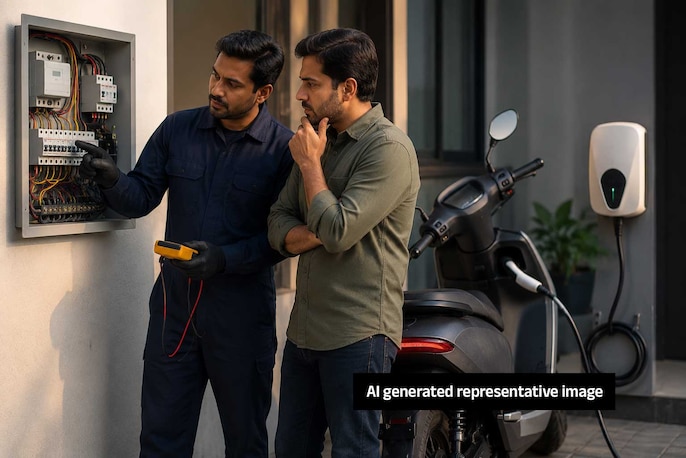
Before charging an EV at home, verify that your electrical connection can handle the load. Charging on a low-load connection significantly increases the risk of accidents. Experts strongly recommend consulting an electrician before setting up a home charging point.
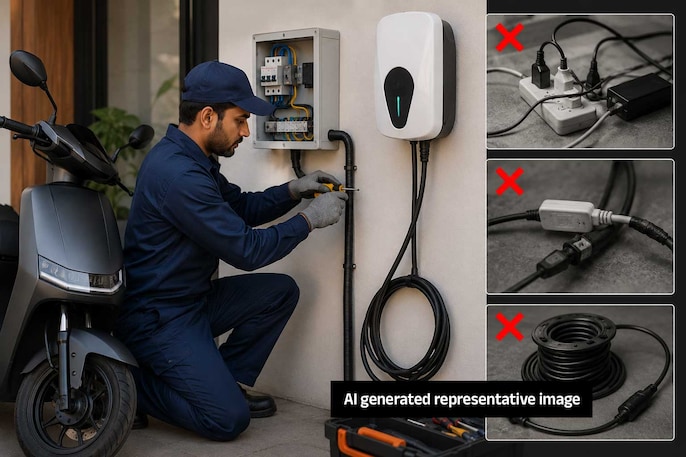
Experts state that home chargers must be installed by trained technicians and connected to a dedicated electrical circuit. Using extension cords, makeshift wiring or adapters for EV chargers dramatically increases fire risk and should be strictly avoided.
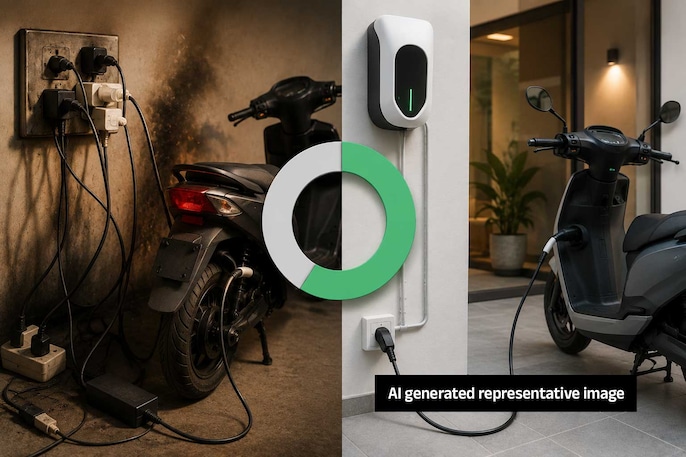
According to experts, only 55% of EV owners in India have a proper charging setup installed at home. This is a key reason why charging-related accidents continue to occur — with many riders using inadequate electrical infrastructure for high-load charging equipment.
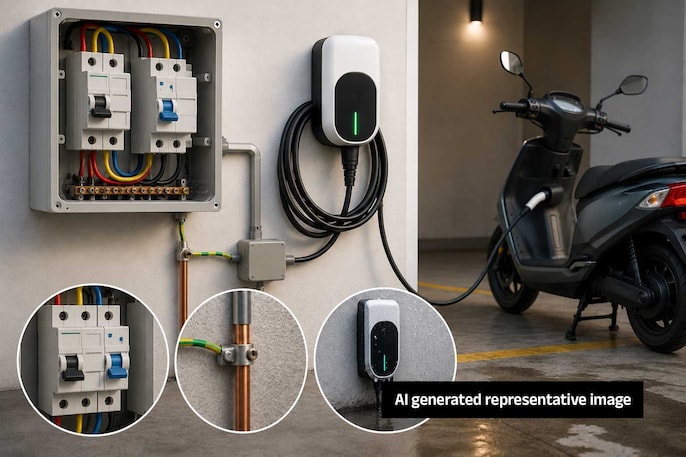
A proper EV charging setup requires a Miniature Circuit Breaker (MCB) and a Residual Current Circuit Breaker (RCCB). Proper earthing is also essential, and the charger must be installed in a location free from moisture and any risk of water accumulation.
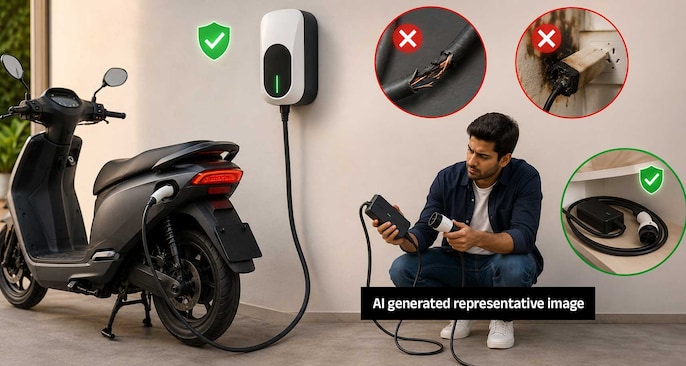
Vehicle owners should always use the charger provided by the manufacturer. If you notice any burning smell, cable damage or wiring issues during charging, stop immediately and contact a technician or the company's customer service before using the charger again.
 Daily Calls: Ask Your STOCK MARKET TODAY QUERIES | Market Update | Share Market News Today
 SBI Fund Management Share: Should You Buy Now Or Wait? Brokerages Reveal Their Target Prices
 Sobha Share Price: Should You Buy This Stock Post Q1 Results? Expert Decode
 Best Banking Stocks: Why This Market Expert See Another Hidden Banking Gem
 Paytm Q1 Results: Buy Now Or Wait? Expert Reveals The Best Entry Price & Target