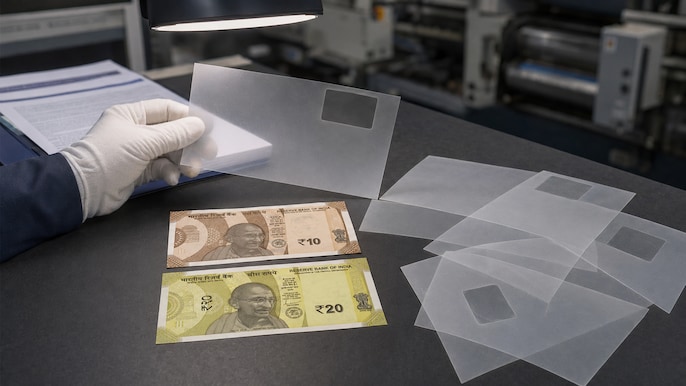
The currency printing arm of the RBI issued a global tender for special polymer substrate sheets to initiate a new trial for ₹10 and ₹20 notes.
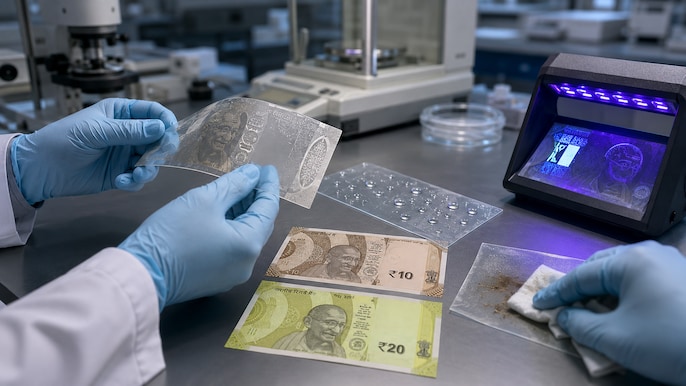
These notes last 2 to 6 times longer than traditional cotton-paper notes, do not spoil from water or dirt, and make counterfeiting virtually impossible.
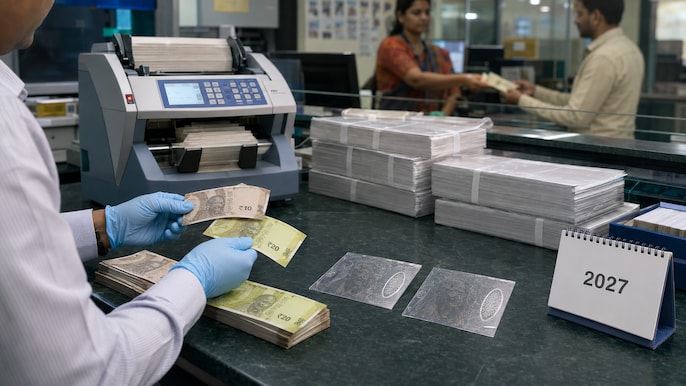
If the field trial using 68 million polymer substrate sheets succeeds, these plastic notes are expected to enter market circulation alongside paper currency by 2027.
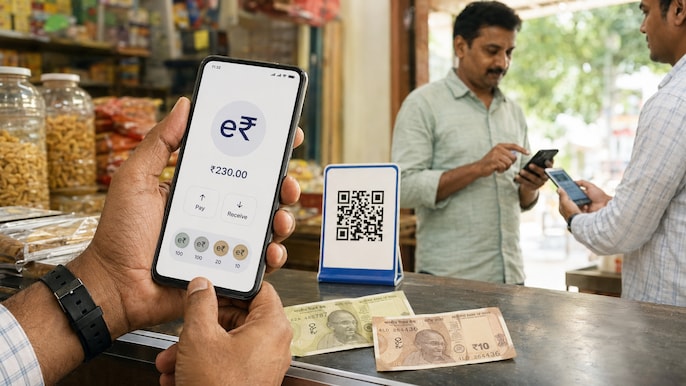
India's official digital currency issued by the RBI, which can be stored in a digital wallet without requiring a bank account, functioning just like physical cash.
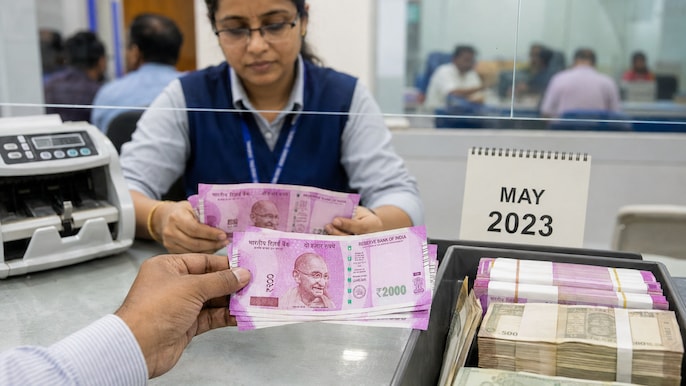
Introduced after demonetization in 2016, it was India's highest denomination paper note until the RBI withdrew it from circulation in May 2023.
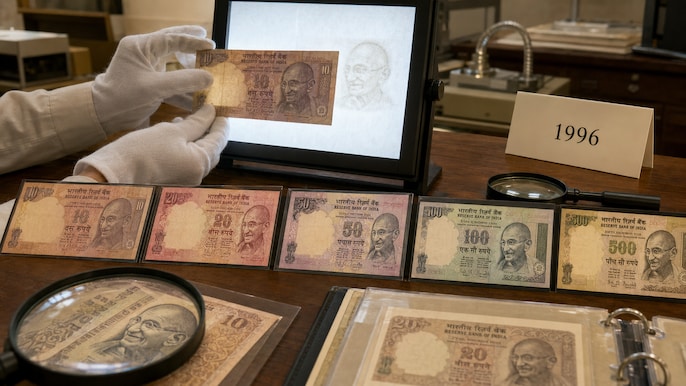
In 1996, the Reserve Bank of India first began printing banknotes featuring a watermark and the prominent portrait of Mahatma Gandhi across denominations.
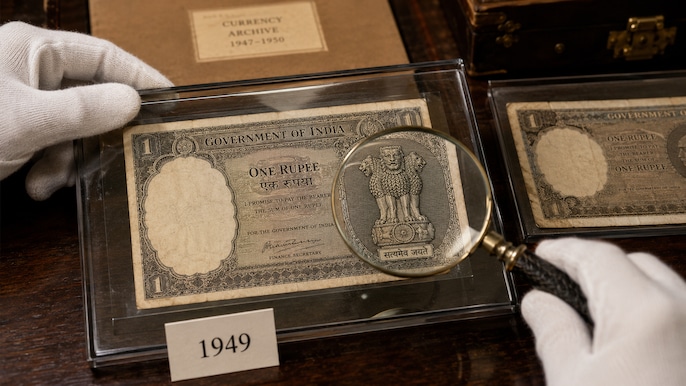
The first ₹1 note issued in independent India in 1949 replaced the portrait of the British monarch with the Ashoka Pillar emblem of Sarnath.
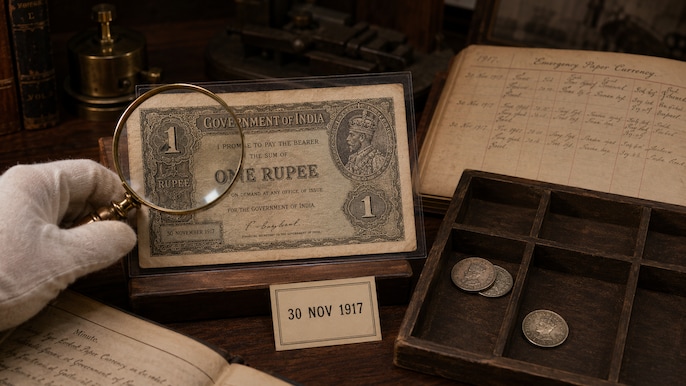
Issued on November 30, 1917, during World War I due to a severe silver shortage that disrupted the minting of silver coins.
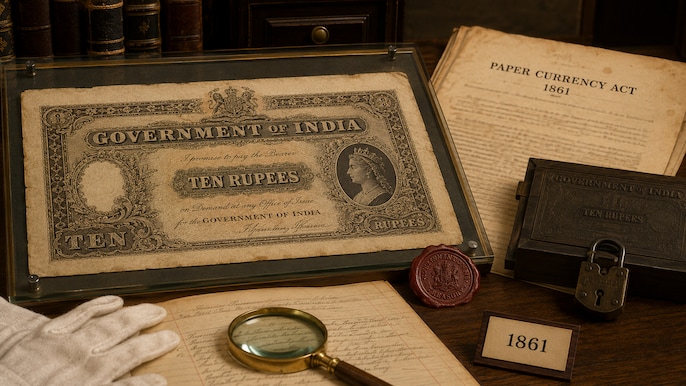
Under the Paper Currency Act of 1861, the British government established a complete monopoly over currency issuance in India, introducing notes bearing the image of King George.
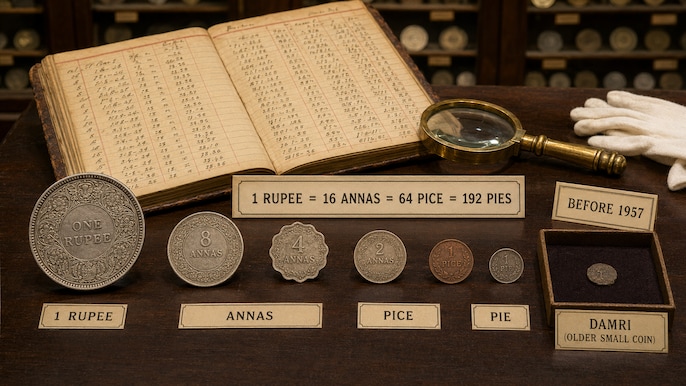
Before decimalization in 1957, the currency structure was 1 Rupee = 16 Annas = 64 Paise = 192 Pies. Popular Hindi idioms like "Pai-pai ka hisab" stem from this currency system.
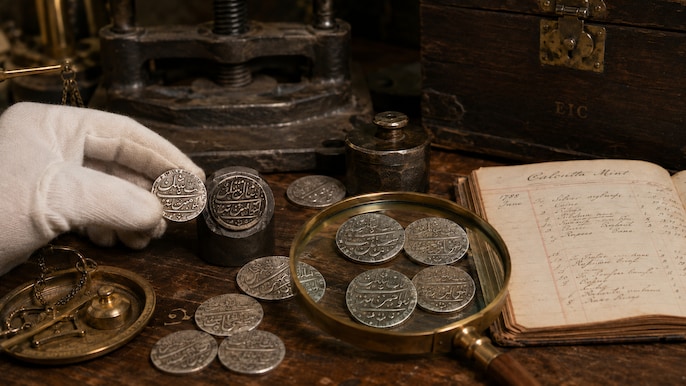
In the 18th and early 19th centuries, the British initialed trade by minting coins under the names of Mughal Emperors rather than their own company.
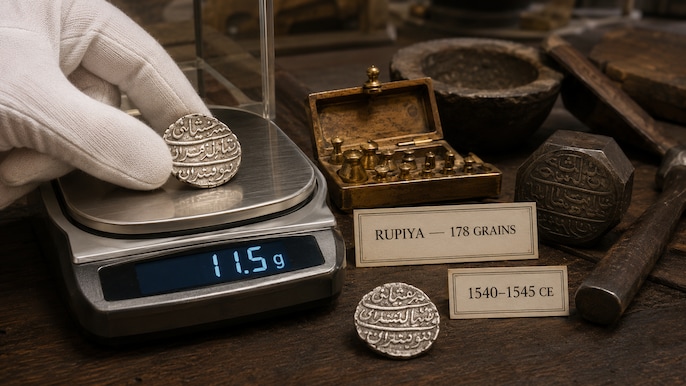
Between 1540 and 1545 CE, Emperor Sher Shah Suri issued a standard silver coin weighing 178 grains (~11.5 grams) named the 'Rupiya', which forms the origin of the modern word 'Rupee'.
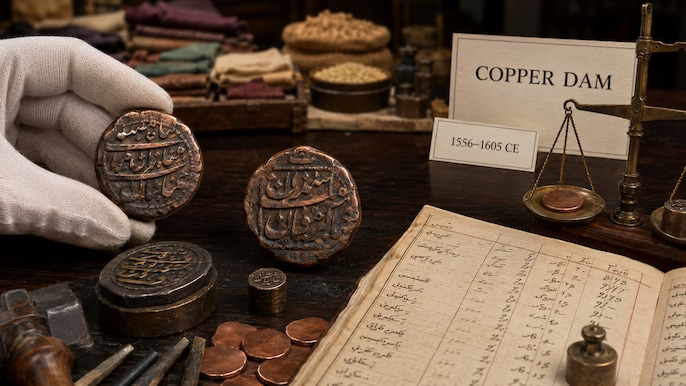
During the reign of Akbar, the smallest copper coin was known as the 'Dam'. This coin gave rise to the Hindi phrase "Dam lagana" (pricing or valuing something).
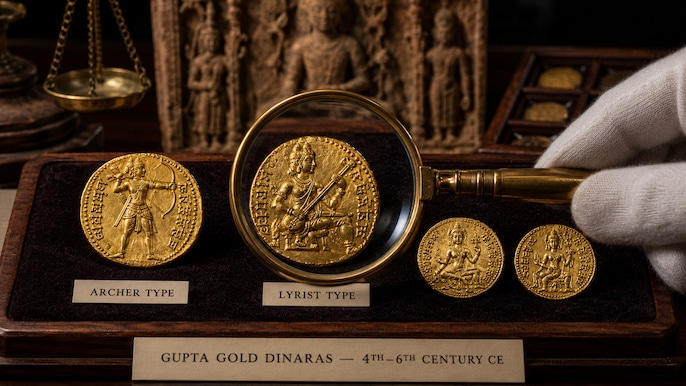
The Gupta period (4th to 6th Century CE) is considered India's 'Golden Age', during which gold coins depicted kings as archers and playing the lute (Veena).
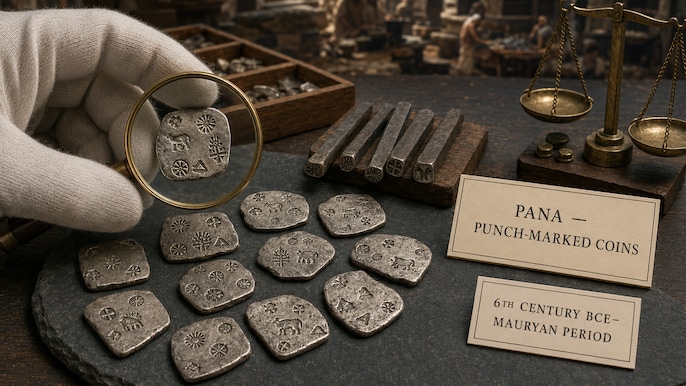
Used from the 6th Century BCE through the Mauryan period, these ancient metal coins had no written inscriptions, relying instead on stamped (punched) symbols of the sun, trees, or animals.
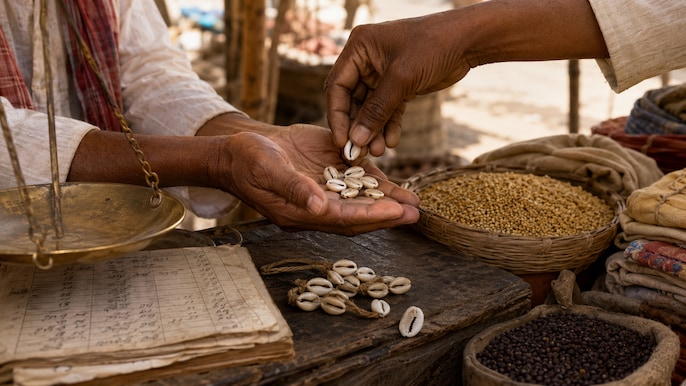
From ancient times up to the 19th century, small sea shells called cowries were used for tiny local market transactions, giving rise to sayings like "Footi kauri na dena".

In the Vedic era and preceding periods when metallic coinage did not exist, cows and grains (like barley and wheat) served as the primary medium of exchange and measure of wealth.
 Did Frontier AI Models Just Break Out On The Live Internet? The Great AI Escape Explained | Tech Today
 Nifty Falls For 7th Straight Session: Is This A Buying Opportunity? Sharad Avasthi Explains
 “Invest In India, Invest In U.P”: Ashwini Vaishnaw’s Big Pitch For Japan At Business Conclave
 Empowering Conscious Enterprise Leadership
 Bonds, AAA Debt Provides Strong Cushion To Portfolio