

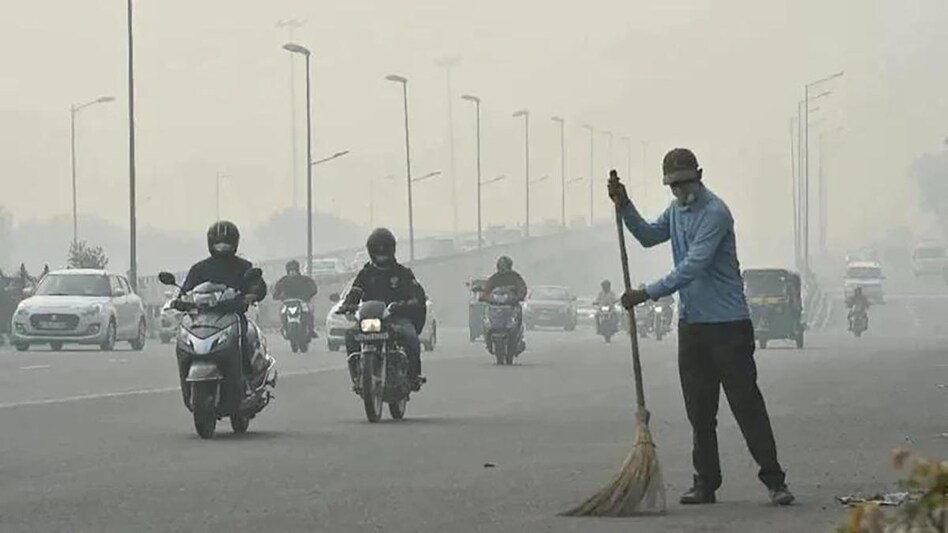
 Delhi's air quality is unlikely to improve drastically in the next few days. (Representational image: PTI)
Delhi's overall air quality continues to remain in the 'severe' category. The Air Quality Index (AQI) of the national capital stood at 436 on Sunday morning, according to the System of Air Quality and Weather Forecasting and Research (SAFAR).
Although the air quality improved marginally on Sunday, it is still in the 'severe' category. The capital's air quality had worsened to the 'hazardous' category on Friday, a day after Diwali, as people in several parts of Delhi burst firecrackers despite the Kejriwal government's blanket ban on bursting and sale of all firecrackers, including green crackers.
 Big victory for Anthropic: US court strikes down Pentagon blacklist over 'illegal retaliation'
 NSDL, CDSL, BSE shares: Check key technical levels to watch out for
 SBI Funds share price: Jefferies initiates coverage with Buy, 26% upside target
 India, Canada eye Bilateral Investment Treaty to unlock ₹4.65 lakh crore trade by 2030
  Beyond factory floors: Piyush Goyal outlines next generation India-Japan economic partnership
 IDV Explained: How It Impacts Your Motor Insurance Premium & Claim
 Nepal Flood Crisis: Massive Floods Leave Trail Of Destruction Across Rasuwa, Nuwakot And Chitwan
 Oseltamivir Shortage Explained: Why H1N1 Cases Are Driving Demand & Prices Are Varying Sharply
 Stock Market Outlook: Strong Earnings, Global Risks; What’s Next For Nifty Above 24,000?
 Lupin Stock Outlook: Citi Downgrade Vs Bernstein Buy; Is The Pharma Stock A Buy Now?
 Nifty IT surges 3%: TCS, Infosys, LTM, HCLTech shares climb after Nvidia's strong results
 Ather Energy shares rise 7% after Rs 1,758 crore block deals; here's why
 Multibagger listing: Tempsens Instruments shares rally over 111% on debut
 Tejas Networks shares rally 10% on Rs 1,537 crore TCS order win; key details SBI Funds share price: Jefferies initiates coverage with Buy, 26% upside target
 Delhi race club demolition: Centre takes over 53 acres after HC refuses interim relief
 'Nothing’s Too Far': Tata Motors unifies all passenger vehicles under new TATA.CARS identity
 Varanasi’s Rajghat: Ancient heritage faces new challenges amid rapid development
 Gaggan Anand returns to India with RAGA: 22 courses, ₹11,111 price tag and months-long wait
 Sonia Gandhi’s memoir 'Belonging' faces setback as Penguin India pulls out over proposed changes












