


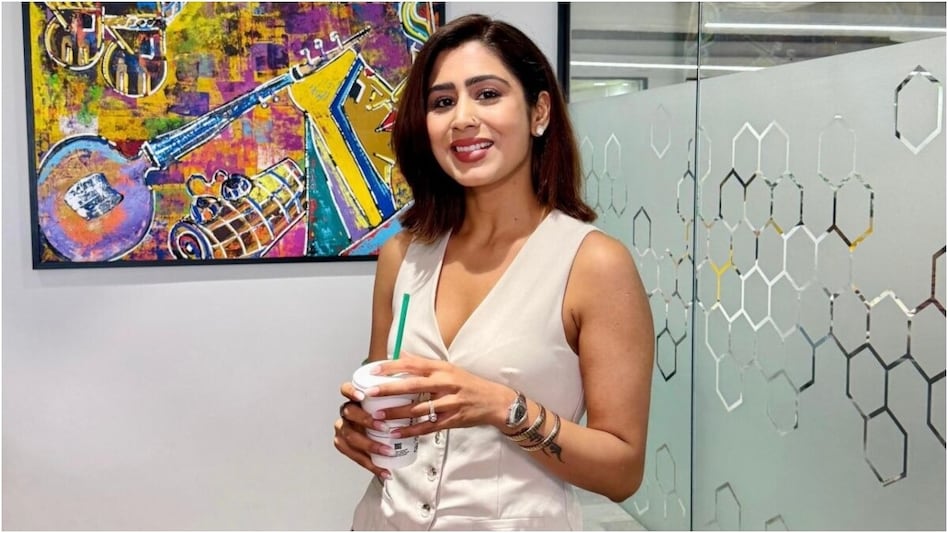
 Her post quickly attracted reactions from professionals who shared their own experiences.
A viral post has sparked a wave of conversations around toxic leadership. Mamaearth co-founder Ghazal Alagh took to LinkedIn to declare that poor management, not the nature of work itself, is often the real reason talented employees quit. She pinpointed eight types of managers who quietly drive high performers out the door — a list that has struck a chord with professionals across industries.
In a post on LinkedIn, Alagh wrote, “Employees don’t leave companies, they leave managers. Across industries and organizations, this statement is one of the most-quoted truths in leadership and for a good reason. Great talent rarely quits because of work or the company’s mission.”

 India's $30 trillion goal needs 8-10% growth, $400 billion more annual investment: Jayant Sinha
 BT India@100: ‘India has not lost the AI race,’ says Amitabh Kant, highlights the country’s biggest advantage
 Will Tukaram Mundhe enter politics? Here's what the Maharashtra FDA commissioner said
 Deepinder Goyal’s Temple gets a major redesign, shrinks to 'less than half the size'
 Bitcoin price today: Rs 16 lakh gain just in a week! What led to a sharp rally in crypto market?
 #IndiaAt100 : CM Pushkar Singh Dhami On Uttarakhand’s Industrial Growth & India’s Next Leap
 #IndiaAt100 : Dr. Pawan Goenka On India’s SpaceTech Lift-Off And The Race To 2047
 #IndiaAt100 : P Chidambaram On India’s Growth Dilemma | What Could Hold Back $30 Trillion Dream?
 #IndiaAt100 | India’s Coolest Start-Ups: Meet The Innovators Building Tomorrow
 #IndiaAt100 | The Labour Code For Manufacturing: What Changes For Jobs & Industry?
 Cupid, NTPC Green, NTPC, Raymond Realty, HAL shares: Key technical levels to watch
 Defence stock with Rs 2,654-crore order book hits record high; here's why
  GACM Technologies: FII holding jumps to 29%; penny stock in focus
 Puravankara shares rise 5% on fresh order win
  20 high-conviction ideas for up to 95% upside | stocks to buy
  90% EVs exported out of India are from Maruti Suzuki: MD & CEO Hisashi Takeuchi
 India set to become Hyundai’s No. 2 market ahead of FY30: Tarun Garg
 India’s deep-tech startups face a new test: Crossing the valley of death#IndiaAt100 : CM Pushkar Singh Dhami On Uttarakhand’s Industrial Growth & India’s Next Leap
 Current economic model in India is default: P. Chidambaram












