


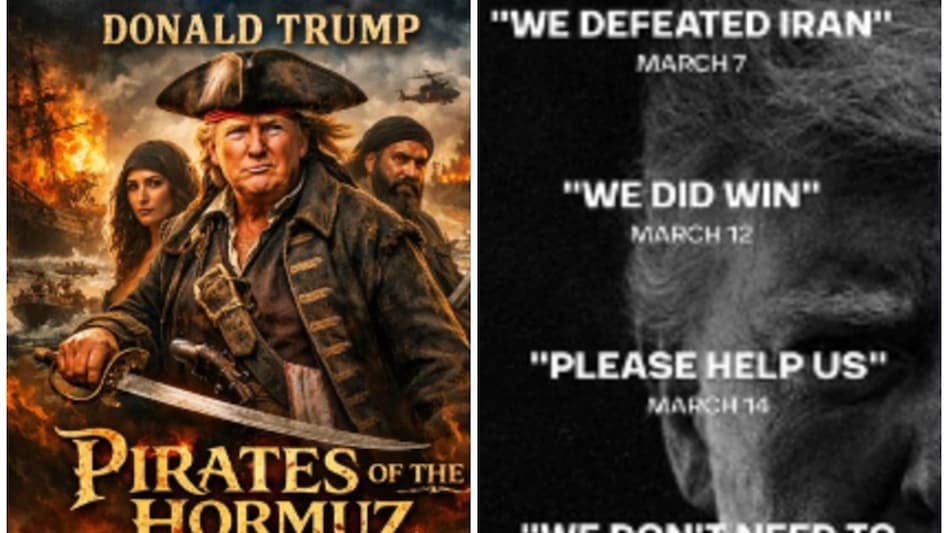
 These posts often respond in near real-time to Trump’s own social media activity.
As tensions between the United States and Iran spill from the Strait of Hormuz into the digital space, Tehran has opened a parallel front — one powered not by missiles, but by memes.
Across continents, official Iranian embassy accounts have been churning out sharp, often surreal posts targeting US President Donald Trump, turning geopolitical friction into a sustained online mockery campaign.

 John Ternus salary: How much will he earn as Apple CEO?
  Power crunch ahead? Weak monsoon cuts hydro output as India’s electricity demand stays elevated
 Nepal flash floods: Death toll tops 1,100, 163 Indian nationals rescued - Top developments so far
 Zerodha's Nikhil Kamath highlights FII-DII trend: 'Smart foreign money isn't always right' in Indian markets
 Annu Projects turns wealth destroyer on Dalat Street debut; shares list at 27% discount
 Nifty Cracks 23,800: Expert Warns Of Further Downside As Crude Oil Nears $97; What Next?
 Maruti, Hyundai Exports Hit: West Asia Crisis Disrupts Shipments; Will FY27 Face More Pain?
 Gold, Silver Outlook: Why Experts Prefer Silver Amid Rising Bond Yields; Buy Gold On Dips?
 India GDP Grows 7.8%: Modi Hails Growth, BJP Hits Back At Rahul Gandhi's 'Economic Tsunami'
 How China Is Winning The Humanoid Robot Race
 Priority Jewels IPO: How to check application status, allotment odds, fresh GMP, listing date
 Adani Green Energy shares climb 3% despite market selloff; here's why
 HAL, Bharat Electronics, Data Patterns: Top stock picks amid rise in defence capex Zerodha's Nikhil Kamath highlights FII-DII trend: 'Smart foreign money isn't always right' in Indian markets
 Shilpa Medicare: Scaling up the complexity ladder; Buy stock, says Nuvama
 Multibagger Stock: Why TBZ Shares Are Locked At 20% Upper Circuit
 Bankers Threaten Indefinite Strike From October 26 | What’s Behind The Protest?Priority Jewels IPO: How to check application status, allotment odds, fresh GMP, listing date
 Bharat Is India’s Next Growth Story | FADA President Sai Giridhar On The Road Ahead
 Old Monk Label Set For A Makeover After FSSAI Raises Questions Over Ageing And Flavouring












