


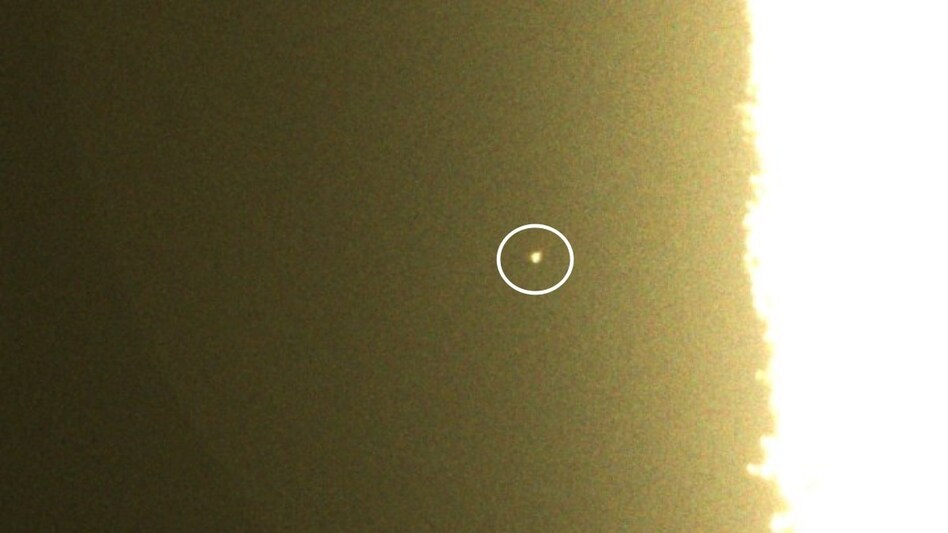
 The first strike happened at 8:30 p.m. Japan Standard Time (6:30 a.m. EST) on October 30, and the second at 8:49 p.m. JST (6:49 a.m. EDT) on November 1.
In a rare event, two bright meteors were seen hitting the Moon’s surface just days apart — captured on video by Japanese astronomer Daichi Fujii, curator of the Hiratsuka City Museum. The flashes, seen on October 30 and November 1, were visible from Earth for only a split second but amazed astronomers around the world.
Fujii recorded the impacts using cameras pointed at the Moon’s darker side, showing quick but powerful bursts of light as the space rocks crashed into the surface at very high speeds. According to Space.com, the first flash appeared east of the Gassendi Crater, and the second was spotted west of Oceanus Procellarum, one of the Moon’s largest plains.

 TCS share price target: Porsche’s IT consulting arm buyout EPS neutral, win-win deal
 Canada to impose retaliatory tariffs on the US as trade talks collapse
 Heavy rains lash Delhi-NCR: 15 flights cancelled, IMD issues red alert for more rain and thunderstorm
 Top stocks in news: TCS, Suzlon, ICICI Bank, HindCopper, Sunshine, Kotak Bank, Afcons, Shankesh
 Delhi Master Plan 2047: Bigger homes, better roads, transport and facilities — what’s changing for you
 Market Masters | Aniruddha Sarkar On Top Sectors, Market Outlook & Where To Invest
 Daily Calls: Ask Your STOCK MARKET TODAY QUERIES | Market Update | Share Market News Today
 All About Debt Funds: Types Of Debt Funds & How To Invest | Mutual Fund Guide | Money Today
 “India Can Attract Global Space Talent Like A Magnet”: PM Modi To Startup CEOs
 CM Yogi Responds To Rahul Gandhi Over Manusmriti Remarks, India's Youth, And Heritage
 Hind Copper OFS: Share price reaction likely as floor price set at 10% discount; govt to sell 6% stakeTCS share price target: Porsche’s IT consulting arm buyout EPS neutral, win-win dealTop stocks in news: TCS, Suzlon, ICICI Bank, HindCopper, Sunshine, Kotak Bank, Afcons, Shankesh
 Tempsens Instruments IPO: Issue subscribed over 184 times on final day; check latest GMP
 Cupid's Aditya Kumar Halwasiya ups stake to 33.53%; buys 11 lakh shares
 Want to work more efficiently? This $251 billion company CEO has a surprisingly simple email rule: just 2 words
 US H-1B visa rules tighten again: DHS proposes over $103,000 fee for applicants; What Indians should knowHind Copper OFS: Share price reaction likely as floor price set at 10% discount; govt to sell 6% stakeCanada to impose retaliatory tariffs on the US as trade talks collapseDelhi Master Plan 2047: Bigger homes, better roads, transport and facilities — what’s changing for you












