Record obsession
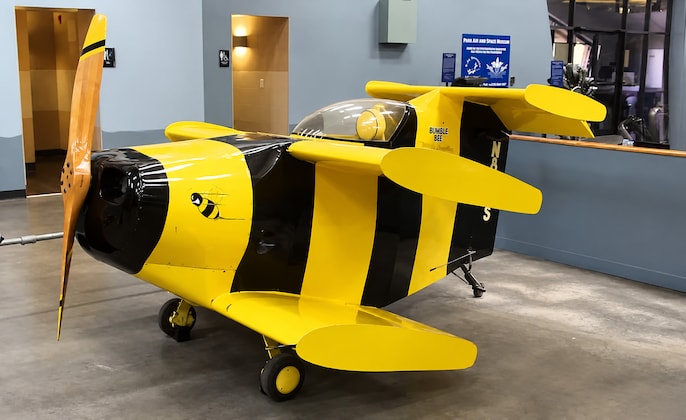
Why would anyone build an aeroplane barely longer than a motorcycle? For Robert Starr, it was a battle to claim aviation's most unusual record. He had previously worked with aircraft designer Ray Stits on the Stits Sky Baby, which first flew in 1952. Starr later built the original Bumble Bee in 1984, but when its record was surpassed, he returned with an even smaller creation. The Bumble Bee II was his answer to the challenge.
Tiny giant
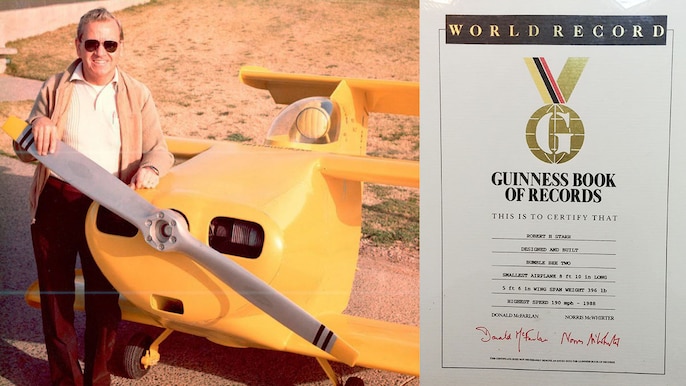
Imagine an aeroplane so small it looks more like a toy than a flying machine! The Starr Bumble Bee II measured just 8 feet 10 inches in length, with a wingspan of only 5 feet 6 inches and a height of 3 feet 11 inches. Built by American pilot Robert H. Starr, this miniature biplane earned a place in Guinness World Records as the world's smallest aeroplane, proving that even a tiny aircraft could make aviation history.
Record flight
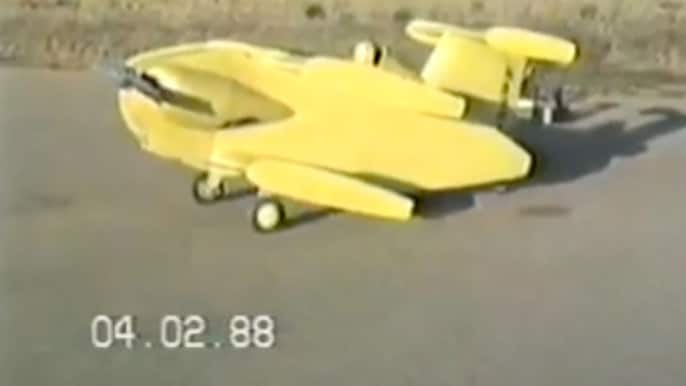
On April 2, 1988, something extraordinary happened at Marana Airpark near Tucson, Arizona. Robert Starr took his astonishingly small Bumble Bee II into the sky, securing a Guinness World Record. The aircraft weighed approximately 180 kg, rising to around 260 kg with its pilot and fuel. Its dimensions were almost unbelievable, but the real surprise was that this miniature machine could actually fly.
Tragic ending
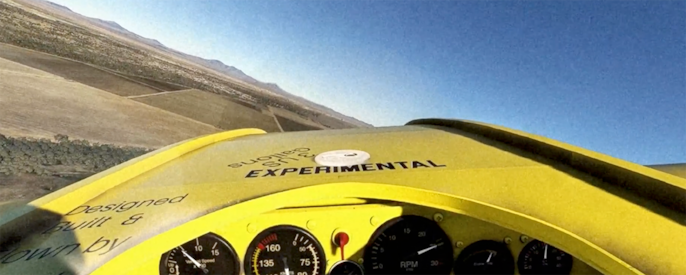
The world's smallest aeroplane had an astonishingly short flying career. Just over a month after its historic flight, the Bumble Bee II crashed on May 5, 1988, seriously damaging the aircraft and injuring its creator, Robert Starr. The record-breaking machine was destroyed, but its predecessor, the original Bumble Bee, survives. Nearly four decades later, the Bumble Bee II's extraordinary achievement remains part of aviation history.
 Cybersecurity Alert: AI Finds PHP Flaws, eMudhra Faces Certificate Concerns
 BrahMos CEO Exclusive | How BrahMos Is Expanding Production To Supply Vietnam, Indonesia & Russia
 Global Cyber Scare: PHP Flaws Threaten Websites, eMudhra Lapse Sparks Security Alarm
 Budget FY28 | Centre Weighs Up To 20% Higher Fertiliser Subsidy: Sources
 Market Commentary | Nifty - Sensex Today | Aditya Agarwal On What Investors Should Do Now