








 After the postmortem, samples of the cheetah's internal organs were sent to the School of Wildlife Forensic and Health in Jabalpur for additional examination.
 After the postmortem, samples of the cheetah's internal organs were sent to the School of Wildlife Forensic and Health in Jabalpur for additional examination.
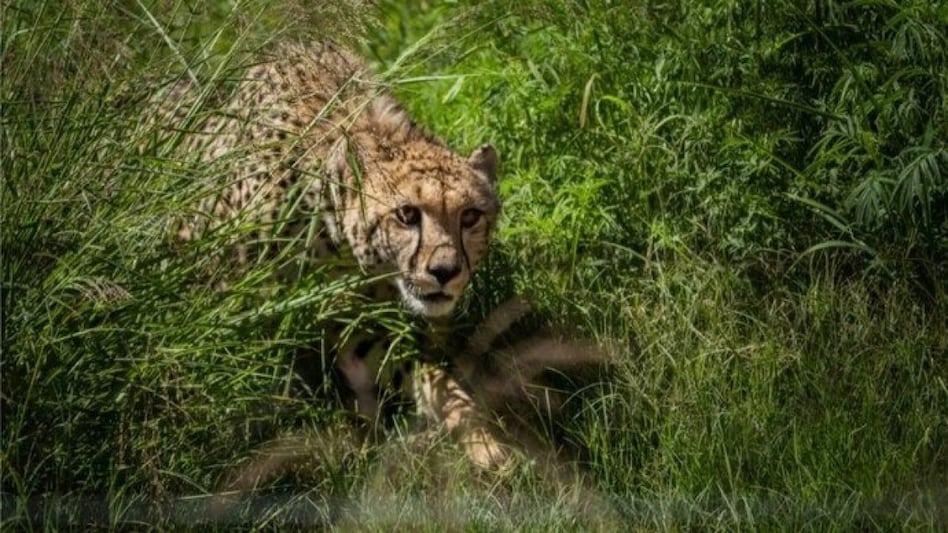
A South African cheetah, Tejas, died at Madhya Pradesh's Kuno National Park (KNP) on Tuesday . The postmortem report on Wednesday revealed that it was internally weak and going through multiple different problems which eventually led to the feline’s death.
It also revealed that Tejas had a violent fight with a female cheetah and was unable to recover from the “traumatic shock”.
According to a forest official, it was confirmed in the report that the cheetah had an infection in its lungs and kidneys.
The animal also had injury marks on its neck, the report claimed.
After the postmortem, samples of the cheetah's internal organs were sent to the School of Wildlife Forensic and Health in Jabalpur for additional examination.
According to the report, the cheetah weighed approximately 43 kilograms, which is below the typical weight for male cheetahs. Additionally, its internal organs were not functioning properly.
The report stated that the chances of the cheetah recovering and becoming healthy in this condition were quite low.
The report suggests that due to its internal weakness, Tejas was unable to recover from the trauma sustained during a violent altercation with a female cheetah.
"Prima facie, the cause of the death is traumatic shock," the report said.
Tejas, a five-and-a-half-year-old cheetah, became the seventh cheetah to die within a span of four months at Kuno National Park, along with three cubs born to Namibian cheetah 'Jwala' .
Tejas was brought to the park from South Africa in February of this year. This unfortunate event marks another setback for the central government's cheetah reintroduction program, which was launched with great enthusiasm in September of the previous year.
The Kuno National Park initially had a total of 24 cheetahs, including 20 translocated from Namibia and South Africa, as well as four cubs born within the park itself. However, with the recent deaths, the overall cheetah population at the park has dwindled to 17 individuals.
Also Read:
 NSE IPO may unlock mega gains for billionaire investors RK Damani, Premji
 'The real sting is the monitoring': Brahma Chellaney flags risk for India in Trump's Russian oil order
 Moltbook hype unravels: Viral posts were human-written, not AI, finds MIT Technology Review
 After mass layoffs, Washington Post publisher Will Lewis resigns; Jeff D’Onofrio named acting CEO
 India-US BTA: Harley Davidson bikes to get 0% duty, gradual tariff reduction on luxury cars
 BT Golf 2025-26 Kochi, Kerala Awards Ceremony Marks A High-Energy, Successful Conclusion
 Golf Is An Addiction. We Eat And Sleep Golf!
 The Fairway Fixes Everything. Mindset, Life, Relationships
 BT Golf LIVE: Join AU Small Finance Bank Presents BT Golf 2025-26 For Its 4th Leg In Kochi, Kerala
 AI Will Change MBAs, Not Leadership: IMD President On India’s Global Education Rise
 RIL, SBI, Kotak Bank, Kalyan, HAL, BEML, BDL among stocks in focus next week; here’s whyNSE IPO may unlock mega gains for billionaire investors RK Damani, Premji
 SBI Q3 Results: Profit jumps 24% to Rs 21,028 crore; asset quality improves
 IDBI Bank stake sale: Kotak Mahindra Bank says ‘has not submitted a financial bid’
 BDL, Mazagon Dock, MRF, Hindustan Copper, RVNL, others to turn ex-dividend next week