


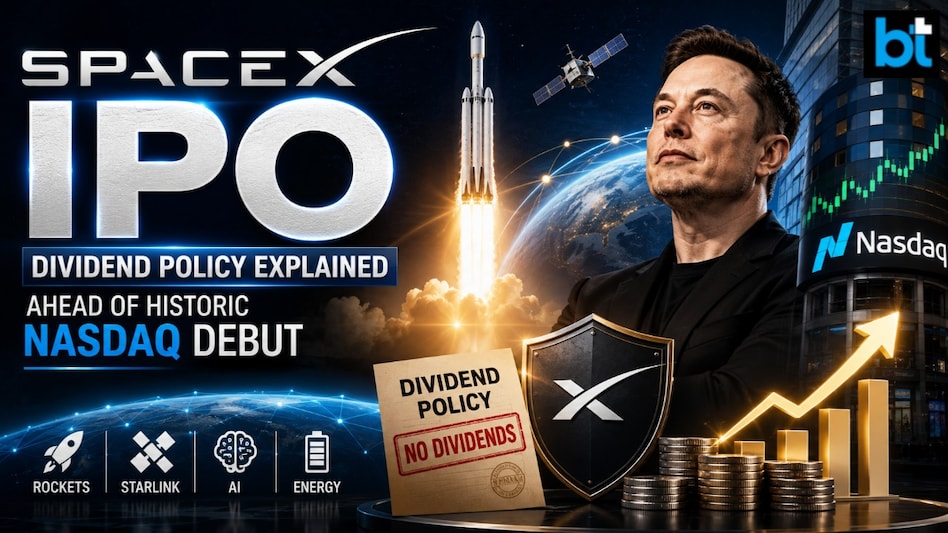
 AI-generated image for representational purpose only
Space Exploration Technologies Corporation or SpaceX has launched initial public offering (IPO) this week in what the company says is a $74.4 billion offer that could be the world's biggest. The listing could also make Elon Musk, the world's richest person, a trillionaire. The Texas-based company, founded in 2002, plans to trade on Nasdaq under the ticker symbol SPCX.
SpaceX is offering 555,555,555 shares at an expected IPO price of $135 each. The final price is expected on June 11, with trading likely to begin on June 12. The timeline could change if the United States Securities and Exchange Commission seeks additional disclosures, market conditions turn unfavourable, or demand-building requires more roadshows.

 Why festive sales are losing their sparkle this year
 Rubio at Jamnagar complex: Sergio Gor flags Reliance's investment in first new US refinery in 50 years
 'Impact has been very limited': MeitY on eMudhra security incident, says Indian DSC and eSign unaffected
 Major security flaw triggers action from Google and Apple against eMudhra certificates
 India's core sector growth accelerates to 7.9% in September; refinery output jumps 10.3%
 Love, Obsession & Horror: 5 New Films Releasing This Friday | Theater Releases This Week | Movies |
 U.S.-India Trade Deal: Why Markets Remain Cautious During Marco Rubio’s Visit
 Market Volatility: Pankaj Pandey Sees Buying Opportunities In Midcaps And Smallcaps
 Jio Platforms IPO Sees Record Demand, Subscribed 2.3 Times As QIB Bids Surge
 Sensex, Nifty Turn Volatile: Sharad Avasthi On What Investors Should Do Next
 Jio Platforms IPO: SBI Focused Fund leads mutual fund anchor allotments at ₹315 crore
 Jio IPO explained: Can subscriber scale and profit growth justify its premium valuation over Airtel?
 Planning to apply for Jio’s IPO? Check all the deatils here
 Bajaj Finance shares fall 4% as NBFC flags rise in overdue gold loans
 Rs 11 lakh crore investor wealth gone as market ends lower for second day
 December MPC meet: A 50 bps repo hike vs 25 bps hike with a wider LAF corridor? SBI Research on two RBI options'Impact has been very limited': MeitY on eMudhra security incident, says Indian DSC and eSign unaffectedRubio at Jamnagar complex: Sergio Gor flags Reliance's investment in first new US refinery in 50 years
 CJP protest: Saurav Das, Ashutosh Ranka released after judicial custodyJio Platforms IPO: SBI Focused Fund leads mutual fund anchor allotments at ₹315 crore












