












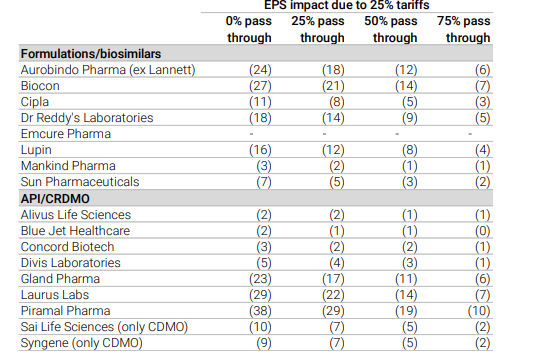



 Sun Pharma's specialty portfolio might also encounter challenges in passing on increased costs due to pre-existing elevated price points.
 Kotak Institutional Equities has highlighted lingering uncertainty over whether a 25% tariff imposed by the US administration on Indian imports will extend to the pharmaceutical sector.
This situation arises amidst confusion regarding the inclusion of pharmaceuticals in the recent US-EU trade agreement. Even if clarity is achieved regarding the applicability of these tariffs to Indian pharmaceuticals, Kotak foresees ongoing ambiguities. The potential for these tariffs to add to existing country-specific tariffs further complicates the situation.

 HDFC Bank fast-tracks CEO search: Who could succeed Jagdishan as more names crop up?
 ‘We do not need lower standards but wider lenses’: Gautam Adani calls for new credit framework
 'Thank you for being a constant source of inspiration': Tim Cook bids farewell to Apple as CEO
 ‘I have nothing left to give’: Lionel Messi bids emotional farewell to Argentina after 20 years
 BT Explainer: What are EREVs? Why JSW MG Motor may bring this tech to India next
 Indian Markets Outlook: Is Bear Phase Ending? Maneesh Dangi Sees Better Next 6-12 Months
 This ₹5 Lakh AI Gym Wants To Replace Your Gym
 Nepal Flood Horror: Sadhguru, Manisha Koirala Stand In Solidarity As Rescue Efforts Continue
 Nepal Flood Horror: Children Found Alive After Days Under Debris, Hope Emerges From Devastation
 India’s 6% Growth Trap: Why Manufacturing Still Struggles To Beat China
 Priority Jewels IPO subscribed 21.23 times on Day 2; check latest GMP, other key details
 Ola Electric shares jump 5%; still down 34% in a year; what's ahead?
 Sensex falls 307 points, Nifty settles below 24,100; what happened today
 Market veteran Ajay Bagga on top sectoral picks; impact of oil prices, monsoon on economy
  Nifty Bank jumps over 600 points in last five minutes; CAS in focus
 'Unknown local electrical issues': TCS iON on NEET-PG exam disruption in Jaipur
 The Districts which Dominate'Thank you for being a constant source of inspiration': Tim Cook bids farewell to Apple as CEO‘I have nothing left to give’: Lionel Messi bids emotional farewell to Argentina after 20 years
 Travelling to Uzbekistan? Indians can now pay through UPI while abroad by scanning UZQR codes


