Nifty experienced a massive 200-point surge on Monday driven by around 1 per cent or more movement across as many as 12 Nifty stocks. That is likely to correct after opening today, Devarsh Vakil, Head of Prime Research at HDFC Securities said earlier today.
“The 390-point spurt in the Nifty yesterday caused primarily by the new closing auction session (CAS) for determining the closing prices of stocks in the F&O segment is expected to normalise today. The sharp spike in Nifty vis-a-vis Sensex was an aberration caused by the new CAS, and therefore, investors need not attach much importance to the aberration," said VK Vijayakumar, Chief Investment Strategist, Geojit Investments Limited.
The new mechanism, effective from August 3, 2026, is seen enhancing transparency, strengthen price discovery, and improve market integrity by determining the closing prices of eligible securities through a structured auction process.
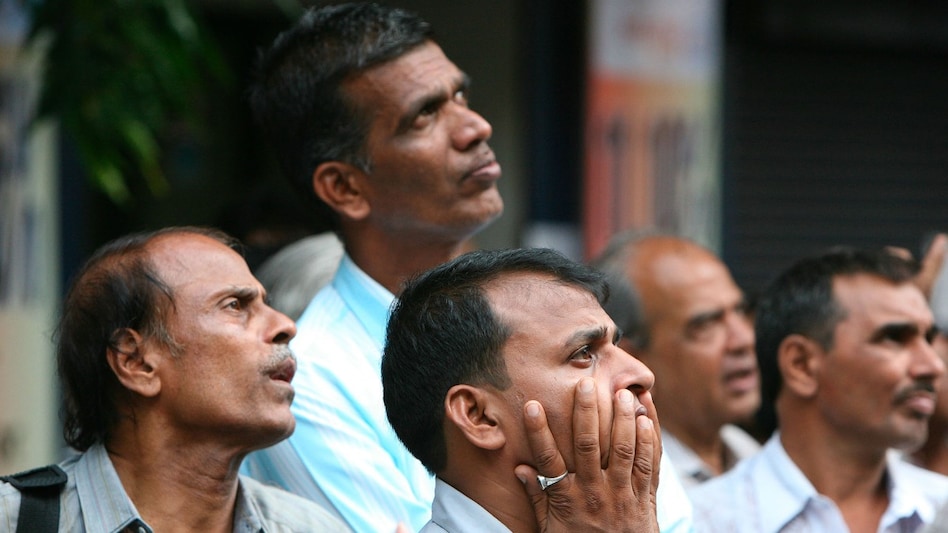
NSE in a statement said the first day of implementation of the Closing Auction Session, or CAS, on Monday saw 515 trading members place orders for 56,773 unique PANs. This was higher than Monday's pre-open call auction session, in which 403 trading members participated and placed orders for 42,822 unique PANs.
India's largest stock exchange said the participation on the first day was strong, while adding that the session is being introduced in phases. “It may be noted that Pre open session has been implemented more than a decade ago. So given the first day, the participation levels were very good. This is expected to mature and increase with time,” the exchange said on Monday.
The NSE said CAS promotes transparency and fair and robust price discovery and is, therefore, been made applicable in a phased manner.
Stocks under CAS
Initially, from August 3, 2026, the closing price of stocks in the cash segment on which derivative contracts are available will be determined based on CAS. For the remaining securities in the cash segment, the closing price will continue to be determined on the basis of the volume weighted average price of trades executed during the last 30 minutes of the Continuous Trading Session in the cash segment.
CAS: How it works
The CAS has been implemented as a separate session of 20 minutes from 3:15 pm to 3:35 pm on all trading days. The first five minutes, from 3:15 pm to 3:20 pm, are meant for reference price calculation and transition from the Continuous Trading Session to CAS.
The next five minutes, from 3:20 pm to 3:25 pm, are for order entry for both limit and market orders. The following five minutes, from 3:25 pm to 3:30 pm, are for order entry only for limit orders.
During this period, market orders cannot be modified or cancelled. There is a random close in the last two minutes, from 3:28 pm to 3:30 pm. The order entry session closes randomly at any time during these two minutes, and the random closure is system-driven. Order matching takes place after this closure. The equity derivatives segment will continue to operate up to 3:40 pm on all trading days.
The reference price of a stock in CAS in the cash segment will be determined on the basis of the volume weighted average price of trades executed in that stock between 3:00 pm and 3:15 pm. If no trade is executed in a stock during that period, the last traded price of the stock during the day will be taken as the reference price for CAS.
CAS & corporate actions
In case of a corporate action, the previous day’s closing price will be the adjusted closing price or the base price. The applicable price band during CAS will be plus or minus 3 per cent from the reference price of the stock. The price band of stock futures between 3:15 pm and 3:40 pm will be aligned with the price band applicable during CAS.
The exchange said only limit orders and market orders are allowed in CAS, and both are considered for computation of the equilibrium price. Iceberg orders and stop loss orders are not allowed in the session.
CAS: Determination of closing price
The closing price in CAS is determined through the equilibrium price mechanism, under which the equilibrium price is the price at which the maximum volume can be executed. Market orders are given priority over limit orders.
All unexecuted limit orders of the Continuous Trading Session are carried forward to CAS, except stop loss orders, iceberg orders and orders with prices beyond the price bands applicable in CAS. The limit orders carried forward from the Continuous Trading Session to CAS will have higher time priority than limit orders placed during CAS. These carried-forward limit orders can be modified, but their time priority changes after modification.
On settlement prices, the NSE said Clearing Corporations calculate settlement prices for stock derivatives and index derivatives. The settlement price is the closing price of the underlying index on the day of expiry, and the closing price of the underlying index is based on the closing prices of its constituents. The stock exchanges will settle derivative contracts at a price calculated by the Clearing Corporations on the basis of the volume weighted average of the closing prices of the stock in the cash segment across all stock exchanges.
CAS: Risk management
The current risk management system for the cash market will apply during CAS. Orders placed in CAS are subject to the applicable margin requirement at the order level, except for limit orders carried forward from the Continuous Trading Session to CAS. If such carried-forward limit orders are modified during CAS, they will also become subject to the applicable margin requirement at the order level.
The NSE also said the index graph during the CAS session needs to be interpreted properly. It said there is no sudden change in the index at 3:30 pm because order collection, cancellation and matching follow a process, and there is no continuous order matching between 3:15 pm and 3:30 pm.
As the index value is based on traded values, it remains constant during that period. However, indicative values are displayed beside the get quote section on the exchange website, based on the indicative values derived from the equilibrium prices calculated continuously between 3:15 pm and 3:30 pm.
The exchange said both exchanges have separate order books for the CAS session, similar to the continuous trading session, and therefore the prices of individual stocks can differ. Since the index is calculated on the basis of the prices determined for individual stocks, the index values can also differ. It also referred to a study of open prices of scrips based on the pre-open call auction session during 2014 to 2024, which found more than 8.5 lakh scrip days where the open price difference was more than 2 per cent. The first day of CAS, the NSE said, recorded higher participation than the pre-open session and marked the start of the phased shift in how closing prices are determined for eligible cash market stocks.



 NSE in a statement said the first day of implementation of the Closing Auction Session, or CAS, on Monday saw 515 trading members place orders for 56,773 unique PANs.
 Parth Jindal takes charge as Chairman at JSW MG Motor India to drive green mobility
 HDFC Bank leadership: Ex-SBI chairman Dinesh Khara being considered for MD, CEO role, says report
 John Ternus’ biggest challenge as Apple CEO: Reshaping a decades-old leadership team
 RIL, Adani Energy, SBI Cards, Laurus Labs: MSCI rebalancing to drive market volatility today
  ISRO’s ‘Bahubali’ gathers industry bigwigs: L&T, Adani, JSW eye rocket technology
  Debt Funds Explained: Who Should Invest & How Much Debt Should Be In Your Portfolio?
 FD Or Debt Fund: Which Can Offer Better Returns, Tax Benefits & Liquidity?
 Why Meta Could Be Fined $1.4 Trillion! Instagram-Facebook Could Change Forever
 Gold Price Outlook: Can Festive & Wedding Demand Push Prices Higher In India?
 Gold Price Rally: Why Gold Surged 16% In August; Key Triggers Behind The Comeback
 Manipal, VBL, Urban Co, AEL, Lenskart among stocks with fresh brokerage interest for upto 62% rise
 Ather Energy shares: Can this stock double after 423% return over IPO price? Targets
 ZEE Entertainment shares tumble 14%, take losing run to 4th session; key details
 Manappuram Finance, HZL, NFIL, Meesho: Jefferies adds 4 stocks to portfolio; here's why
 Apple Pencil for foldable iPhone Ultra tested, though release remains improbable
 PHEV vs self-charging hybrid: MG Hector Tomahawk takes on Innova Hycross. Who wins?












