


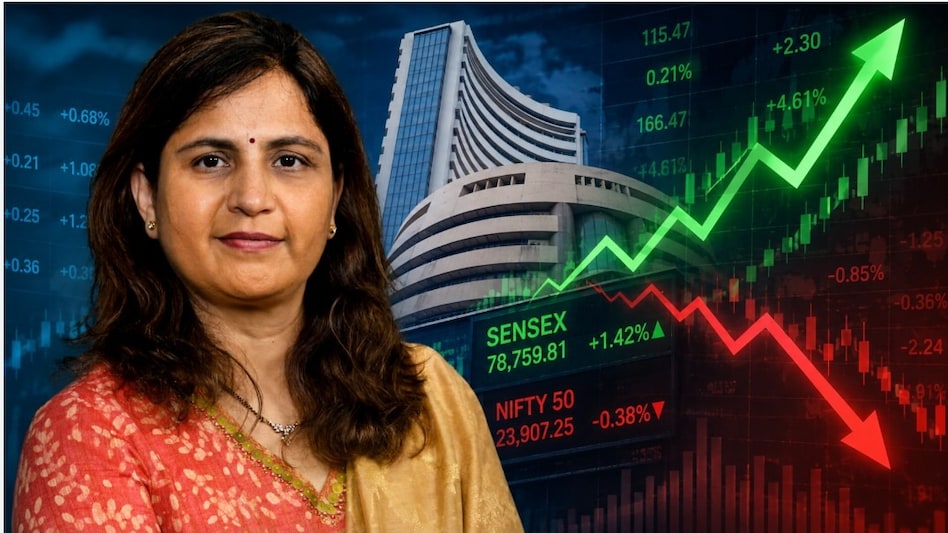
 Radhavi Deshpande, CIO of Kotak Mahindra Life Insurance, remains optimistic like many others, on the medium-term prospects of India’s equity market.
 India’s equity market has been among some of the worst performing markets this year, amid ongoing geopolitical tensions, a massive sell-off by foreign institutional investors and worries over how the war in West Asia will impact India’s economy and government finances. Year-to-date the BSE Sensex is down around 8%, while the NSE Nifty50 has shed 6%. In contrast, the US S&P 500 is up around 11% and the Nikkei 225 has gained over 23%. The Taiwan Index (TAIEX) has jumped 48%.
Radhavi Deshpande, the chief investment officer of Kotak Mahindra Life Insurance, remains optimistic like many others, on the medium-term prospects of India’s equity market. However, strong corporate earnings and reduction in geopolitical tensions among other things will be key to a sustainable market recovery, she stressed.

 India braves global headwinds: Q1GDP surges 7.8% as investment and services fire on all cylinders
  HDFC Bank races to hire search firm for new CEO: Report
 Centre fast-tracks HMT revival plan; ₹2,000 crore package under consideration
  Semicon 2.0 notified: ₹1.27 lakh crore scheme widens India’s chip ambitions
 Defense boost: Tata Advanced Systems signs MoU for Javelin missile co-production
 Midcap Fund Strategy: Where WhiteOak Capital Sees The Biggest Opportunities
 Adani Stocks Fall Sharply: What’s Behind The Sell-Off?
 EMS Stocks: Can India’s Electronics Boom Drive More Gains?
 HDFC Bank CEO Exit: What Investors Should Know About Succession, Governance & Stock Outlook
 Gold & Silver Outlook: Should Investors Buy ETFs After The Big Rally?
 Priority Jewels IPO subscribed 21.23 times on Day 2; check latest GMP, other key details
 Ola Electric shares jump 5%; still down 34% in a year; what's ahead?
 Sensex falls 307 points, Nifty settles below 24,100; what happened today
 Market veteran Ajay Bagga on top sectoral picks; impact of oil prices, monsoon on economy
  Nifty Bank jumps over 600 points in last five minutes; CAS in focusPriority Jewels IPO subscribed 21.23 times on Day 2; check latest GMP, other key details
 Kotak Bank recommends two internal candidates for CEO post: Report
 India’s aerospace push gains momentum as Mahindra Aerostructures bags new Airbus A320 contractMidcap Fund Strategy: Where WhiteOak Capital Sees The Biggest Opportunities
 FM Nirmala Sitharaman Arrives In U.S. For G20 Meet, Carries Her Own Luggage At Airport












