


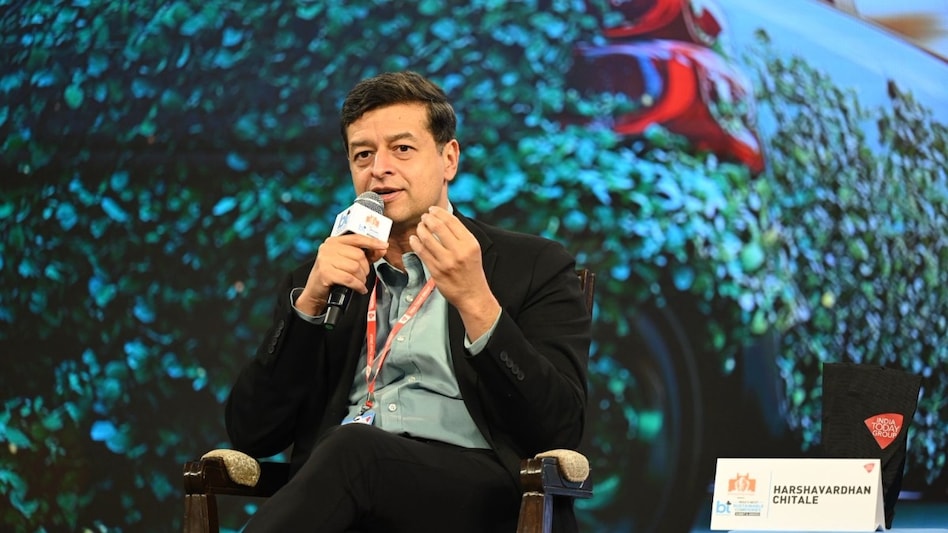
 Addressing consumer concerns around flex-fuel vehicles, Chitale emphasised that the company's newly launched models are designed to offer flexibility.
Sustainability can no longer be confined to manufacturing operations alone and the next challenge is creating sustainable products that reduce environmental impact throughout their usage cycle, Hero MotoCorp CEO Harshavardhan Chitale said in ‘The Eco Drive’ session at BT India's Most Sustainable Companies Summit and Awards.
India's automotive sector will ultimately need large-scale electrification to meet the country's net-zero commitments, believes Chitale. Yet he cautioned that the transition will take time. That reality, he said, makes biofuels an important solution for the near term.
FAQs
Why does Hero MotoCorp see sustainable products as the next big challenge?
Hero MotoCorp says sustainability cannot stay limited to manufacturing alone. The focus now is on creating sustainable products that reduce environmental impact across their full usage cycle, from fuel use to recyclability.
Why are biofuels important for India’s automotive sector right now?
According to CEO Harshavardhan Chitale, large-scale electrification is necessary for India to meet its net-zero goals, but it will take time. In the near term, biofuels offer an immediate and practical way to cut carbon emissions.
How do Hero MotoCorp’s flex-fuel vehicles work?
Hero MotoCorp’s flex-fuel vehicles can run on regular petrol as well as higher ethanol blends. The engine automatically detects the ethanol content and adjusts performance, giving riders flexibility without needing major intervention.
Are flex-fuel vehicles much more expensive than conventional ICE models?
At present, Hero MotoCorp’s flex-fuel vehicles cost around 3-4% more than comparable internal combustion engine models. The company expects this gap to reduce and eventually disappear as volumes rise and the technology scales further.
What progress has Hero MotoCorp made on its sustainability targets?
Hero MotoCorp says it is on track towards carbon neutrality by 2030. The company has reduced carbon emissions by 45% from baseline levels, become 500% water positive, and achieved 95% product recyclability, which is well above the AIS 129 standard of 80%.

 India's $30 trillion goal needs 8-10% growth, $400 billion more annual investment: Jayant Sinha
 BT India@100: ‘India has not lost the AI race,’ says Amitabh Kant, highlights the country’s biggest advantage
 Will Tukaram Mundhe enter politics? Here's what the Maharashtra FDA commissioner said
 Deepinder Goyal’s Temple gets a major redesign, shrinks to 'less than half the size'
 Bitcoin price today: Rs 16 lakh gain just in a week! What led to a sharp rally in crypto market?
 #IndiaAt100 : CM Pushkar Singh Dhami On Uttarakhand’s Industrial Growth & India’s Next Leap
 #IndiaAt100 : Dr. Pawan Goenka On India’s SpaceTech Lift-Off And The Race To 2047
 #IndiaAt100 : P Chidambaram On India’s Growth Dilemma | What Could Hold Back $30 Trillion Dream?
 #IndiaAt100 | India’s Coolest Start-Ups: Meet The Innovators Building Tomorrow
 #IndiaAt100 | The Labour Code For Manufacturing: What Changes For Jobs & Industry?
 Cupid, NTPC Green, NTPC, Raymond Realty, HAL shares: Key technical levels to watch
 Defence stock with Rs 2,654-crore order book hits record high; here's why
  GACM Technologies: FII holding jumps to 29%; penny stock in focus
 Puravankara shares rise 5% on fresh order win
  20 high-conviction ideas for up to 95% upside | stocks to buy
  90% EVs exported out of India are from Maruti Suzuki: MD & CEO Hisashi Takeuchi
 India set to become Hyundai’s No. 2 market ahead of FY30: Tarun Garg
 India’s deep-tech startups face a new test: Crossing the valley of death#IndiaAt100 : CM Pushkar Singh Dhami On Uttarakhand’s Industrial Growth & India’s Next Leap
 Current economic model in India is default: P. Chidambaram












