


 Travelling abroad after July 1? New US, Japan and Vietnam rules to know
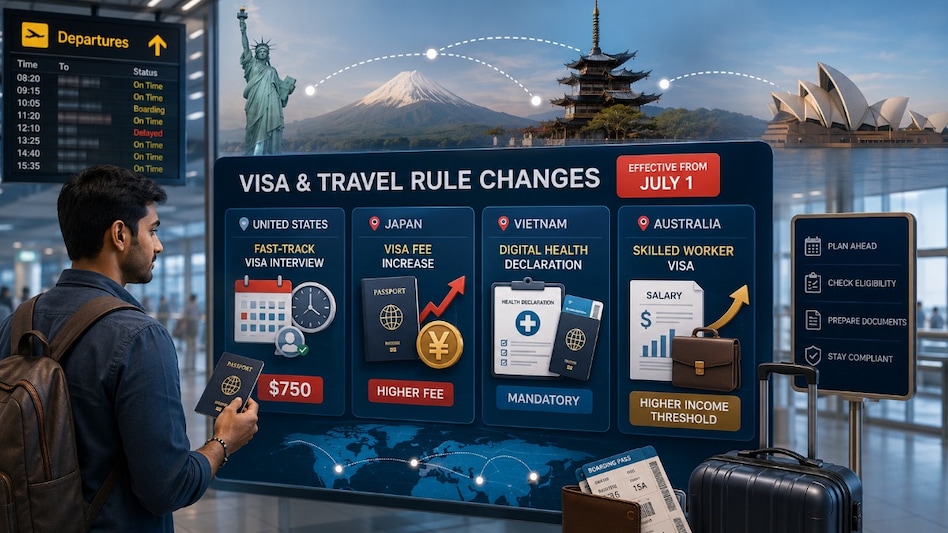
International travel and migration rules will change across four major destinations from July 1, affecting tourists, business visitors, transit passengers and employer-sponsored workers.
The United States will begin charging for faster visitor visa interviews, while Japan will sharply raise visa issuance fees. Vietnam is introducing a health declaration for people crossing its borders, and Australia will increase the minimum salary required for several sponsored-work visa categories.

 NSE IPO: Exchange raises Rs 6,746 crore from 189 anchor investors; LIC, GIC, Fidelity among buyers
 India’s chip push goes global: Semiconductor heavyweights deepen footprint ahead of SEMICON 2026
 NSE IPO opens tomorrow: Brokerage weighs growth prospects, valuation; what GMP indicates
 UPI MDR: No rollback of 0.4% fee above Rs 2,000; govt says move will make UPI self-sustainable
 From Rs 300 to Rs 25,000: How the wage ceiling under EPFO has increased over the years
 “Onion Prices Down 9% In 9 Days”: Nidhi Khare On Availability And ₹35/Kg Retail Sales
 Indian Markets At A Crucial Juncture: Nifty, Crude, Fed & Smallcaps | Jaipuria
 Nifty At 23,200: Crude Oil, U.S. Fed Rate Hike Fears & Market Outlook Explained
 “7.8% Growth Is Not Random”: FM Sitharaman Credits India’s People, Industry And MSMEs
 Indian I.T. Stocks: Why AI Disruption & Weak Growth Are Making Investors Rethink Their Bets
 NSE IPO: 26 crore investor accounts and 3,000+ listed companies — 10 numbers to know
 US Fed rate hike: Why India could face pressure from higher US yields and a stronger dollarNSE IPO: Exchange raises Rs 6,746 crore from 189 anchor investors; LIC, GIC, Fidelity among buyersNSE IPO opens tomorrow: Brokerage weighs growth prospects, valuation; what GMP indicates
 Paytm, KRN Heat Exchanger, Ather Energy, Vishal Mega Mart: Expert shares key entry levels, targets
 Planning Uzbekistan trip? Indians with US, UK, Schengen visas can enter without Uzbekistan visa
 Dadasaheb Phalke Award 2024 goes to Anant Nag: What comes with the prestigious honour?
 Paid ₹2.08 crore for a flat, but promised gym and badminton court were missing: RERA awards ₹10 lakhNSE IPO: 26 crore investor accounts and 3,000+ listed companies — 10 numbers to knowUS Fed rate hike: Why India could face pressure from higher US yields and a stronger dollar












