


 'Contribute more than you take': Trump considers $100,000 bond for US green-card seekers
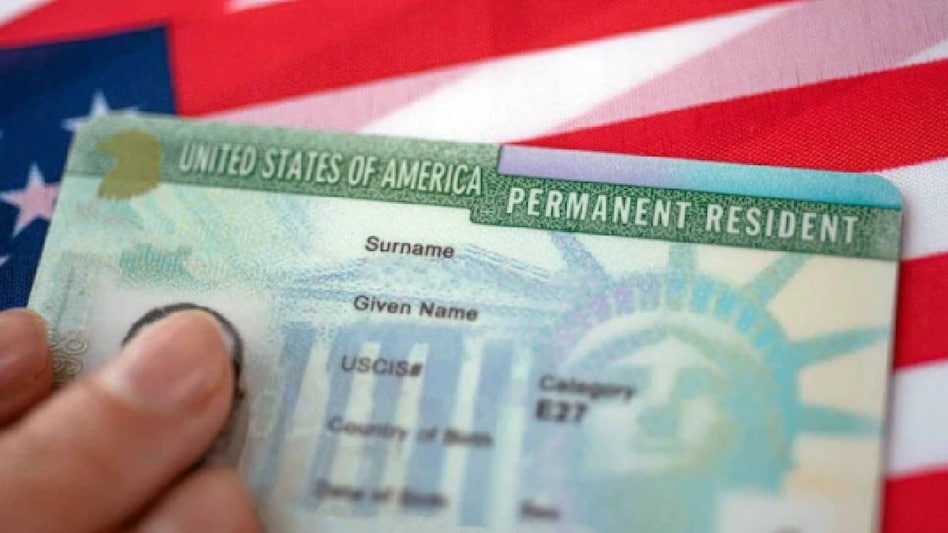
The United States may soon require people seeking permanent residency to put up $100,000 before their green-card application can move forward. The Trump administration is actively weighing the proposal, framing it as a way to ensure that those who obtain lawful permanent residence are capable of supporting themselves without relying on government-funded benefits.
Tommy Pigott, a State Department spokesperson, confirmed the administration was working with the Department of Homeland Security on the measure. He said the goal was to bring "commonsense and effective procedures" to US immigration enforcement, protect public benefits programmes from those who arrive with significant financial needs, and restore what the administration describes as the integrity of the system.
Pigott said the proposal would draw on authority that already exists within the Immigration and Nationality Act — a provision that allows the government to require individuals who might otherwise be deemed likely to become a public charge to demonstrate financial capacity by posting a bond. Under this arrangement, the money would be collected upfront from the applicant or from family members already living in the US, and returned at a later point.
What applicants currently pay
To put the proposed figure in context: someone applying for a green card from within the US currently pays $1,440 to file the primary application form, with further charges for work authorisation and travel documentation in many cases. Those going through consular processing abroad pay around $325 for the visa application itself, followed by a separate $235 processing fee once the visa comes through. A $100,000 bond would exceed all of these costs by a significant margin.
Not the first attempt at a financial threshold
This is not the first time the Trump administration has tried to place a large financial barrier in the path of would-be immigrants. Earlier, it moved to attach a $100,000 fee to applications for H-1B visas, the category that lets American employers bring in overseas talent for specialised roles, most commonly in technology. A federal judge blocked that move, ruling that the administration had overstepped its powers and effectively taken over a function, setting immigration fees and policy, that belongs to Congress. H-1B visa holders are temporary residents, unlike green-card holders who gain permanent status.
A smaller version already running
The bond idea is not entirely new. Since last August, nationals from Malawi and Zambia applying for US visas have been required to put up $15,000 upfront, which is forfeited if they overstay their permitted period or seek to change their immigration status after arrival, for example, by applying for asylum. The requirement has since been extended to around 50 other African countries.
Administration officials cited the scheme as a success, pointing to figures suggesting that 97 per cent of visa holders from those countries did not overstay. However, State Department officials acknowledged a separate consequence: the number of visas being issued to applicants from those countries has also fallen.
Pigott suggested that a broader bond programme would effectively create an alternative route for those with the means to use it — giving financially secure applicants a way to demonstrate their self-sufficiency and move forward with their applications. What it would mean for those without that kind of liquidity, the proposal does not address.

 No proposal to abolish LTCG on listed equities: Govt in Lok Sabha
 YES Bank, IndusInd Bank: Two widely-tracked largecaps with highest downside potential
 Jio Platforms Q1 results: What analysts value RIL's IPO-bound arm at; key triggers ahead
 Fake airline jobs, fake insurance payouts: Noida police bust call centres targeting job seekers
 'Dipke has been picked up by the police': CJP alleges crackdown as Delhi protests erupt
 Jupiter Hospital Opens Dombivli Unit As It Targets A 3,000-Bed Network
 Best Midcap & Small Cap Mutual Funds to Buy Now | Expert Reveals Top Picks
 Nagarro Will Help Create A $2.9 Bn AI-Led Digital Engineering Giant: Persistent Systems CEO
 EXCLUSIVE: Skyroot CEO Reveals Vikram-1 Journey, India's Private Space Dream Comes True
 Daily Calls: Ask Your STOCK MARKET TODAY QUERIES | Market Update LIVE | Share Market News Today
 HDFC Bank shares tumble after Q1 results: Should investors buy the dip or stay away?Jio Platforms Q1 results: What analysts value RIL's IPO-bound arm at; key triggers ahead
 Why cement stocks are rising despite India’s construction boomYES Bank, IndusInd Bank: Two widely-tracked largecaps with highest downside potential
 Tatva Chintan Pharma shares hit upper circuit; ICICI Securities shares price target









