









 US Supreme Court upholds 2015 rule, allowing spouses of H-1B holders to work in the US

 US Supreme Court upholds 2015 rule, allowing spouses of H-1B holders to work in the US
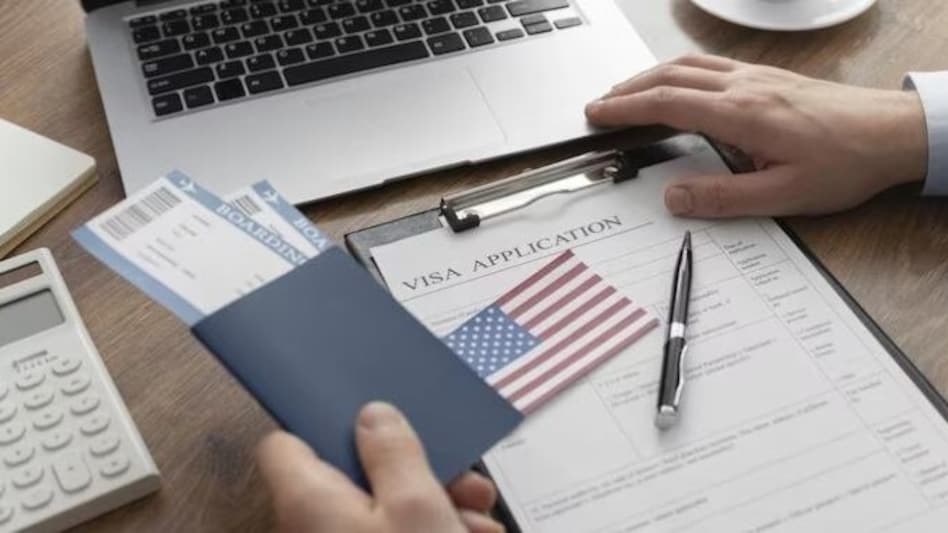
Securing a U.S. visa is often a complex journey, but for many families of skilled workers, the H-4 visa provides an important pathway. Designed for dependents of H-1B visa holders, the H-4 visa allows spouses and children under 21 to accompany the primary visa holder to the U.S. However, recent developments in immigration policy, including a critical Supreme Court decision, have raised questions about the rights and work authorisation of H-4 visa holders.
What is the H-4 Visa?
The H-4 visa is a dependent visa issued to the spouse and unmarried children under the age of 21 of certain nonimmigrant workers. This includes the spouses and children of H-1B, H-1C, H-2A, H-2B, and H-3 visa holders. The H-4 visa allows them to live in the U.S. for the duration of the primary visa holder’s authorised stay. Importantly, it also permits H-4 holders to study in the U.S. and apply for employment authorisation, subject to specific conditions.
Who Is Eligible for an H-4 Visa?
To be eligible for an H-4 visa, the following criteria must be met:
Spouses of individuals holding valid H-1B, H-1C, H-2A, H-2B, or H-3 visas.
Unmarried children under 21 years of age of individuals holding any of the aforementioned work visas.
Eligibility for an H-4 visa also depends on the primary visa holder being in valid, lawful status and demonstrating they can financially support their dependents. Additionally, applicants must have no criminal record that would make them inadmissible to the U.S.
How Much Does the H-4 Visa Cost?
As of now, the government filing fee for the H-4 visa is $205. This fee is subject to change, so applicants should always confirm the current fee with the U.S. Embassy or consulate.
Processing Time and Work Authorisation
H-4 visa processing times vary by embassy or consulate. Applicants must wait for the primary visa holder’s approval before their H-4 visa can be processed. Additionally, an H-4 Employment Authorisation Document (EAD) can be applied for by filing Form I-765, which allows the visa holder to work in the U.S. The average processing time for an H-4 EAD is 4.25 months when filed with an H-4 status change and 6.25 months for a standalone EAD.
The Supreme Court’s Ruling and Its Impact
The Supreme Court's recent decision has upheld the Obama-era 2015 ruling that allowed spouses of H-1B visa holders to apply for work authorization through the H-4 visa. The case, brought forth by Save Jobs USA, argued that the Department of Homeland Security (DHS) exceeded its powers by granting work rights to H-4 visa holders. The petition sought to overturn the decision by the U.S. Court of Appeals for the D.C. Circuit, but the Supreme Court declined to take up the case, effectively upholding the ruling.
This decision has significant implications for families of H-1B visa holders, as it ensures that spouses can continue to seek employment in the U.S., a crucial aspect for many households. However, the ruling is part of the broader debate on the future of the H-1B visa program, with both the Trump administration and others pushing for more restrictions.
The Bigger Picture: The H-1B Visa Program and its Critics
The H-1B visa program, which allows U.S. employers to hire foreign workers for specialised positions, has been a subject of contention. Critics argue that it displaces American workers by allowing companies to hire cheaper foreign labor, particularly in fields like technology. The Trump administration’s attempts to limit the program, including a proposed $100,000 fee for employers hiring new H-1B workers, have sparked heated debates.
Although the Biden administration has paused efforts to repeal the H-4 work authorisation rule, concerns about visa regulations continue to grow. Many advocates for workers and families argue that the H-1B program needs reform but also emphasize the importance of ensuring the rights of H-4 visa holders.
What Lies Ahead?
As the U.S. government continues to navigate the complexities of immigration policy, the future of the H-1B and H-4 visa programs remains uncertain. However, for now, the Supreme Court's ruling is a significant victory for families, granting clarity and protection to spouses of H-1B workers seeking employment authorisation.
Indian nationals, in particular, who make up a large portion of the H-1B workforce, continue to be a critical part of this conversation. With the ongoing adjustments to visa and immigration policies, these decisions will play a crucial role in shaping U.S. immigration policy and its effects on global talent mobility.
 Income tax deadlines in July 2026: From TDS deposits to ITR filing, key dates to know
 Oyo-parent PRISM files UDRHP for IPO: Why unlisted shares remain flat despite profitability
 Relief for taxpayers: Govt extends last date for filing appeals before GST Appellate Tribunal
 Cabinet reshuffle around the corner? PM Modi calls top bureaucrats for high-stakes meeting
 'Met for 2 hours. He started writing equations': Gita Gopinath names the world leader who left a lasting impression on her
 Market Expert Sudip Bandyopadhyay Reveals His Top Pharma Bets For The Next Big Rally
 Why Pharma Could Be India's Next Multibagger Sector | Expert Explained
 IBM CEO Arvind Krishna: India's Growth Mirrors Japan & Korea, A Global Strategic Bet For AI
 EV Stocks Outlook: Ather Energy, Maruti Suzuki & Tata PV In Focus After Delhi ICE Ban Buzz
 Vijay Vs Stalin Family: Tamil Nadu Assembly Clash Turns Personal Amid Political War
 Oyo-parent PRISM files UDRHP for IPO: Why unlisted shares remain flat despite profitability
 KEC International shares rise 7% on fresh order win, check order book size
  Why did Eicher Motors share tumble nearly 7% today?
 Multibagger stock: Rs 2,500-crore fundraising plan gets board's nod, check share reaction
 Delhi EV policy: Tata Motors PV, Ather, M&M among key gainers; likely losers explained