

 Economists are now closely studying the Middle East crisis trajectory and comparing previous conflicts in the region to determine the potential scale of economic repercussions.
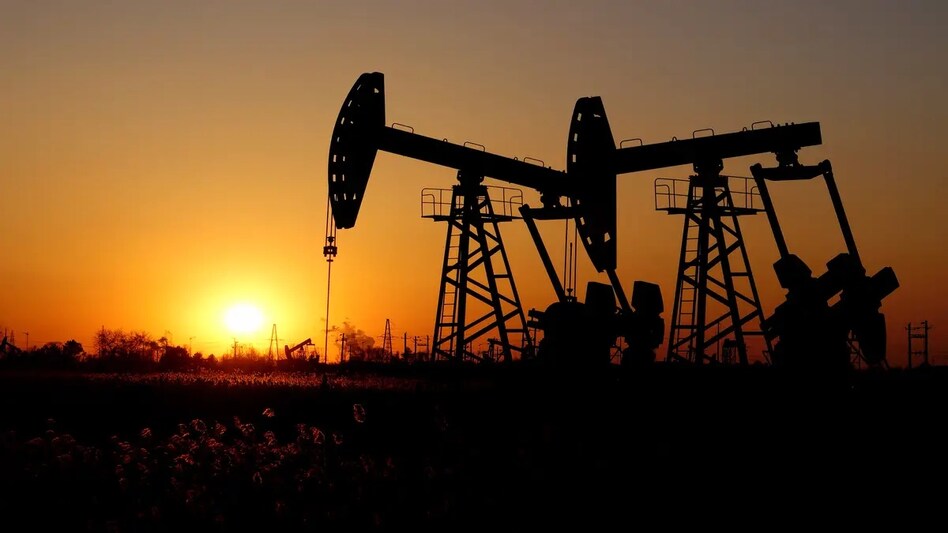
 Crude oil prices have always been sensitive to political tensions in the Middle East, a region that boasts the world's greatest oil wealth.
The impact of the ongoing conflict between Israel and Hamas on global commodity markets has been limited so far. Ever since the outbreak of the Israeli-Hamas crisis, oil prices have risen about 6 per cent while most industrial metals, agricultural commodities, and other commodities have exhibited little to no price fluctuations.
This has been the case up until now. But as the war wages on and as Israel’s military expands its ground activity in Gaza, oil prices have been on a rising spree in the last two weeks. This has set off an alarm among economists and policymakers, reviving concerns about the war disrupting global supply chains and commodity markets.
Economists worldwide have already been drawing up strategies to combat inflation brought on by the Russia-Ukraine war. An invasion that has left a lasting impact on the global economy, causing ongoing disruptions to this day. Economists are now closely studying the Middle East crisis trajectory and comparing previous conflicts in the region to determine the potential scale of economic repercussions.
Are we headed for a severe oil price shock?
World Bank’s latest study confirms our worst fears. According to the World Bank’s quarterly Commodity Markets Outlook report, if the conflict between Israel and the militant group from Palestine intensifies, the global economy will be up against a massive energy shock for the first time in decades. These outcomes are a result of the aftermath of Russia's recent war with Ukraine as well as the ongoing crisis in the Middle East.
The World Bank urges that a prolonged Israel-Hamas conflict risks a repeat of the 1970s oil price crisis. Although Israel and the Palestinian territories are not significant oil producers, the conflict is situated within a broader, oil-rich region. Following the outbreak of the latest conflict, the Brent benchmark—the pricing standard for over three-quarters of the world's traded oil, surpassed $89. Globally, oil prices are anticipated to average $90 per barrel for the current quarter.
On Monday, the World Bank issued a warning, stating that a further escalation of tensions in the Gaza Strip with potential spillover into a wider Middle East conflict, might result in oil prices skyrocketing by more than 75 per cent. Under the worst-case scenario, should key producers such as Saudi Arabia cut supplies—this might lead to oil prices reaching an all-time high of $157 per barrel. In what the World Bank describes as a “large disruption” scenario, similar in magnitude to the Arab oil embargo of 1973—the global oil supply could shrink by 6 million to 8 million barrels per day. A staggering drop from the current global oil consumption, which stands at roughly 102 million barrels each day.
The knock-on effects on the global economy
 Infosys, Tech Mahindra, TCS, Wipro: Why IT shares are down in a rising market today
  AI safety or market control? Anthropic, OpenAI, Google SpaceXAI accused of slowing AI progress
 Cyber hits to fake news: Vaishnaw warns of foul play against India’s semiconductor push
  Raymond, Welspun Living, Alok Industries shares rise up to 8%; here's why
  IIT-B prof to be summoned by police; Director signs 18-point charter amid students’ demands
 India’s Credit Growth Surprises At 18-19%: Christopher Wood On CapEx | Jefferies Forum 2026
 MG Hector Tomahawk EV Review | 517km Range, 7 Seats, Performance & Ride Quality | MG’s Best SUV Yet?
 Gold Price Target 2026: Expert Sees MCX Gold At ₹1.8 Lakh By Year-End Amid Strong Demand
 Health Insurance: Why Pre-Existing Diseases And Waiting Periods Matter For Buyers
 Crude Oil Above $100: How High Energy Prices And Rupee Weakness Impact Gold Prices In India
 NSE IPO: What sets India’s second-largest issue apart? A token sale
 NSE IPO: India's largest exchange gets 1.73x subscription on Day 3 so far; retail portion booked 94%
 SAMIL shares: Stock fall 2%; company buys 50.1% stake in aerospace & defence firm
 Airtel, NOCIL, Acutaas among top stocks to buy for short-term gains; check target prices & details
 Dilip Buildcon emerges L-1 bidder for Rs 1,265 crore transmission project; stock reactsNSE IPO: What sets India’s second-largest issue apart? A token sale
 Smokers Pay Up to 100% More for Term Insurance in India: Here's What You Need to Know Before You Buy
 Critical milestone for nuclear sector: NPCIL commences geotechnical investigation for 2 more projects in Rajasthan
 Planning to visit Canada this year? All you need to know from eTA, visa to processing time, visitor visaIndia’s Credit Growth Surprises At 18-19%: Christopher Wood On CapEx | Jefferies Forum 2026












