


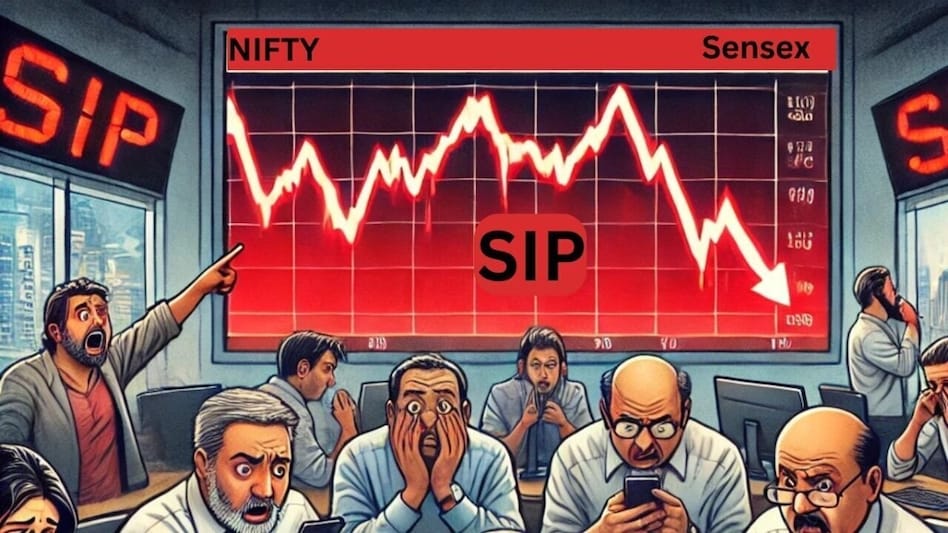
 Financial experts emphasize the importance of maintaining SIPs during market downturns. Continuing investments during such periods allows investors to benefit from rupee-cost averaging.
In March, the mutual fund sector in India saw a significant shift with the closure of 5.1 lakh Systematic Investment Plans (SIPs). This surge in closures brought the stoppage ratio to an unprecedented 127.5%. This figure indicates the percentage of SIP closures against new registrations, points to a concerning trend where more investors are opting to discontinue their systematic contributions. The rise in the closure of SIPs this month surpasses figures seen in previous months, suggesting potential investor apprehension about the current market conditions.
SIPs have been a favoured investment vehicle among retail investors in India, providing a disciplined approach to investing in mutual funds. However, the recent increase in closures could be attributed to several economic factors, including market volatility. Fluctuations in financial markets may have negatively impacted investor sentiment, prompting them to reassess their investment strategies. This trend raises concerns about the growth prospects and stability of the mutual fund industry, as sustained closures could impact overall fund inflows.

 US diesel price hits record $6.49: How much prices have surged since Hormuz crisis
 AI agents are coming for every day tasks: What Goldman Sachs sees for the next AI growth wave
 Escalating Houthi-Saudi clashes trigger fresh US travel warning across West Asia
 French fuel crisis deepens as one in nine stations run out of stock, diesel prices at record high
  'Enjoy the journey, do not turn confidence into arrogance': Chandrasekaran on life lessons
  Gold Price Target 2026: Expert Sees MCX Gold At ₹1.8 Lakh By Year-End Amid Strong Demand
 Health Insurance: Why Pre-Existing Diseases And Waiting Periods Matter For Buyers
 Crude Oil Above $100: How High Energy Prices And Rupee Weakness Impact Gold Prices In India
 CEA On India’s Manufacturing Rise, Atmanirbhar Bharat And Modi’s Economic Policy
 Health Insurance Buying Guide: 7 Things First-Time Buyers Must Check Before Choosing A Policy
 Tata Motors or Ashok Leyland? Analyst reveals his preferred auto stock for near-term gains
 Maharashtra Scooters, Dixon Tech, Bharat Dynamics, Jai Corp among stocks to turn ex-dividend on Monday
 Jindal Supreme, SS Retail, Hero Motors IPOs subscribed up to 181 times on final day; details here
 Sensex, Nifty post sixth weekly loss; TCS, Titan among top laggards, slip up to 4%
 How AI collapse could benefit Indian equity market; Jefferies' Christopher Wood explains Gold Price Target 2026: Expert Sees MCX Gold At ₹1.8 Lakh By Year-End Amid Strong DemandTata Motors or Ashok Leyland? Analyst reveals his preferred auto stock for near-term gainsMaharashtra Scooters, Dixon Tech, Bharat Dynamics, Jai Corp among stocks to turn ex-dividend on MondayHealth Insurance: Why Pre-Existing Diseases And Waiting Periods Matter For Buyers
 Delhi SIR: 33.1 lakh voters get notices; Arwind Rekha Gupta, Kejriwal face scrutiny too












