









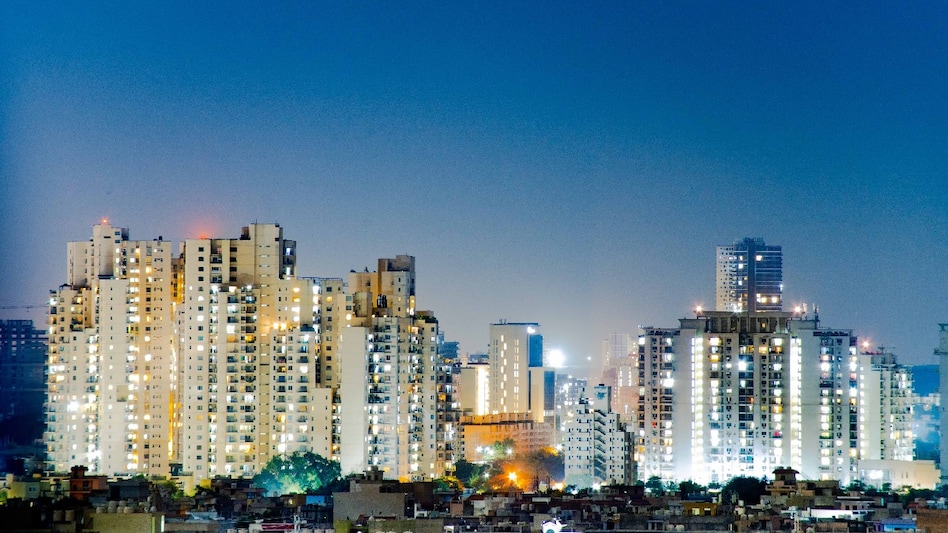
 Gurgaon, which is part of the region, witnessed an 84 per cent increase, with rates going from Rs 6,150 per sq. ft. to Rs 11,30, according to ANAROCK.

 Gurgaon, which is part of the region, witnessed an 84 per cent increase, with rates going from Rs 6,150 per sq. ft. to Rs 11,30, according to ANAROCK.
Dubai flexes. Gurgaon compounds. It’s a shift the ultra-wealthy have already started making—and one that ordinary investors should watch closely before it’s too late, warns CA Nitin Kaushik.
Right now, all the buzz might be about Dubai. Glossy skyscrapers, luxury waterfront apartments, and a lifestyle that looks spectacular on Instagram. But the serious capital—the kind that builds generational wealth—is moving to Gurgaon, quietly but at breakneck speed.
Take Zomato co-founder and CEO Deepinder Goyal. He recently registered ownership of a sprawling ultra-luxury apartment in Gurugram’s DLF Camellias for Rs 52.3 crore, as confirmed by real estate analytics firm Zapkey. Though acquired in August 2022, the conveyance deed was only finalized in March 2025, attracting Rs 3.66 crore in stamp duty.
The apartment itself spans a massive 10,813 sq. ft. of super built-up area and comes with five dedicated parking bays, signaling its ultra-premium positioning. Market insiders estimate the current value of a similar asset in DLF Camellias at Rs 125–Rs 150 crore—more than double Goyal’s purchase price.
The sale in DLF Camellias also points to the ongoing surge in the luxury real estate market in Delhi NCR. According to real estate consultancy JLL, Delhi NCR accounted for an impressive 64% share of luxury residential launches across India’s top seven cities in the first half of 2024. This surge reflects growing demand and a booming market for ultra-luxury homes in the region.
“This is what most investors are missing,” says Kaushik.
Dubai real estate: All shine, less yield
Despite its glitz, Dubai’s property market carries hidden risks:
Rental yields hover around a modest 5%.
Hidden costs—Dubai Land Department fees, NBD taxes, agent commissions—often exceed 20%.
Luxury oversupply threatens long-term appreciation.
Foreign ownership faces legal and regulatory red tape, including Emiratisation laws.
“It looks great for your Instagram feed, but not for your balance sheet,” Kaushik points out.
Gurgaon: The billionaire’s new playground
By contrast, Gurgaon’s real estate market has become the silent favorite of India’s wealthiest investors and global private equity funds:
DLF stock has soared 170% since 2020.
The Dwarka Expressway has appreciated 8x in seven years.
Westin Residences commands ₹2 crore resale bids—even before launch.
Gurgaon’s real estate market now exceeds ₹1.8 lakh crore and is growing.
Gurugram's real estate market is currently experiencing a surge, particularly in areas with good infrastructure and connectivity. The city is witnessing a sharp rise in property prices and growing demand for both residential and commercial spaces. Several factors fuel this boom, including ongoing infrastructure projects like the Dwarka Expressway, metro expansions, and Gurgaon’s status as a major IT and business hub.
Average residential property prices in the National Capital Region surged by 81% between Q1 2020 and Q1 2025, according to real estate consultancy ANAROCK. Gurgaon, as a key part of the region, outpaced the average with an 84% increase, rising from ₹6,150 per sq. ft. to ₹11,300.
A snapshot of residential prices in Gurugram shared by real estate platform NoBroker shows:
1BHK: Rs 48 lakh
2BHK: Rs 89 lakh
3BHK: Rs 3.7 crore
4BHK: Rs 5.2 crore
Interestingly, Gurugram saw its sharpest year-on-year price jump in 2024, with average residential rates rising 30%—from ₹7,660 per sq. ft. in 2023 to ₹9,980 in 2024. The spike was largely driven by a surge in new launches in the luxury segment (priced above ₹1.5 crore), according to ANAROCK.
Big money isn’t waiting. They’re positioning early—before Cyberhub 2.0 opens, before the bullet train corridor arrives, before new infrastructure lights up demand.
So who wins in the Dubai vs Gurgaon faceoff?
Dubai dazzles, but it’s fragile—heavily dependent on global sentiment. Gurgaon, meanwhile, may be chaotic, but it’s compounding—driven by India’s next-decade growth.
As Kaushik sums up: “Dubai is built to impress. Gurgaon is built to grow. Smart money knows the difference. You should too.”
 EPFO revamps Unified Member Portal; UAN activation shifts to UMANG: What it means for subscribers
 NSE issues investor advisory against 'dabba', illegal trading services: What it means
 No more 2-day WFH, staggered timings for Delhi govt employees: Rekha Gupta
 'We gave them a week off': Trump takes swipe at Iran during July 4 speech
 Online food delivery isn't slowing down: Why Indians are ordering more than ever
 Exposed: How Deadly Zinc Phosphide Is Being Sold Online With Weak Checks
 Persistent CEO Explains Why Nagarro Was The Perfect Global Acquisition For The Company
 Can A Kill Switch Exist In Electric Vehicles? Here’s What EV Owners Should Know
 Persistent Systems CEO Sandeep Kalra Says Nagarro Acquisition Will Drive Long-Term Growth
 Tech Gear Show | Latest Tech News, Moto Razr Fold Review, Sony INZONE H6 Air, OnePlus Nord Buds 4 | EP 9
 Tata Power, Adani Power: Short-term trading strategy for these power stocksNSE issues investor advisory against 'dabba', illegal trading services: What it means
 Sensex, Nifty extend winning streak to 3rd day; investor wealth jumps over Rs 6.1 lakh crore
 L&T, Ashok Leyland and MCX: How to trade these 3 buzzing stocks?
 HCLTechnologies shares extend gains, climb nearly 8%: Two factors behind today's rise