


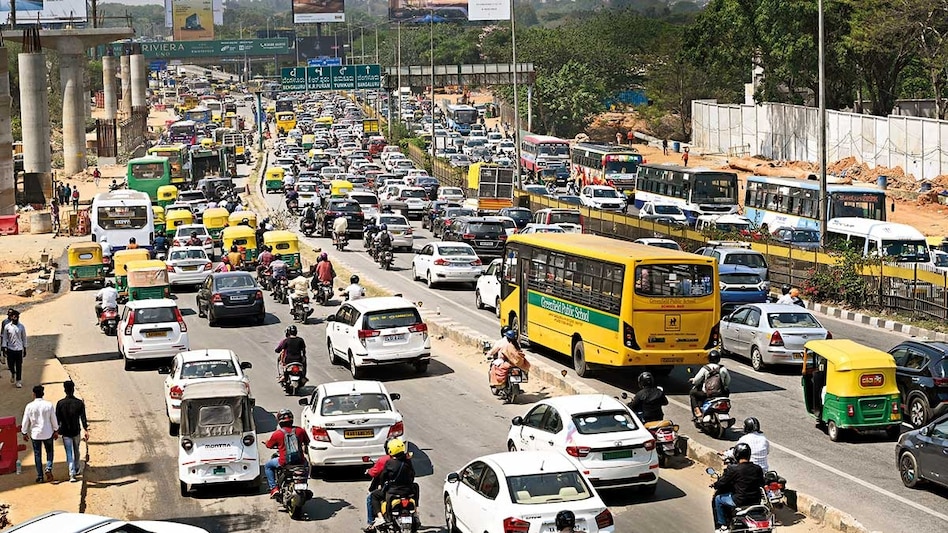
 Bangalore continues to dominate India’s flex market, accounting for 31% of total stock, buoyed by its mature tech ecosystem and diverse occupier base.
 India’s flexible workspace industry is witnessing unprecedented growth, driven by strong corporate adoption and evolving workplace strategies, according to the Flex Office Market in India 2025 Report by myHQ by ANAROCK. The report reveals that India is poised to surpass other Asia-Pacific markets to become the region’s largest flexible office sector, with flexible workspaces now accounting for nearly 20% of all commercial leasing nationwide.
“Flexible workspace has moved from cost optimisation to a strategic essential,” said Utkarsh Kawatra, CEO and Co-Founder of myHQ by ANAROCK. “Corporate deal sizes have risen significantly this year from an average of around 63,000 sq. ft. in 2024, as organisations increasingly prioritise agility and scalability. As India crosses the 100-million-square-foot mark next year, we’re building the infrastructure for how modern India will work and grow.”

 BT Big Story: Why India Inc is warming up to non-English-speaking executives
  G20 Summit: PM Modi expected to travel to US; bilateral with Trump likely on the cards, say sources
 Tata Sons IPO battle: Why Shapoor Mistry has so much at stake
 India’s imports of Russian crude fell in August; could fall further in September: Report
 Google offers free AI Plus and AI Pro to university students: Here’s how to claim it
 Macro Volatility Vs Earnings: Why Earnings Matter More Than Valuations | Anshul Saigal
 India’s CDMO Opportunity: Anshul Saigal Spots Underappreciated Names
 IT Stocks Under Pressure: What Next For Indian Markets? | Chakri Lokapriya
 Karnataka’s Welfare Schemes Under Pressure As Finance Department Flags New Challenges
 Family Disputes Can Hold Businesses Back: Nirmala Sitharaman’s Message To Family Firms
 ESDS shares surge 302%, emerge as second-best new listing; stock that tops the list
 Finolex Cables, United Spirits, Black Box: Stocks to trade — Key levels, target prices & stop loss
 GIFT Nifty down 45 pts; Adani shares, Hero Motors, Persistent, IRB Infra, among top stocks in focus
 Voltas shares: Nuvama upgrades rating after analyst meet; check target price
 Tata Steel, SOIL, IDFC First Bank, MMFSL: Share price targets hint at 20-24% upside ESDS shares surge 302%, emerge as second-best new listing; stock that tops the listMacro Volatility Vs Earnings: Why Earnings Matter More Than Valuations | Anshul Saigal
 Govt may consider auto PLI applications from firms with Chinese investments: ReportFinolex Cables, United Spirits, Black Box: Stocks to trade — Key levels, target prices & stop loss
 LPG, CNG, PNG prices today (September 23): Check latest rates in Delhi, Mumbai, Kolkata, other cities












