















 Big-tech companies will drive co-living segment occupancy, experts say
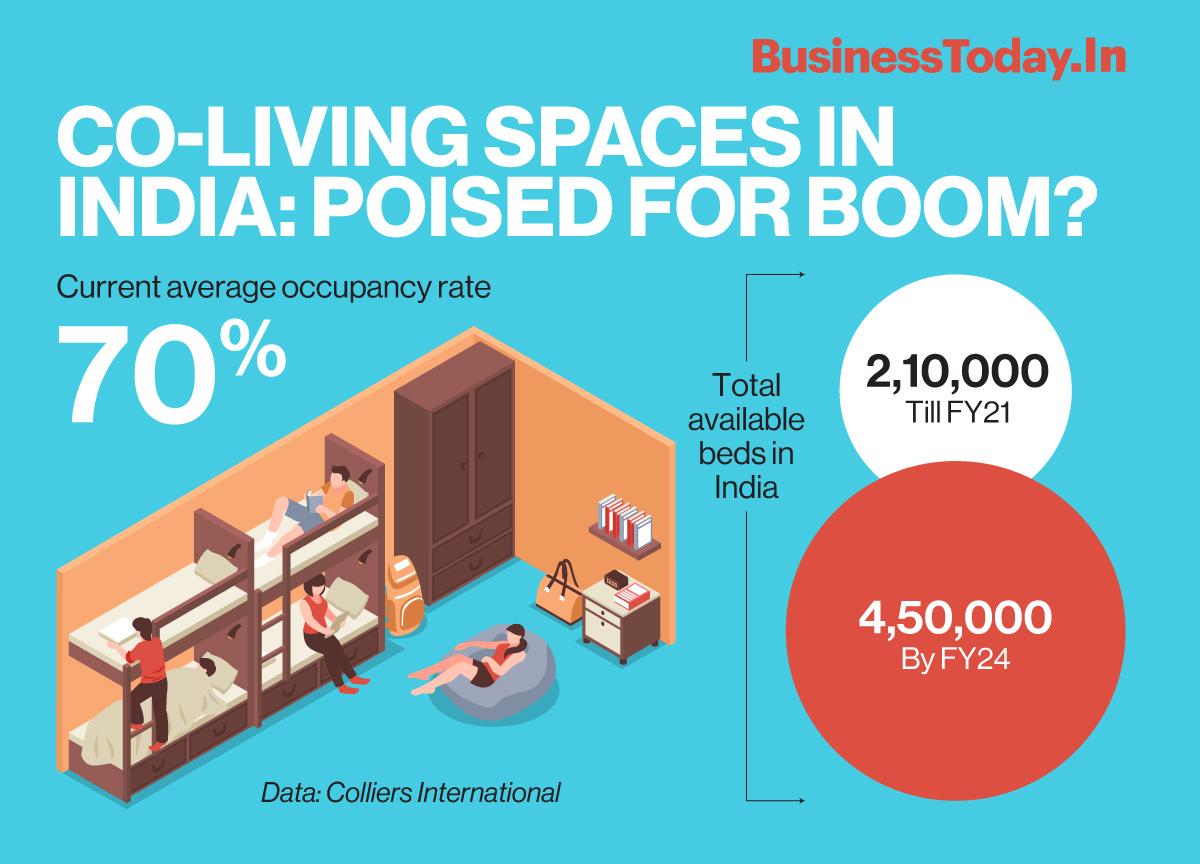
 High-attrition in big-tech companies and a prolonged work from home (WFH) arrangement could continue to impact co-living spaces on an average, even as the segment has been witnessing a 70 per cent occupancy rate across India since Q4 2021.
A report released by Colliers on the co-living segment had earlier predicted that co-living accommodation is likely to shoot up to 4,50,000 beds by 2024 as opposed to 2,10,000 beds by end of 2021.

 HDFC Bank succession: Why the new MD and CEO will have to address multiple challenges
 E20 row: Supreme Court refuses petition seeking direction for disclosure of percentage of ethanol content in petrol
 Zomato to layoff 250 employees; shuts Hyderabad customer support centre
 This RIL-backed stock hits fresh 52-week low; shares plunge 25% in five sessions
 Tata Communications shares rise 30% from 52-week low: Three triggers for the Tata Group stock
 Nepal Floods Ground Report: Towns Flattened, Thousands Missing As Rivers Unleash Devastation
 India GDP Growth Seen At 7.2%: Ajay Bagga's Take On Slowdown, Oil Shock & Monsoon Risks
 RSS Chief Mohan Bhagwat's Big Hindu-Muslim Message In New York Sparks Political Debate
 MSCI Rebalancing Today: Laurus Labs, Lenskart, Adani Energy & Grow In Focus
 Nepal Flood Horror: +900 Dead, Many Missing As Bhote Koshi Surges Again | India Steps In
 Sensex, Nifty down 8-10% in 2026; this factor needs investor attention
  Samvardhana Motherson offers 'buy on dips' opportunity; CAMS may reward patient investors, says analyst
 NCDEX to launch Chennai rainfall futures from Monday; expands India’s weather derivatives market
 FIIs remain net buyers for second straight month in August, here's what analysts say
 Sugar stocks: Balrampur Chini, Bajaj Hindusthan, Shree Renuka, Uttam Sugar Mills jump; here's why
 Divya Mittal's letter should be inscribed in stone at LBSNAA: Ex-MP after UP-cadre IAS officer quitsSensex, Nifty down 8-10% in 2026; this factor needs investor attention Samvardhana Motherson offers 'buy on dips' opportunity; CAMS may reward patient investors, says analyst
 SBI Card loses ground while ICICI rebounds: How India’s biggest card issuers performed in July
 Elon Musk says AI could become superhuman by 2027, perform almost anything in the digital world


