


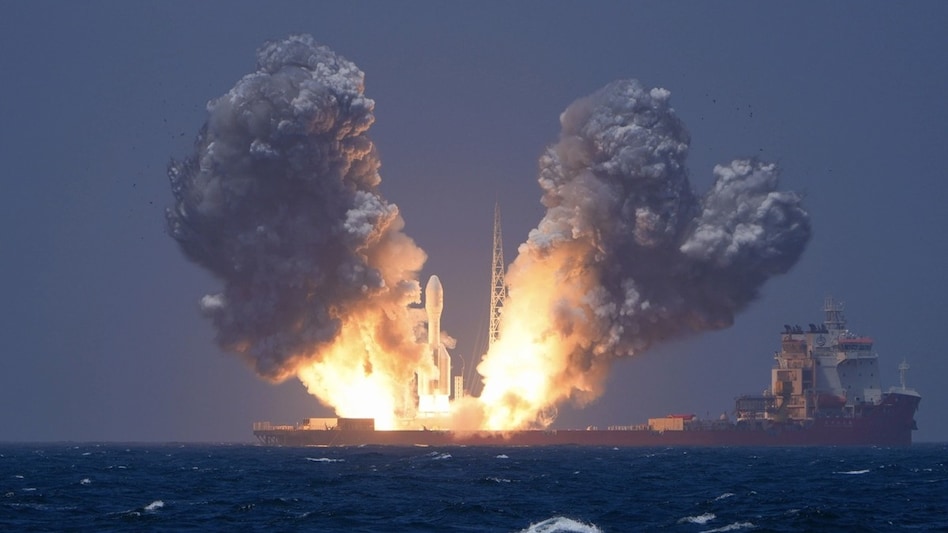
 The Gravity-1 launch vehicle takes off from the Oriental Aerospace Port launch vessel. (Photo: Courtesy of the Haiyang Aerospace Industry Development Center)
At 10:54 a.m. on Wednesday, ignition exhaust erupted over the open waters of the East China Sea as the Gravity-1 rocket roared off a mobile deck, piercing the sky and successfully deploying nine satellites into orbit alongside an experimental payload.
Directed by the Taiyuan Satellite Launch Center, the liftoff marked China's first far-sea launch of a private commercial rocket and the third sea-based mission for the Gravity-1 platform, as per a Global Times report.

 HDFC Bank shares rise, snap 2-day fall; LIC gets RBI nod to raise stake to 9.99%
 Zerodha to bring mutual funds to Kite soon: What investors need to know about the upcoming feature
 Moderna-Merck personalised cancer vaccine takes step closer to market after trial success, could be available next year
 Aditya Birla Capital shares jump 3% amid entry into gold loan business; details here
 Mumbai food safety alert: Rats entering hotel kitchen through drain? FDA flags major hygiene lapses, suspends licence
 Why Is Pixel 11 More Expensive? Google Explains | Mitul Shah Interview
 SEBI To Issue AI Rules For Markets, F&O Trading, CAS & SME IPOs Under Regulator’s Watch
 Bond Yields Hit Multi-Year Highs: Could Rising Oil & Weak Rupee Trigger A Market Correction?
 Medical Inflation At 8-10%? Niva Bupa On Rising Hospital Costs & Transparency
 Can AI Make Health Claims Faster & Simpler? NIVA Bupa Explains
 MGL, IGL, Gujarat Energy shares: CGD to benefit most amid additional APM gas incentive
 Sixth PIL: 'Opportunity bigger than Rs 3,070 crore'; HAL, BEL, BDL top beneficiaries
 Glenmark Pharma shares rise 3% as nasal spray gets USFDA approval
  Balrampur Chini, Bajaj Hind, Shree Renuka shares rise up to 13%; here's why
  L&T shares rise after bagging large APM System order for Dubai's Al Maktoum AirportWhy Is Pixel 11 More Expensive? Google Explains | Mitul Shah InterviewSEBI To Issue AI Rules For Markets, F&O Trading, CAS & SME IPOs Under Regulator’s WatchBond Yields Hit Multi-Year Highs: Could Rising Oil & Weak Rupee Trigger A Market Correction?Medical Inflation At 8-10%? Niva Bupa On Rising Hospital Costs & TransparencyCan AI Make Health Claims Faster & Simpler? NIVA Bupa Explains












