


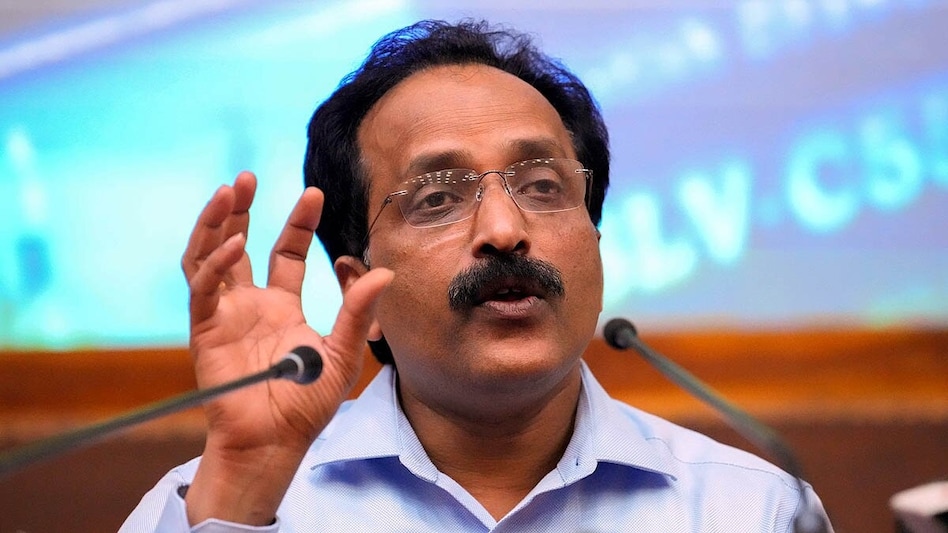
 Former ISRO chief S Somanath
 Former ISRO chief S Somanath on Thursday said that Indian astronaut Shubhanshu Shukla's presence on the Axiom-4 mission "will significantly bolster our Gaganyaan mission," marking a crucial step for India's human spaceflight program. As the Ax-4 capsule closes in on the International Space Station (ISS), Somanath described it as a moment where "India is not just a passenger...we are a partner, a participant, and a future-ready crew."
Shubhanshu Shukla on Wednesday became the first Indian astronaut to travel to the ISS, joining three other crew members aboard Axiom Space’s commercial Ax-4 mission. The spacecraft lifted off from NASA's Kennedy Space Centre in Florida at 12:01 pm IST, with live watch parties held across the world — including in Shukla's hometown Lucknow, where his parents viewed the launch from City Montessori School.

 'Majority among two is two': Tata Trusts says Chandrasekaran reappointment failed AoA condition, has no legal effect
 ICAI plans further reforms to scale up homegrown accounting firms
 'Modi admin has done a phenomenal job': Blackstone's Jon Gray on what changed in India
 West Asia tensions: Iran hands 7 terms to US via Qatar, warns of all-out war if Trump rejects deal
 Tata Trusts hires Abhishek Manu Singhvi as advocate. His first reaction: 'Having worked with Ratan Tata...'
 Gold Price Target 2026: Expert Sees MCX Gold At ₹1.8 Lakh By Year-End Amid Strong Demand
 Health Insurance: Why Pre-Existing Diseases And Waiting Periods Matter For Buyers
 Crude Oil Above $100: How High Energy Prices And Rupee Weakness Impact Gold Prices In India
 CEA On India’s Manufacturing Rise, Atmanirbhar Bharat And Modi’s Economic Policy
 Health Insurance Buying Guide: 7 Things First-Time Buyers Must Check Before Choosing A Policy
 SpaceX weight in Nasdaq 100 to jump to 2.82% following quarterly index rebalance: Report
 Tata Motors or Ashok Leyland? Analyst reveals his preferred auto stock for near-term gains
 Maharashtra Scooters, Dixon Tech, Bharat Dynamics, Jai Corp among stocks to turn ex-dividend on Monday
 Jindal Supreme, SS Retail, Hero Motors IPOs subscribed up to 181 times on final day; details here
 Sensex, Nifty post sixth weekly loss; TCS, Titan among top laggards, slip up to 4%'Majority among two is two': Tata Trusts says Chandrasekaran reappointment failed AoA condition, has no legal effectICAI plans further reforms to scale up homegrown accounting firms
 3-day bank strike from September 28: SBI asks customers to complete key transactions early'Modi admin has done a phenomenal job': Blackstone's Jon Gray on what changed in India
 'Even with flight, it's cheaper': Indians fly to Dubai just to buy iPhone 18 Pro












