








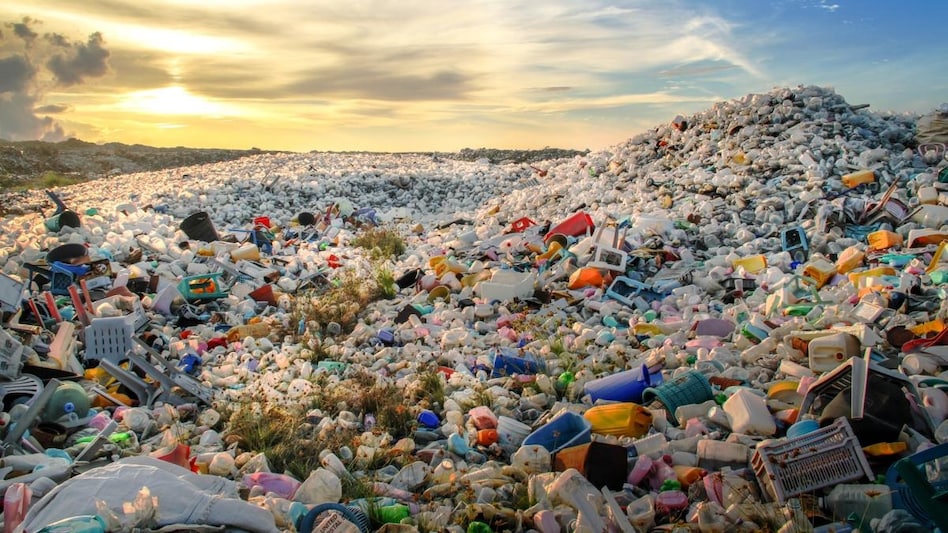
 Plastic pollution has become one of the most pressing environmental issues of our time.
  Plastic pollution has become one of the most pressing environmental issues of our time.
 Scientists may have uncovered an unexpected solution to the global plastic waste crisis: a plastic-eating worm.
The larvae of the lesser-known Kenyan mealworm has the remarkable ability to digest plastic, specifically polystyrene, making it the first insect species native to Africa shown to break down this pervasive pollutant.
Fathiya Khamis, a senior scientist at the International Centre of Insect Physiology and Ecology, who led the discovery, said, “By studying these natural ‘plastic-eaters,’ we hope to develop new methods to eliminate plastic waste more efficiently.”
This plastic-eating worm, the pupae of the Alphitobius darkling beetle, contains enzymes capable of breaking down polystyrene — commonly found in products like styrofoam, as reported in Nature.
Polystyrene is notoriously resistant to degradation and wreaks havoc on aquatic ecosystems. It has even been targeted by a Biden Administration initiative aimed at reducing plastic pollution.
The mealworm offers a potential eco-friendly and more efficient alternative to traditional recycling methods, which can be costly and, in some cases, worsen pollution.
To evaluate its potential, scientists conducted a month-long trial to understand the worm’s digestive process. The results were promising: worms fed a diet of polystyrene and bran consumed polystyrene more efficiently, breaking down 11.7% of the plastic over the trial period. These worms also survived at a much higher rate, highlighting the importance of a balanced diet.
Notably, the worms that digested the polystyrene exhibited significantly higher levels of certain bacteria, which scientists believe produce enzymes capable of further breaking down plastic.
Rather than flooding landfills with the worms themselves, Khamis suggests using the microbes and enzymes in factories, landfills and cleanup sites. However, before scaling this solution, scientists must first determine if the enzymes can be produced in large quantities. They also hope to investigate whether the mealworm's ability to break down polystyrene extends to other types of plastic.
Plastic pollution has become one of the most pressing environmental issues of our time. With billions of tonnes of plastic waste entering landfills, oceans, and natural habitats every year, the impact on ecosystems is devastating. Single-use plastics, such as bags, bottles, and packaging, contribute significantly to this growing problem.
These plastics take hundreds of years to decompose, causing long-term harm to wildlife and polluting both terrestrial and marine environments. In the oceans alone, it is estimated that there are over 5 trillion pieces of plastic, which pose a direct threat to marine animals through ingestion, entanglement, and habitat destruction.
Efforts to combat plastic pollution have been growing, but solutions are still limited. Recycling programs, while effective to some extent, often fail to keep up with the sheer volume of plastic produced. Moreover, recycling itself can be costly and inefficient, with many plastics not being recyclable at all. As a result, much of the plastic waste ends up in landfills or the natural environment.
The growing awareness around plastic pollution has spurred movements to reduce plastic use, encourage alternatives, and develop more sustainable production methods. However, large-scale solutions are still needed to address this global crisis and prevent further damage to our planet.
 NSE IPO may unlock mega gains for billionaire investors RK Damani, Premji
 India-US BTA: Harley Davidson bikes to get 0% duty, gradual tariff reduction on luxury cars
 India-US interim trade agreement: 'No GM modified product allowed, agri sector protected,' says Piyush Goyal
 'Decided to give 0% tariff on some cancer medications, neuro treatment': Piyush Goyal on what US got
 ‘How is this a win?’: Chidambaram slams India-US trade framework as opaque, US-tilted
 BT Golf 2025-26 Kochi, Kerala Awards Ceremony Marks A High-Energy, Successful Conclusion
 Golf Is An Addiction. We Eat And Sleep Golf!
 The Fairway Fixes Everything. Mindset, Life, Relationships
 BT Golf LIVE: Join AU Small Finance Bank Presents BT Golf 2025-26 For Its 4th Leg In Kochi, Kerala
 AI Will Change MBAs, Not Leadership: IMD President On India’s Global Education Rise
 RIL, SBI, Kotak Bank, Kalyan, HAL, BEML, BDL among stocks in focus next week; here’s whyNSE IPO may unlock mega gains for billionaire investors RK Damani, Premji
 SBI Q3 Results: Profit jumps 24% to Rs 21,028 crore; asset quality improves
 IDBI Bank stake sale: Kotak Mahindra Bank says ‘has not submitted a financial bid’
 BDL, Mazagon Dock, MRF, Hindustan Copper, RVNL, others to turn ex-dividend next week