

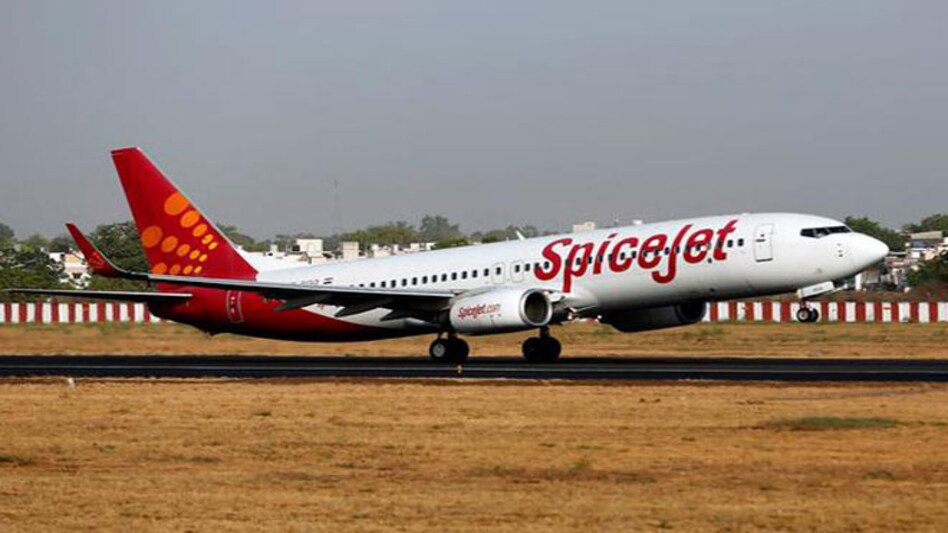
Let's hear the bad news first. The country's second largest airline SpiceJet today posted heavy losses to the tune of Rs 593.4 crore on revenues of Rs 709.76 crore which dropped a whopping 77 per cent over the same quarter last year. The sharp dip in revenues and losses were largely expected as the entire aviation sector suffered a massive shock due to pandemic. SpiceJet also reported that it's operating capacity at 47 per cent of the pre-COVID schedule since flight services resumed on May 25. For instance, if the low-cost carrier previously had 570 flights daily, it's now taking about 268 flights. This is expected to rise as Ministry of Civil Aviation (MoCA) has permitted 60 per cent operational capacity for airlines. Civil Aviation Minister Hardeep Singh Puri has suggested that passenger traffic would reach pre-COVID levels by the end of December.
Even as the airline is struggling in the passenger segment, it claims to have emerged as the largest air cargo airline in the country, ahead of carriers like IndiGo and Air India who have bigger fleets. SpiceJet also claims that it's operating a fleet of 13 cargo aircraft, including wide-body Airbus A340 and A330 aircraft, Boeing 737s, and Bombardier Q-400s.
 Sensex, Nifty open on a flat note; analyst shares trading strategy
 Brief pause ends: US hits Iran again after ballistic missile attack on American troops in Jordan
 Ram Temple donation theft row: Temple project manager, engineer Jagdish Aphale picked as secretary by trust
 Air India AI-171 crash: 'No abnormality found in fuel switch,' says Aviation Ministry
 Iran wants to bulk up its defence amid war with the US, Israel. China lends a helping hand
 FIIs Turning Positive On India After Massive Sell-Off? Ajay Bagga Explains The Flow Shift
 How To Build The Perfect Mutual Fund Portfolio | Active Vs Passive Strategy Explained
 Why Ajay Bagga Is Bullish On EMS Stocks | PLI, Semiconductors & India's Growth Story
 Why Term Insurance Is Better For Family Protection Than Traditional Life Insurance
 "RSS Controls Education, Dharmendra Pradhan Is Just A Symbol!": Rahul Gandhi’s Scathing Attack
 Infosys, Wipro, Tata Tech, Mphasis shares gain after Cognizant's Q2 results: Key takeaways
 Indo-MIM jumps 45% on D-st debut; Lohia Corp, Xtranet Technologies post mixed listings
 MV Electrosystems IPO kicks-off: Should you apply or avoid? Check details, reviews & GMPSensex, Nifty open on a flat note; analyst shares trading strategy
 Juniper Green Energy IPO opens today: Should you subscribe? Check price band, GMP & reviewInfosys, Wipro, Tata Tech, Mphasis shares gain after Cognizant's Q2 results: Key takeaways
 'Ramayana' trailer Twitter review: 'Yash is going to get loudest cheers,' say users on Ranbir Kapoor's upcoming filmFIIs Turning Positive On India After Massive Sell-Off? Ajay Bagga Explains The Flow ShiftIndo-MIM jumps 45% on D-st debut; Lohia Corp, Xtranet Technologies post mixed listings
 Salman Rushdie stabbing case: US jury convicts Hadi Matar on terrorism charges, prosecutors cite Hezbollah links










