


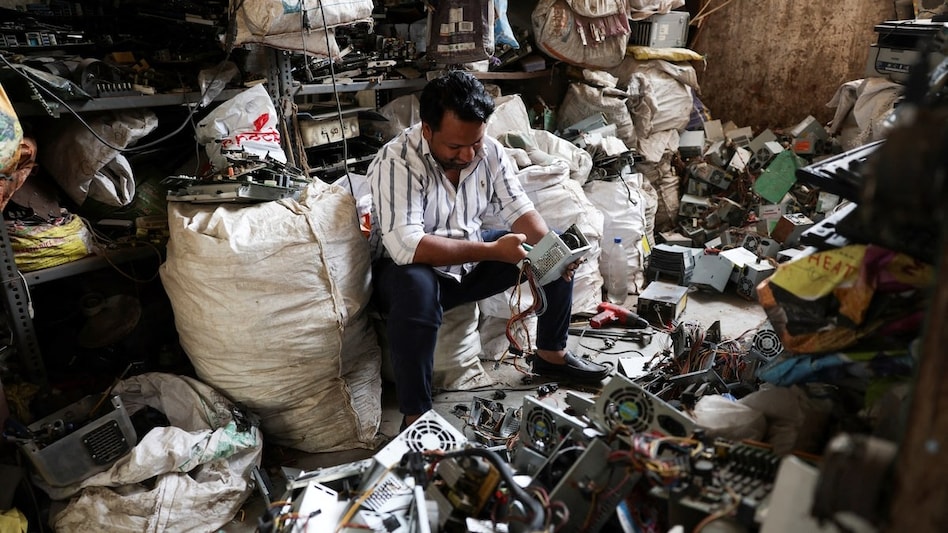
 LG, Samsung sue Indian government over e-waste policy. (Image: Reuters)
South Korean electronics giants LG and Samsung have filed lawsuits against the Indian government, challenging a recent policy that increases payments to electronic-waste recyclers, according to a report from Reuters. Both companies argue that the regulation imposes excessive financial burdens and fails to tackle the root issues within India’s e-waste sector.
According to court documents reviewed by Reuters, the legal challenges by LG Electronics and Samsung Electronics will be heard on Tuesday, alongside similar petitions from other industry players. The move signals rising tensions between multinational corporations and the Indian government over its evolving environmental compliance regime.

 Indian Oil, HPCL, BPCL shares rise as brent crude prices fall for fourth day
  Ahead of 3-day bank strike next week, Chief Labour Commissioner calls for meeting
 Tata Sons power struggle: Who will pay for the next legal battle?
 Semiconductor stocks: Centrum's Nilesh Jain prefers CG Power, Syrma SGS; cautious on Kaynes, Dixon
 Will India cut down on Russian crude purchases due to US tariffs? Here’s what we know
 Tata Sons Listing Row: Shapoor Mistry Backs IPO As Noel Tata Pushes ₹25,000-Crore Plan
 Takeda, Dr. Reddy’spartner To Bring QDENGA Dengue Vaccine To India; Launch Expected In H1 2027
 Would You Really Upgrade Your iPhone Just For THIS? | The iPhone 18 Pro Debate
 IPO Rush Drains Secondary Market Liquidity; Ajay Bagga On Primary Market & NSE IPO
 Dr. Reddy's Sees Dengue Vaccine Opportunity As QDENGA Launch Nears
 Hero MotoCorp, Delhivery shares set for a rebound: Market expert
  Howard Buffett: Key facts about Berkshire Hathaway's new chairman
 Paytm shares: UPI fee changes could aid revenue, margin recovery; what Kranti Bathini saysIndian Oil, HPCL, BPCL shares rise as brent crude prices fall for fourth day Semiconductor stocks: Centrum's Nilesh Jain prefers CG Power, Syrma SGS; cautious on Kaynes, DixonHero MotoCorp, Delhivery shares set for a rebound: Market expert
  52 cheetahs and counting: Project Cheetah reaches a new milestone after four years
 Pixel 10 gets ₹12,460 cheaper: Here’s the new price and what you get
 Nothing's ‘CMF becomes Indian’: CEO Carl Pei explains what this means for sub-brand
 22 years watching IITs, 14 years teaching: Professor says he 'never once' saw caste discrimination












