


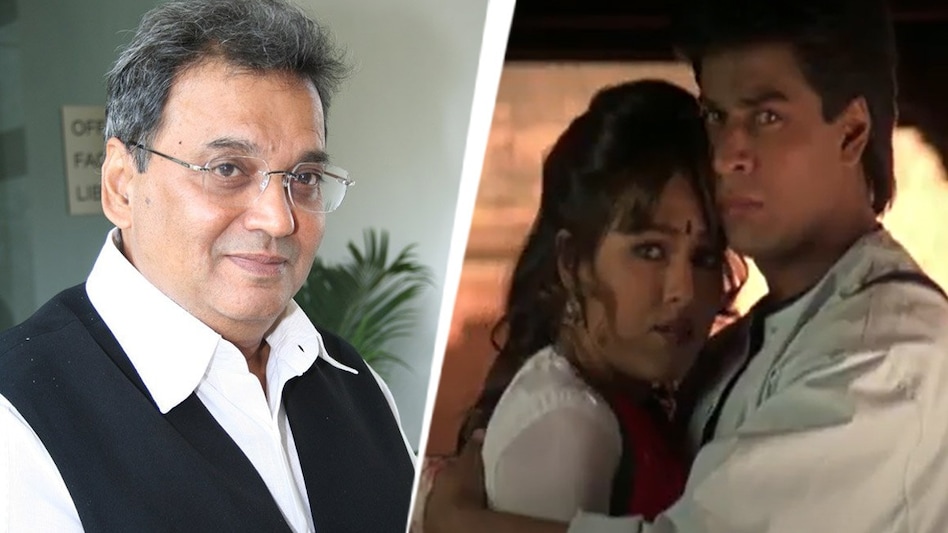
 Subhash Ghai's memoir reveals how Shah Rukh Khan's superstardom had to be reined in for Pardes
Subhash Ghai’s 1997 film, Pardes, starring Shah Rukh Khan and Mahima Chaudhary, might have left the critics a bit divided when it released but it managed to remain etched in the memories of all film-buffs, and especially Shah Rukh Khan fans. Khan’s character in the film, Arjun, was not the quintessential hero. He was mostly the observer, the non-active factor, a far call from what a 90s hero was supposed to be.
While Pardes was essentially the story of Ganga, played by Chaudhary, Khan had stolen much of the show. All this and Khan’s portrayal of Arjun boils down to this one thing – Subhash Ghai’s diktat to the superstar on how he perceived his hero to be.

 SDTT had submitted response to charity commissioner over Venu Srinivasan, Vijay Singh’s complaints: Report
 HFCL shares: Why this multibagger stock gets 53% upside target despite 290% jump in 2026
 Jio IPO: Overseas expansion to unlock new revenue streams through telecom technology
 YES Bank shares down 27% in 30 days; target prices; one key trigger to watch
 US crude oil stocks in strategic reserve fall to their lowest level since 1982
 Starlink Vs India: Is Elon Musk Being Blocked? | Tech Today
 RBI Measures Boost Rupee | Is Further Depreciation Unlikely?
 More RBI Rate Hikes Ahead? PPFAS Mutual Fund CIO Shares His Outlook
 Retirement Planning: How a ₹10,000 Monthly SIP Can Grow to ₹1 Crore in 20 Years
 Volkswagen On CNG Cars, JSW Partnership And India's Auto Market Outlook
 Jio IPO: Overseas expansion to unlock new revenue streams through telecom technologyHFCL shares: Why this multibagger stock gets 53% upside target despite 290% jump in 2026
 Defence stocks to buy: Aditya Birla Money picks HAL, BEL as top picks; check fresh targetsYES Bank shares down 27% in 30 days; target prices; one key trigger to watch
 Jio Platforms raises Rs 8,110 crore from over 200 anchor investors; draws Rs 2.5 lakh cr demand
 Dussehra 2026: Long queues outside Fafda-Jalebi shops in Ahmedabad; customers wait up to 2 hours
 Airline cancelled their flight hours before departure, ruining the family holiday; 4 years later, passengers get over ₹16 lakh
 Dussehra 2026: The story behind Ravana worship in Greater Noida’s Bisrakh village
 The most underrated AI investment: Building the humans in the loopUS crude oil stocks in strategic reserve fall to their lowest level since 1982












