


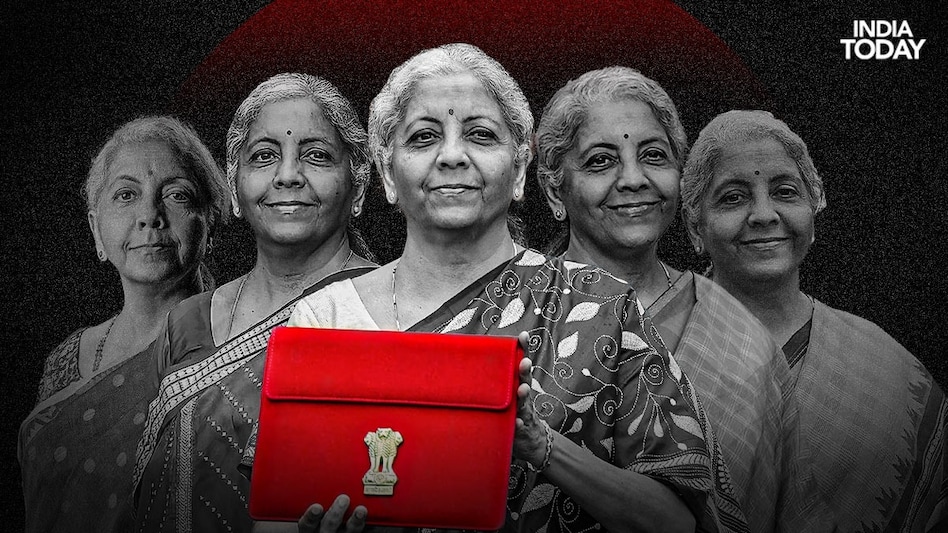
 Budget 2026 comes amid global uncertainty, geopolitical tensions, slowing advanced economies and volatile markets, as India balances growth with fiscal discipline.
Finance Minister Nirmala Sitharaman is set to present her ninth consecutive Union Budget in Parliament on February 1, 2026 (Sunday), a rare milestone that underscores continuity in India’s fiscal policymaking. Budget 2026 will be framed against the backdrop of heightened global uncertainty -- marked by geopolitical tensions, slowing growth in advanced economies, volatile commodity prices and shifting capital flows -- at a time when India is seeking to protect growth momentum while maintaining fiscal discipline.
Since taking charge in 2019, FM Sitharaman has delivered eight straight Budgets, including an interim Budget in February 2024. Over the past seven years, India’s Union Budgets, from FY2019-20 to FY2025-26, have largely revolved around economic recovery, structural reforms, infrastructure expansion, tax rationalisation and social welfare, with an increasing emphasis on long-term growth enablers rather than short-term populism.
 No prescription, no pills: Govt cracks whip on misuse of painkillers, antibiotics
 SEBI settles proceedings linked to Hindenburg report against 5 Adani firms for ₹1.51 crore
 'No positive response on 5-day banking': Bank unions to go ahead with 3-day strike
 LIC emerges as biggest bidder in NSE IPO, applies for shares worth Rs 4,500 crore: Report
 NSE IPO listing on September 24: How 5 largest IPOs fared on market debuts
 IT Stocks Under Pressure: What Next For Indian Markets? | Chakri Lokapriya
 Karnataka’s Welfare Schemes Under Pressure As Finance Department Flags New Challenges
 Family Disputes Can Hold Businesses Back: Nirmala Sitharaman’s Message To Family Firms
 TRAI New Rules: Voice-SMS Only Plans Mandatory | What It Means For 20 Crore Non-Data Users
 Oil & Gas Capex Boom: Anshul Saigal Names Energy Stock He Owns | Saigal Capital Advisors
 Balmer Lawrie to demerge Travel & Vacations unit into wholly-owned subsidiary: Report
 Sansera Engineering shares rise 7%; Goldman Sachs raises target; sees further upside
 US-Iran talks today? Oil slips to $98 a barrel; will Sensex, Nifty rebound?
  Borosil Renewables shares rise 3% as board approves revised Rs 1,100 crore expansion cost
 L&T, DRL, Vijaya Diagnostic, M&M Financial: Buy, Hold or Sell? Here are target prices
 ONGC strikes gas in Mahanadi Basin: What it means for India's LNG importsNo prescription, no pills: Govt cracks whip on misuse of painkillers, antibiotics
 BHIM app gets MyUPI AI assistant with 24/7 multilingual UPI support: Key features explained
 JSW plugs into India’s electric truck and bus race with Amp StarBalmer Lawrie to demerge Travel & Vacations unit into wholly-owned subsidiary: Report












