


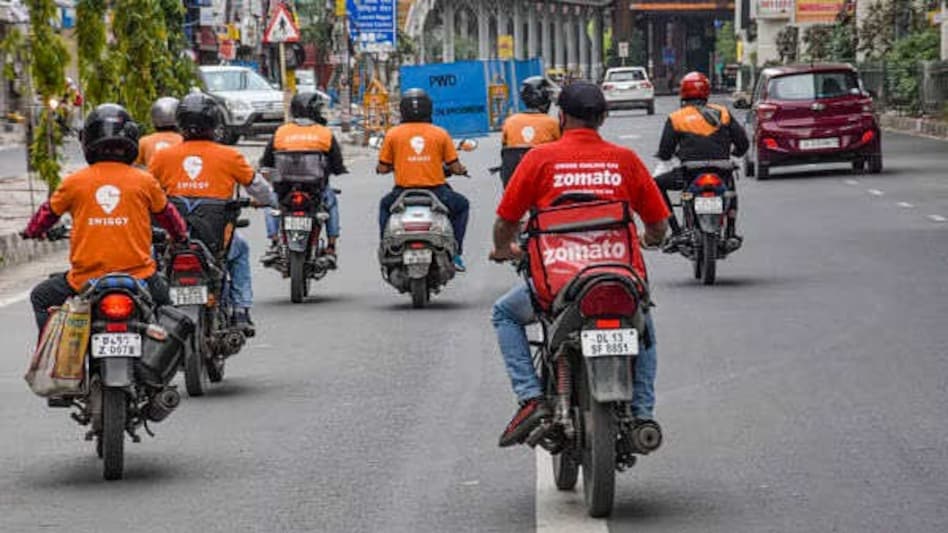
 While the gig economy is booming, income volatility persists, leading to challenges in accessing credit, the survey pointed out.
India’s gig workforce has grown 55% from 7.7 million in FY21 to 12 million in FY25, driven by increasing smartphone penetration and (Unified Payments Interface) UPI transactions, according to the Economic Survey 2025-26 tabled in the Parliament.
The gig economy, encompassing delivery, ridesharing, and freelancing, has witnessed structural growth, transitioning informal jobs into ecosystem-integrated roles, the survey noted.

 Nestle faces FSSAI crackdown over baby food formula claims. What the regulator found
  ‘Welcome the decision wholeheartedly’: Shapoorji Pallonji on RBI’s decision on Tata Sons listing; full text
 NSE IPO: India's largest exchange gets 96% subscription on Day 2 so far; employee, NII, QIB portions fully booked
 Buying prescription medicines? You’ll soon be under CCTV surveillance
 Noel Tata at the centre of Tata Sons board tussle: A look at his 40-yr career, educational qualification and more
 LIVE What’s Hot: Stocks, Gold & Big Money Moves | Daily Markets Show | September 17 | Business Today
 From NPAs To Infrastructure: CEA On How India’s Economy Has Changed Under PM Modi
  “PM Modi Is Architect Of Economic Policy”: CEA V. Anantha Nageswaran On India’s Growth Journey
 iPhone Sale Sparks Overnight Rush As Buyers Queue Across Delhi, Mumbai, Bengaluru
  Shapoorji Pallonji Welcomes RBI Nod On Tata Sons Listing | SP Group
 Supreme Court allows NSE-Sebi co-location case settlement, disposes of pleas: Report
 Tata Chemicals, TCPL, Uno Minda, Welspun Living, Bandhan Bank, E2E Networks: Expert shares outlook
 Nestle India shares tank 3% as FSSAI initiates legal action over infant products
 Coforge share price: Brokerages bullish on its enterprise autonomy and AI strategy; check targets
 Soach Global set for nearly 25x gains in partial exit from NSE; to sell 20% stake in IPO
 Planning a movie in Karnataka? Your ticket may cost more as state plans 2% additional cessLIVE What’s Hot: Stocks, Gold & Big Money Moves | Daily Markets Show | September 17 | Business Today
 Nithari killings 2006: Surendra Koli dies by suicide in Haridwar, police begin probeFrom NPAs To Infrastructure: CEA On How India’s Economy Has Changed Under PM Modi Buying prescription medicines? You’ll soon be under CCTV surveillance












