


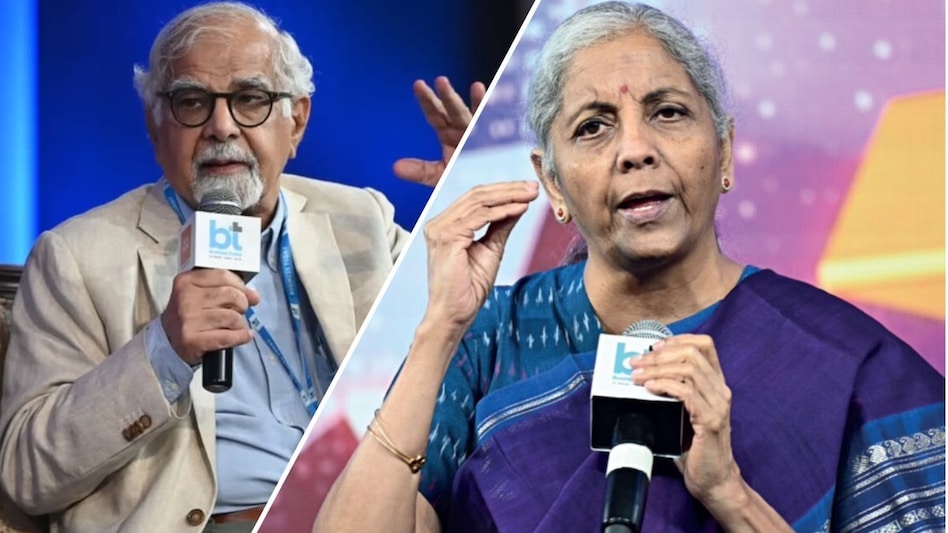
 Former IMF Executive Director Surjit Bhalla
Former IMF Executive Director Surjit Bhalla has raised concerns about India’s tax policies, calling the burden on its citizens unprecedented. “Our taxation— we are overtaxing our people to an extent not known in any other country,” Bhalla said in an interview with NDTV, citing IMF, OECD, and World Bank data.
India's tax-to-GDP ratio, including all state, local, and central taxes, currently exceeds 19%, far above the 14.5% seen in East Asian economies like China and Vietnam. “China has been growing faster than us, and East Asia has performed enormously well. So my question is, let’s just look at what kind of taxation policies they follow and have followed because we’ve got the data now. And the tax-to-GDP ratio in East Asia as a whole is around 14.5%. We are 19%,” Bhalla said.

 GST Council to take up proposal of MDR on UPI
 Tata Sons rejects Noel Tata objections over N. Chandrasekaran reappointment
 SEBI rewrites PMS rulebook, allows IPO, foreign securities and unlisted debt investments
 BT Big Story: Is 66% = zero? The Tata Sons question on everyone’s minds
  Govt, IBA to work on mechanism to ensure UPI MDR isn't passed on to consumers
 Meta’s New Gadgets: Camera-Free Glasses, VR Eyewear And AI Handheld Device Unveiled
  MDR Levy: Will Retail Trading Volumes Take A Hit? | NSE Chairman Srinivas Injeti
 NSE Lists At ₹1,800: Exclusive Post-Listing Interview With India's Largest Exchange
 From Mobile Trading To AI: How NSE Plans To Protect Market Integrity
 NSE On India’s Capital Markets Growth | IPOs, REITs, InvITs And More
 SEBI rewrites PMS rulebook, allows IPO, foreign securities and unlisted debt investments
 HSBC plans India equity broking return amid IPO boom, says report
 Whirlpool of India clarifies on promoter stake sale report; stock slips
 From Azim Premji to DMart’s Radhakishan Damani: The famous investors sitting on thousands of crores in NSE shares
 Solar Industries stock gets 'Buy' call on defence push and global explosives growth
 'Self-contained civilisation': Indian co-founder visits Shenzhen, returns with a lesson for India
 Actor Mushtaq Khan passes away at 56: His 'Meri ek taang nakli hai' scene in 'Welcome' remains unforgettable
 Saudi Arabia boosts crude shipments through Strait of HormuzGST Council to take up proposal of MDR on UPISEBI rewrites PMS rulebook, allows IPO, foreign securities and unlisted debt investments












