


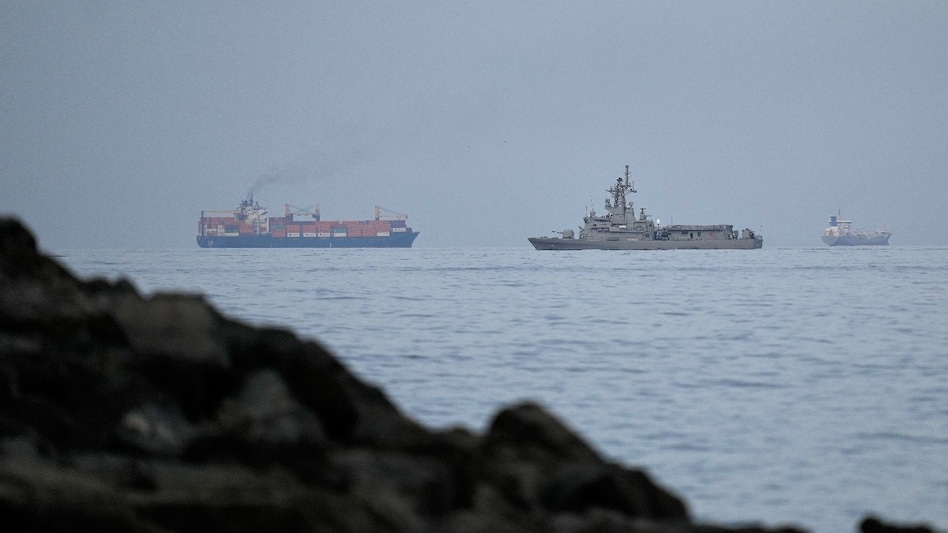
 US was assisting commercial vessels to transit through the Strait of Hormuz
Shipping companies are increasingly avoiding a US military-guided transit scheme through the Strait of Hormuz following a series of Iranian attacks on commercial vessels. These attacks have raised concerns over crew safety and the security of the route.
For decades, vessels entering and leaving the Gulf used a Traffic Separation Scheme established by the UN's shipping agency in 1968, which involved sailing through designated lanes in the middle of the strait. However, since the Iran war began on February 28, Iranian forces have mined the area, forcing ships to use makeshift routes closer to either the Iranian or Omani coast.

 'Volatile Trump may misinterpret it': Ex-diplomat on whether BRICS is becoming anti-West
 India cannot become $30 tn economy without US, China, Europe: Amitabh Kant on New Delhi's BRICS challenge
 Bahrain Court rejects claims by investors in Credit Suisse AT1 bonds case against HDFC Bank
 It's official: Xi Jinping will attend BRICS Summit in New Delhi
  Insolvency regulator sounds alarm over misuse of bankruptcy law; tells professionals to dig deeper
 Can BRICS Share Data Without Sharing Control? RITES CMD Rahul Mithal On MAITRI
 India’s Hidden Gems Could Unlock A $500 Bln Export Opportunity: ICIB’s Manpreet Singh
 China Is Not Just A Rival, It’s A Market For Indian Companies Says ICIB President Manpreet Singh
 UPI Boom Vs Credit Cards: Why Card Companies Could Still See Strong Growth In India
 ‘Biggest Drawback For Investors’: Sachin Ahuja Flags India’s Slow Justice System
 Closing Auction Session here to stay, says Sebi chairman Pandey
 Power stocks: Nuvama picks ACME Solar, NTPC, Power Grid; check target prices
 FII outflows, market correction: Client Associates’ Himanshu Kohli on where investors should put their money now
 MSCI India rebalancing went well under CAS, says SEBI chief: Report
 HFCL share price: Why recent rally is a red flag; analyst says this on fresh entry
 eMudhra appointed Validation Agent for LEI services in India as LEI adoption risesCan BRICS Share Data Without Sharing Control? RITES CMD Rahul Mithal On MAITRIIndia’s Hidden Gems Could Unlock A $500 Bln Export Opportunity: ICIB’s Manpreet SinghChina Is Not Just A Rival, It’s A Market For Indian Companies Says ICIB President Manpreet SinghUPI Boom Vs Credit Cards: Why Card Companies Could Still See Strong Growth In India












