


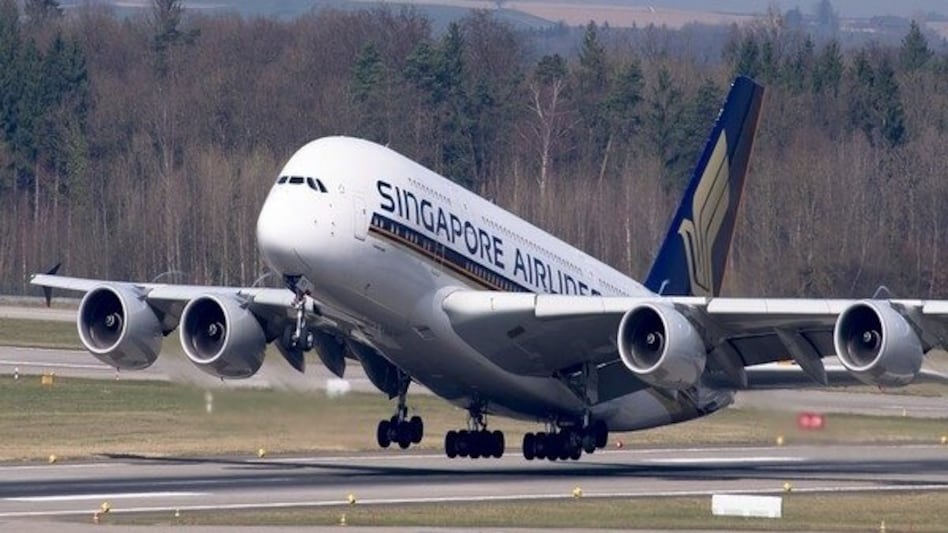
 Under the new system, passengers will pay a fixed amount based on flight distance and class of travel.
Air travellers flying out of Singapore will soon pay a small additional charge on their tickets as part of the country’s push towards greener skies. The Civil Aviation Authority of Singapore (CAAS) has announced a “green fuel levy” to fund the use of sustainable aviation fuel (SAF) — a cleaner, low-carbon alternative to traditional jet fuel. The move makes Singapore the first country to formally build environmental accountability into flight pricing.
The new levy will appear as a separate line item on tickets for full transparency and will apply to flights departing from Singapore. It is designed to help cover the higher cost of SAF, which can cut emissions by up to 80% over its lifecycle compared to conventional jet fuel. However, the fuel remains significantly more expensive to produce and scale, making cost-sharing necessary to support its adoption.

 'Majority among two is two': Tata Trusts says Chandrasekaran reappointment failed AoA condition, has no legal effect
 ICAI plans further reforms to scale up homegrown accounting firms
 'Modi admin has done a phenomenal job': Blackstone's Jon Gray on what changed in India
 West Asia tensions: Iran hands 7 terms to US via Qatar, warns of all-out war if Trump rejects deal
 Tata Trusts hires Abhishek Manu Singhvi as advocate. His first reaction: 'Having worked with Ratan Tata...'
 Gold Price Target 2026: Expert Sees MCX Gold At ₹1.8 Lakh By Year-End Amid Strong Demand
 Health Insurance: Why Pre-Existing Diseases And Waiting Periods Matter For Buyers
 Crude Oil Above $100: How High Energy Prices And Rupee Weakness Impact Gold Prices In India
 CEA On India’s Manufacturing Rise, Atmanirbhar Bharat And Modi’s Economic Policy
 Health Insurance Buying Guide: 7 Things First-Time Buyers Must Check Before Choosing A Policy
 SpaceX weight in Nasdaq 100 to jump to 2.82% following quarterly index rebalance: Report
 Tata Motors or Ashok Leyland? Analyst reveals his preferred auto stock for near-term gains
 Maharashtra Scooters, Dixon Tech, Bharat Dynamics, Jai Corp among stocks to turn ex-dividend on Monday
 Jindal Supreme, SS Retail, Hero Motors IPOs subscribed up to 181 times on final day; details here
 Sensex, Nifty post sixth weekly loss; TCS, Titan among top laggards, slip up to 4%
 IMD warns of extremely heavy rain as Bay of Bengal low-pressure system heads towards Andhra-Odisha coast
 EAM S Jaishankar, former Army chief get SIR notices in Delhi
 New CBFC rules mandate anti-drug warning in films depicting drug use'Majority among two is two': Tata Trusts says Chandrasekaran reappointment failed AoA condition, has no legal effectICAI plans further reforms to scale up homegrown accounting firms












