


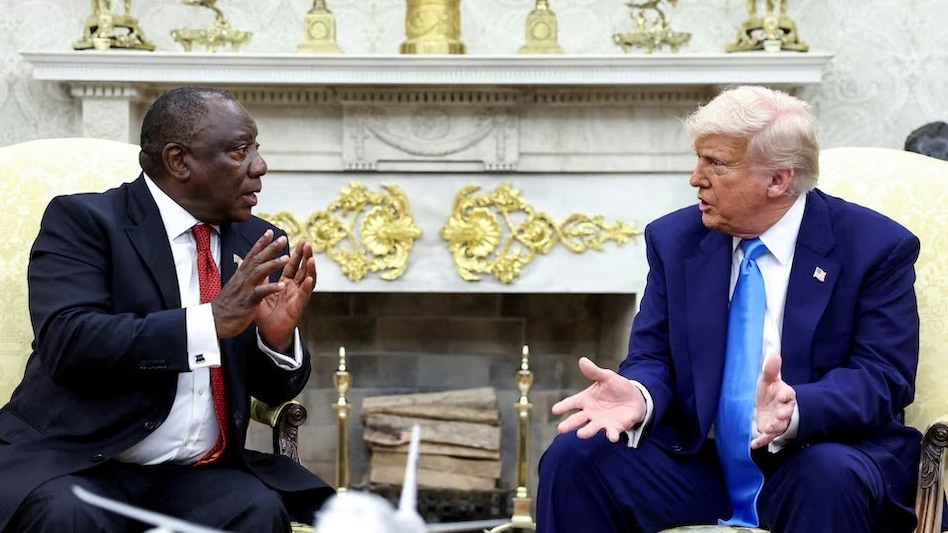
 Washington's G20 boycott: Why US wants no joint statement from South Africa
The United States has formally warned South Africa not to issue a joint statement at this weekend's G20 summit in Johannesburg - a gathering Washington is boycotting.
According to a diplomatic communication obtained by Bloomberg, the US told Pretoria it will block any "consensus" G20 declaration unless it explicitly reflects Washington's approval.

 Subway's Indian parent EverBrands files DRHP with SEBI to launch its IPO; check details
 Reliance, Nayara restrict fuel sales as crude hits $107 and retail prices stay frozen: Report
 No social media for under 18s? Centre mulls new safeguards after SC raises concern
 Gold is booming, but EGRs aren’t: Why electronic gold receipts are struggling to attract investors despite market buzz
 BT BIG STORY: Why crypto is still thriving among Indian investors
 8 Years Of Ayushman Bharat: Benefits, Eligibility & How To Claim | Insurance Guide | Money Today
 Noel Tata Hits Back With New Merger Plan | Can Tata Sons Avoid Listing? | Boardroom War
 Tata Vs Tata: The iPhone, Ram Mandir Connection That Could ‘Rescue” Tata Sons
 Market Crash Or Value Trap? | Oil Above $100 Vs Stock Market Crash | Dinshaw Irani | Helios Capital
 What’s Hot: Stocks, Gold & Big Money Moves | Daily Markets Show | September 29 | Business Today
 Prestige Estates stock outlook: Motilal Oswal sees 29% upside on strong launches, check target price
 Infosys, KPIT Tech, Wipro, Tata Elxsi: IT stocks hit 52-week lows; here are fresh price targets
  Sensex, Nifty extend fall but recover from intraday lows on expiry day; outlook still cautious?
 India could add 100 million new long-term investors by 2035: EYSubway's Indian parent EverBrands files DRHP with SEBI to launch its IPO; check details8 Years Of Ayushman Bharat: Benefits, Eligibility & How To Claim | Insurance Guide | Money Today
 ₹20,000 crore unpaid e-challan? Supreme Court says ‘add it to electricity bill’ to recover Noel Tata Hits Back With New Merger Plan | Can Tata Sons Avoid Listing? | Boardroom WarPrestige Estates stock outlook: Motilal Oswal sees 29% upside on strong launches, check target price
 'This is carnage': SC questions Rs 27,000 MRP on Rs 2,700 cancer drug at corporate hospital












