


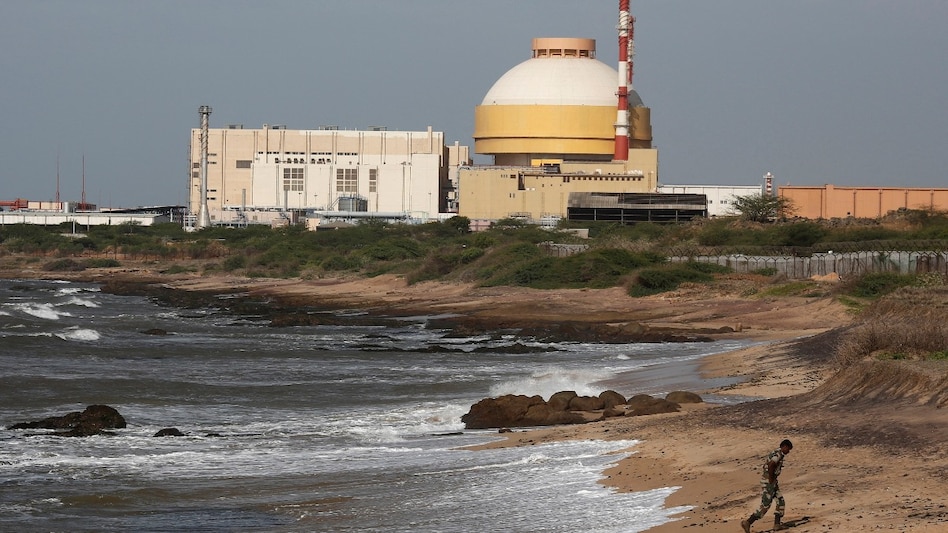
 Crucially, the legislation opens India’s tightly controlled nuclear ecosystem to private participation, breaking a decades-old monopoly of the Department of Atomic Energy (DAE).
 India has taken a decisive step toward reshaping its clean-energy future, with the Union Cabinet on Friday approving the ambitious Atomic Energy Bill, 2025 — branded as SHANTI (Sustainable Harnessing of Advancement of Nuclear Energy for Transforming India). The move signals a historic shift in India’s atomic energy policy, long dominated exclusively by the state.
Chaired by Prime Minister Narendra Modi, the Cabinet’s approval marks one of the most significant reforms in the sector since India’s atomic programme began. The SHANTI Bill lays the foundation for a unified and modern legal framework for nuclear energy — consolidating multiple existing laws, addressing regulatory gaps, and creating a structure that supports expansion at scale.

 Cargo vessel with 20 Chinese crew sinks near Odisha; Coast Guard deploys 3 ships for rescue ops
 'Asked too much, offered too little': Carney on why Canada suspended US trade talks
 Trump doubles down on Hormuz claim, shares map calling strait 'NEW US Territory'
 'FOMO, fixed return': SEBI proposes revamped ad code for bond portals from misleading investors
 Bangladesh-Pakistan ties: What Dhaka’s interest in Saudi-Türkiye defence pact means for India
 Rental Income Tax: 3 Key Deductions Every Senior Citizen and Property Owner Should Know
 Meta’s $200 Billion Trial: Did Instagram & Facebook Keep Kids Hooked?
 Motor Insurance Explained: Is Third-Party Car Insurance Enough? Know Before You Buy
 Retirement Tax Planning: 5 Ways Senior Citizens Can Reduce Their Tax Liability
 #IndiaAt100 : Adipen Bose Nandhiji On Conscious Capitalism- Can Profit & Purpose Coexist?
 India stocks lag global markets in 2026: BofA data shows 9.1% decline in USD terms'FOMO, fixed return': SEBI proposes revamped ad code for bond portals from misleading investors
 Crompton Greaves says no plan to sell stake, expects revenue to double by FY31
 Gaja Alternative Assets IPO: 3 ways to check application status; allotment odds, GMP, listing date
 FII sentiment shows early signs of turnaround after months of selling: Report'Asked too much, offered too little': Carney on why Canada suspended US trade talksTrump doubles down on Hormuz claim, shares map calling strait 'NEW US Territory'
 Quote of the Day by Narayana Murthy : ‘Every company has to identify what I call its strategic resources, and make sure that it grabs as much of its strategic resources as possible’Cargo vessel with 20 Chinese crew sinks near Odisha; Coast Guard deploys 3 ships for rescue ops
 No more ticket queues: RailOne app lets you book general train tickets from your phone












