


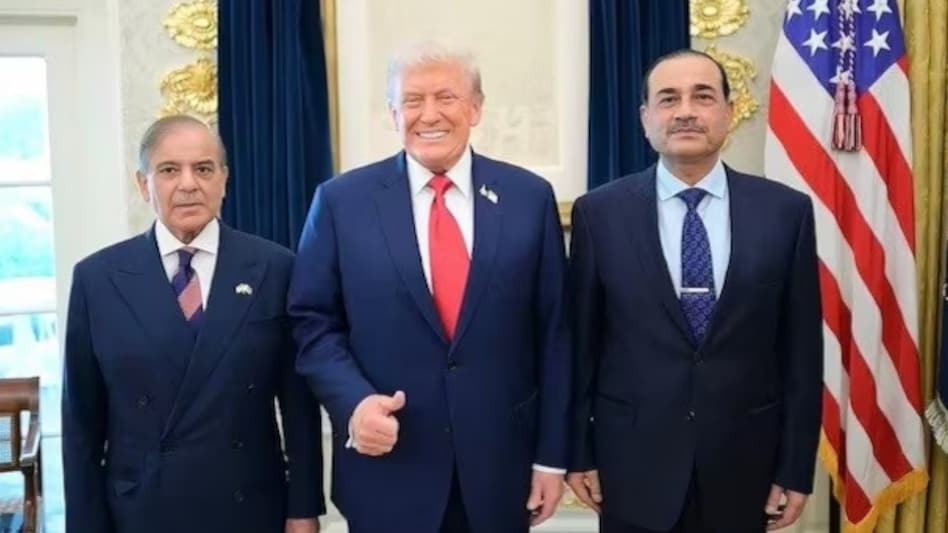
 Speaking to reporters a day earlier, Trump indicated he could travel to Islamabad if a formal agreement is reached.
 US President Donald Trump on April 17 publicly lauded Pakistan’s leadership for its role in facilitating talks linked to rising tensions around the Strait of Hormuz, highlighting what he described as a breakthrough moment in regional diplomacy involving Iran and key Gulf states.
In a series of remarks and social media posts, Trump singled out Pakistan’s top leadership — including Prime Minister Shehbaz Sharif and Army chief Asim Munir — for their role in hosting and advancing negotiations. Pakistan, which reportedly led weeks of shuttle diplomacy and hosted discussions in Islamabad, has emerged as a central intermediary in efforts to de-escalate tensions tied to global energy routes.

 A new engine for India's growth? Private investment finally picks up pace
 Insolvency and the law: Subhash Chandra case raises wider questions about IBC
 New Apple CEO says 'hello' on X and gets 2.6 million+ views
 'NCLT order rightly stayed': Subhash Chandra personal guarantee issue back to the drawing board
 Rajiv Kumar pushed for changes at HDFC Bank; Sashidhar Jagdishan chose to step down: Report
  Kotak’s Mid Cap & Flexi Cap Strategy: Where Should Investors Bet Now?
 India GDP Growth At 7.8%: What It Means For The Economy, Markets & You
 Sugar Stocks Under Pressure | Govt Tightens Dealer Stock Limits Till Nov 30
 Market Commentary: Where Is The Next Big Opportunity? | Asit Bhandarkar
 Daily Calls: Ask Your STOCK MARKET TODAY QUERIES | Market Update | Share Market News Today
 Tata Tech, NCC, Data Patterns, eMudhra shares: Expert shares technical view, targets
 NTPC, GAIL, Gujarat Pipavav, TBZ, Triveni Turbine among 13 stocks to turn ex-dividend tomorrow
 Happiest Minds shares dive 11% to near listing price; ITC Infotech merger plan in focus: Buy, sell or hold?
 Happiest Minds stock crash: Buying opportunity after 11% fall? Analyst says this
  More pain likely on HDFC Bank counter, stock may fall to Rs 650 mark, says analyst New Apple CEO says 'hello' on X and gets 2.6 million+ views
 BRICS Summit 2026: Delhi traffic police announces major diversions on September 2;check hereInsolvency and the law: Subhash Chandra case raises wider questions about IBC
 Shortage of ships hits India's auto exports in August
 'Affordable today, distress tomorrow': ISB professor's warning for Indian home loan borrowers












