









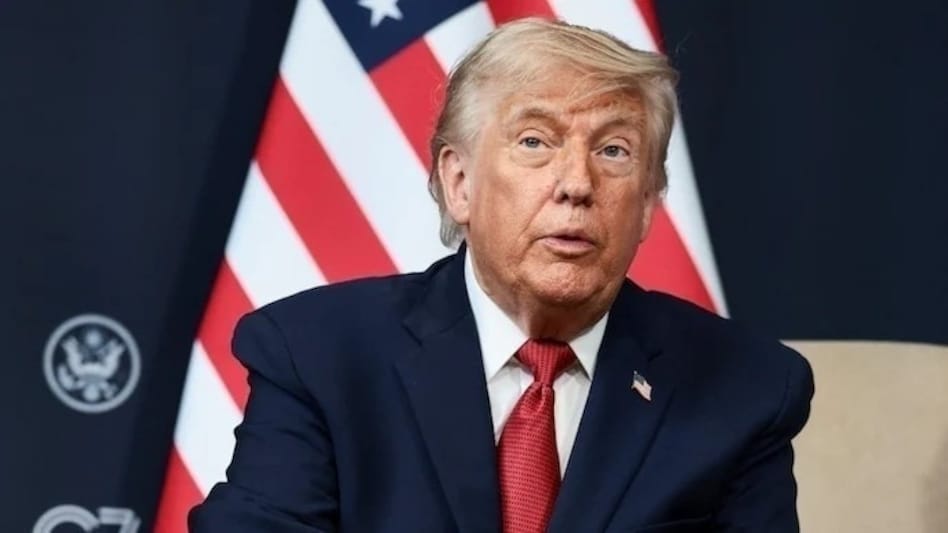
 Birthright citizenship survives: Supreme Court blocks Trump executive order

 Birthright citizenship survives: Supreme Court blocks Trump executive order
The US Supreme Court on Tuesday struck down President Donald Trump's executive order seeking to limit birthright citizenship. The justices voted 6-3 to uphold the long-standing principle that virtually anyone born on American soil is automatically a US citizen, rejecting Trump's attempt to narrow that constitutional guarantee.
Trump signed the executive order on January 20, 2025, the first day of his second term, directing federal agencies to deny automatic citizenship to children born in the United States after February 19, 2025, if their parents were undocumented immigrants or in the country on temporary visas.
Birthright citizenship has been a cornerstone of American law since the ratification of the 14th Amendment in 1868 in the aftermath of the Civil War. The amendment was adopted in part to ensure citizenship rights for formerly enslaved people.
The scope of that protection was expanded in the landmark 1898 case involving Wong Kim Ark, a man born in the United States to Chinese immigrant parents. The Supreme Court ruled that he was a US citizen by birth, establishing a precedent that has shaped American citizenship law for more than a century.
Subsequent rulings reinforced the principle that individuals born in the United States are citizens regardless of whether their parents are in the country legally, illegally, or temporarily.
Only a handful of exceptions exist, most notably for children born to foreign diplomats stationed in the United States.
For decades, birthright citizenship remained a settled part of American jurisprudence and attracted little political controversy.
The issue gained prominence after Trump sought to restrict the practice as part of his broader immigration agenda. His administration argued that automatic citizenship should not extend to children born to certain categories of non-citizens, a position that faced immediate legal challenges.
 Tata Motors Passenger Vehicles sees threefold jump in EV bookings after West Asia war
 Why a weak monsoon may not hurt India's economy as much as before, Finance Ministry report explains
 Visa-on-arrival for select countries, simpler hotel rules: NITI Aayog proposes tourism overhaul
 Calcutta Stock Exchange shares rally in unlisted market; details here
 First-time ITR filer? Why experts say you should enable the Income Tax Department's e-Filing Vault
 Rajnath Singh’s Big Vision: Why Gujarat Is Set To Become India’s Next Defence Manufacturing Hub!
 WhatsApp's Biggest Transformation Begins! No Phone Number, Ads & Premium Plans
 PM Modi Meets Top Secretaries | Watch To Know The Full Agenda
 100% Road Tax Waiver For Clean Vehicles! Centre's Big Push For EVs & Green Transport
 IPhone 18 Pro Secrets Leaked? Tata Electronics Cyberattack Raises Major Security Concerns
 Calcutta Stock Exchange shares rally in unlisted market; details here
 YES Bank gets rating upgrade for infrastructure, tier II bonds; key details
 Tata Communications shares: Two factors that may move the Tata Group stock in short term
  Sensex, Nifty extend slide: IT stocks drag markets lower; what to expect next
 Bharti Airtel deserves to trade at a valuation premium against global peers, says Nomura