


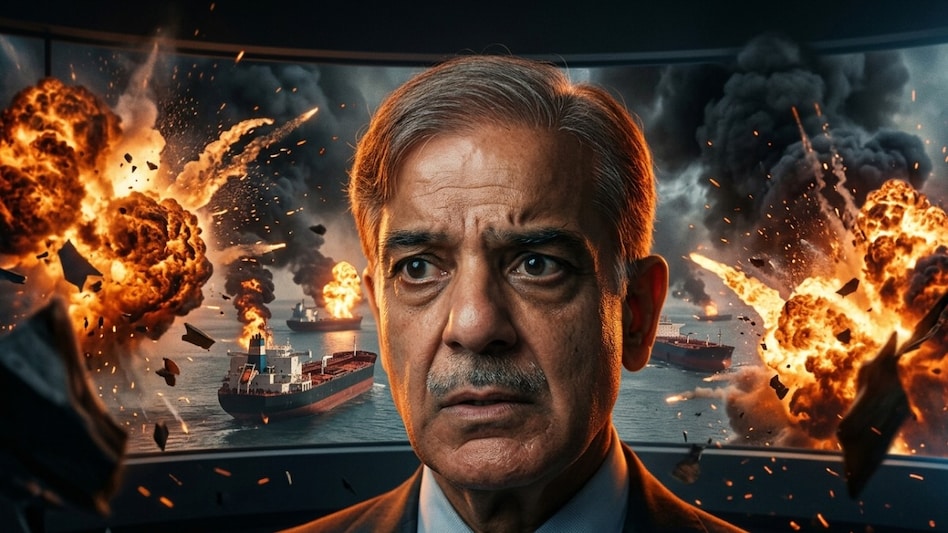
 West Asia crisis: Tough time for Pakistan as Hormuz blockade continues
Pakistan's Minister for Energy (Petroleum Division), Ali Malik, recently said that the country has no strategic petroleum reserves and compared its handling of the situation to India's. His comment comes as Pakistan Prime Minister Shehbaz Sharif said that Pakistan's oil bill has almost tripled to $800 million a week as the Iran war continues to rage on.
He said that no strategic petroleum reserves (SPR) are available even for a single day, adding that the country holds only 5-7 days of crude oil reserves. Malik mentioned that the refined fuel stocks with Pakistan's oil marketing companies can last 20-21 days.

 India is the second-best BRICS performer, but that is not enough: Economist Surjit Bhalla
 BRICS Summit 2026: PM Modi warns against turning critical supply chains into geopolitical tools
  China will push for a 'Greater BRICS': Ex-foreign secretary decodes Delhi summit, says test will come in 2027
 'India must seriously evaluate exiting UN': Zoho's Sridhar Vembu
 'Need to reflect 2026, and no longer 1945': UN endorses PM Modi’s push for UNSC overhaul in BRICS 2026
 MEA Details BRICS Summit Outcomes as India Pushes Practical and People-Centric Cooperation
 Modi@25: Amit Shah Highlights 25 Years Of Leadership, Governance And 2047 Vision
 “Development And Environment Are Complementary”: PM Modi On Sustainability At BRICS
 Modi@25: Amit Shah Announces Seva Sankalp Campaign From Sept 17 To Mark Modi’s 25 Years Of Service
 “BRICS’ Relevance Is Growing”: PM Modi As 18th BRICS Summit Draws To Close
 Avoid jewellery; stick to ETFs, bars and coins for investment this festive season: Navneet Damani
 SEBI’s CAS proposals: Expert weighs in on new expiry-day settlement price methodology
 Large caps stocks under pressure as rising US bond yields, crude prices weigh on foreign flows
  SEBI proposes bringing unexecuted Iceberg orders into closing auction
 SEBI proposes new expiry-day settlement formula for derivatives after CAS concernsMEA Details BRICS Summit Outcomes as India Pushes Practical and People-Centric CooperationModi@25: Amit Shah Highlights 25 Years Of Leadership, Governance And 2047 Vision
 ‘Many Thought We Would Not Succeed’: Ramaphosa Hails BRICS Declaration and India’s Chairship
 'Computer-based testing is the future': NTA chief says NEET will soon move online
 Meet Sidharth Babu, the IFS officer who stood alongside Modi, Putin, and Xi at BRICS












