


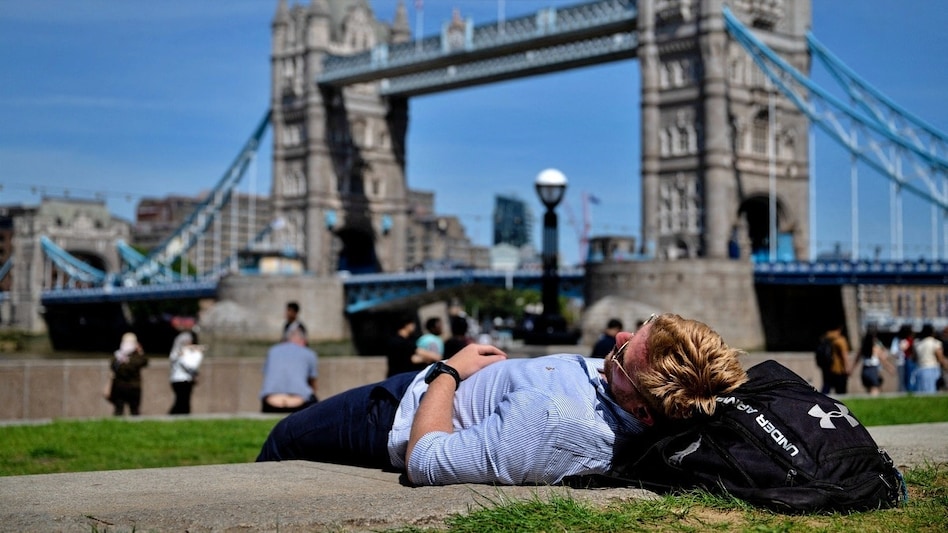
 A man lies down on the South Bank next to Tower Bridge as heat health alerts have been upgraded to amber as parts of the UK prepare for soaring temperatures. (Photo: Reuters)
Europe’s summer travel season is being disrupted by extreme heat, with rail delays, shortened hours at major attractions and wildfire risks affecting several popular destinations.
Temperatures have crossed or approached 40 degrees Celsius in parts of France, Spain, Italy and Germany, prompting authorities to issue their highest-level warnings and advise people to limit outdoor activity.
Travellers are being asked to monitor transport schedules, check attraction timings and avoid strenuous sightseeing during the hottest hours of the day.
Heat puts rail networks under strain
High temperatures are creating problems for railway infrastructure across the continent.
Extreme heat can cause tracks to expand and affect overhead power lines, forcing operators to impose speed restrictions, cancel services or carry out emergency inspections.
Passengers have been advised to confirm train timings before leaving and allow additional time for connections. Older travellers, children and people with medical conditions have been urged to reconsider non-essential journeys during peak afternoon heat.
Paris attractions reduce hours
France has faced some of the most severe conditions, with temperatures exceeding 40 degrees Celsius in several areas.
The Eiffel Tower and the Louvre have shortened operating hours as authorities try to reduce exposure for visitors and employees. Tourists without advance bookings have also been advised to postpone visits during the hottest periods.
Rail operations have faced heat-related disruptions, while power cuts have been reported in parts of the country. Additional railway personnel have been deployed to inspect tracks and respond to equipment failures.
The conditions have also increased pressure on hospitals and other public services, particularly in cities where air conditioning is not widely available.
UK issues rare red heat warning
The UK Met Office issued a red warning for extreme heat across parts of England and Wales as temperatures climbed to record levels for June.
The warning signalled a risk to life and the possibility of significant disruption to travel and infrastructure. Rail operators asked passengers to avoid unnecessary journeys and warned that speed restrictions could extend travel times.
High humidity and warm overnight temperatures have added to the health risk by giving the body little time to recover from daytime heat.
Travellers staying in accommodation without air conditioning have been advised to keep rooms shaded, remain hydrated and avoid long outdoor itineraries.
Italy places major cities on red alert
Italy has issued its highest heat warning for cities including Rome, Milan, Florence and Bologna.
A red alert indicates that the weather could affect healthy people as well as elderly residents, children and those with existing medical conditions.
Authorities have recommended avoiding direct sunlight between 11 am and 6 pm. Travellers visiting outdoor archaeological sites or taking walking tours have been advised to shift plans to early morning or evening.
Public transport and tourist sites may also alter their schedules at short notice as local authorities respond to conditions.
Spain faces temperatures of up to 44°C
Parts of Spain are under red and orange warnings, with temperatures forecast to reach between 39 and 44 degrees Celsius.
The heat is affecting mainland destinations as well as Mallorca, with some areas recording temperatures far above the seasonal average.
Visitors have been advised to reduce outdoor activity, carry water and avoid long periods on beaches or in exposed public spaces during the afternoon.
The heat has also increased wildfire danger across dry inland areas, potentially affecting road access and local transport.
Switzerland raises heat danger level
Swiss authorities raised the warning level to “high danger” in some regions as prolonged heat affected low-lying areas.
The conditions have worsened dry weather in parts of northern Switzerland and increased the risk of heat-related illness.
Tourists planning mountain walks should not assume that higher-altitude destinations will remain unaffected. Weather can change sharply, and exposed trails may offer little protection from the sun.
Greece faces heat and wildfire threat
Temperatures above 40 degrees Celsius have increased wildfire risks in Greece.
Evacuations were ordered in parts of Evia as emergency crews responded to a major fire. Smoke, road closures and changing wind conditions can affect travel even outside the immediate fire zone.
Greek authorities have previously restricted afternoon access to exposed tourist sites, including the Acropolis, during periods of intense heat. Visitors should therefore confirm opening hours before travelling to archaeological sites.
Heat warnings extend across Europe
Austria, Belgium, Croatia, Hungary, Poland and Slovenia are among the other countries affected by heat warnings.
Conditions vary widely between regions, and travellers moving between countries may encounter different alert levels, transport restrictions and public-health guidance during the same trip.
What travellers should do
Tourists should keep travel plans flexible and follow local weather and emergency alerts rather than relying only on forecasts checked before departure.
Outdoor sightseeing should be scheduled for early morning or late evening. Travellers should carry water, use sun protection and avoid alcohol before long journeys or strenuous activities.

 Adani's airline push: Letter shows group wants to launch carrier, says report
 Should you buy every IPO? Research suggests patience may be the smarter strategy
 Mphasis shares: FY27 guidance maintained; brokerages keep 'Buy' after Q1; check target price
 'Getting IV drips every morning': Abhijeet Dipke says fight against Dharmendra Pradhan will go on
 New Tax Regime is changing how Indians think about home loans: Here's why
  Think Life Insurance Is Optional? Here's Why Every Indian Family Needs It Today
 FD Vs Arbitrage Fund: Which Is Better For High Taxpayers?
 Manipal Health Enterprises Sets Price Band For Rs 9,275 Crore IPO, Opens July 29
 "Sack Education Minister First": Rahul Gandhi Vs Rijiju Clash Locks Parliament Over NEET Debate
 Anti-Paper Leak Amendment Bill Approved: 10-Year Jail, ₹10 Crore Fine & Fast-Track Courts Planned
 ITC shares: Rs 307 a key short-term level to watch; here's target priceMphasis shares: FY27 guidance maintained; brokerages keep 'Buy' after Q1; check target priceShould you buy every IPO? Research suggests patience may be the smarter strategy
 Sensex, Nifty extend losing streak to fifth day; analysts see cautious trend ahead
 Bank of Baroda Q1 profit slumps 72% to Rs 1,278 crore after one-time exceptional loss
 Rocket Lab's $8-bn bet takes Peter Beck into battle with Elon Musk, Jeff Bezos
 'If I wanted a deal, why would I fast for 26 days?' Sonam Wangchuk rejects 'compromise' claims after ending hunger strike'Getting IV drips every morning': Abhijeet Dipke says fight against Dharmendra Pradhan will go onNew Tax Regime is changing how Indians think about home loans: Here's why ITC shares: Rs 307 a key short-term level to watch; here's target price









