Retired Brigadier General Steve Anderson said the United States Navy is not ready to safely conduct escort missions in the region despite calls from US President Donald Trump to provide protection for shipping traffic through the strait.
Also read: Hormuz shut, Bab el-Mandeb next? Houthi warnings put another chokepoint at risk
"It's not safe right now. Buckle up because this (Iran war) is going to get worse before it gets better," he said in an interview with CNN.
Anderson said Iran possesses a wide array of unconventional capabilities that could make naval escorts difficult and dangerous in the narrow maritime corridor linking the Persian Gulf to global oil markets.
"The Iranians have enormous asymmetric threats. They've got all these mines they could put out there, perhaps 5,000. They've got ballistic missiles they could fire. Still have 120 launchers now with cluster munitions that they've demonstrated," he said.
Also read: 'Iran war will ultimately lower oil prices': Peter Navarro explains Tehran's 'hidden tax'
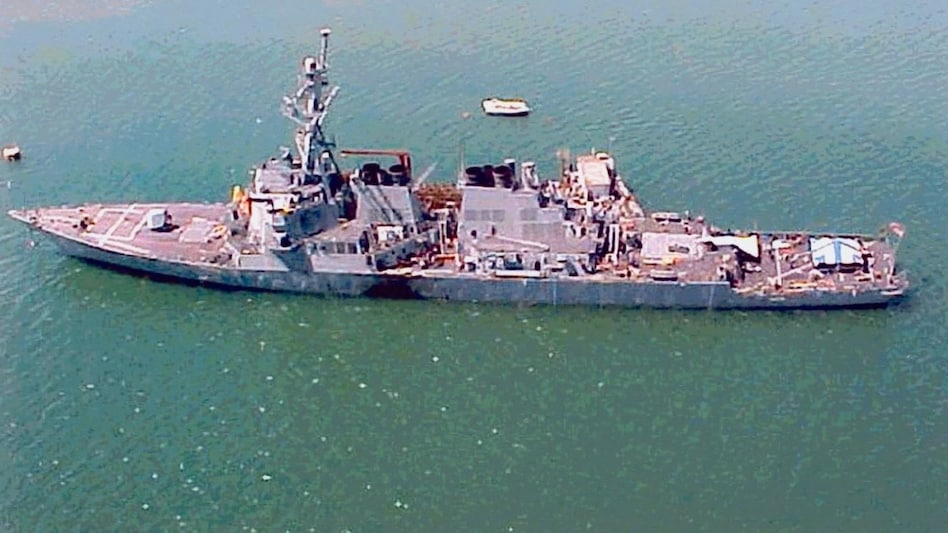
The retired general said the Iranians have air, sea, and underwater drones. "Remember what happened to the Russian fleet in the Black Sea by the Ukrainians. That was all drones. They (Iran) have homebuilt cruise missiles now. They have got suicide speedboats. Think about the USS Cole, 26 years ago in Yemen."
On October 12, 2000, two suicide attackers piloting a small bomb-laden boat approached the US destroyer USS Cole during a refuelling stop in Aden, Yemen. The attackers detonated explosives alongside the vessel, ripping a 40-foot hole near the waterline, killing 17 US sailors and injuring nearly 40.
The possibility of similar tactics, Anderson said, is one reason maritime insurers and ship operators remain cautious.
"There are lots of things, and that's why the insurance underwriters are very scared, and that's why it's a very dangerous mission to conduct escorts right now in the Hormuz. The United States needs to think about very very hard about what they can do to degrade the asymmetric threats that that are exist right now on the coastline."
Hormuz at centre of war
The Strait of Hormuz, through which about one-fifth of global oil supply normally passes, has become a central pressure point in the conflict between Iran, the United States and Israel.
Iran has effectively shut the waterway, allowing only select vessels from a few countries, including China and India, to pass through the corridor.
Last week, Iran's Supreme Leader Mojtaba Khamenei said the strait would remain closed despite calls from global markets to reopen the vital shipping lane.
The disruption has halted much tanker traffic and triggered calls from Washington for a multinational effort to protect commercial shipping.
On Sunday, Mike Waltz, US Ambassador to the UN, said Washington is urging international allies to join escort operations to secure the route. "President Trump is calling upon the world, saying the entire world is affected," Waltz said on CNN's State of the Union. "Iran can't hold your economies hostage, and we certainly welcome, encourage and even demand their participation to help their own economies."
Trump said Saturday that "many countries" would send warships to patrol the shipping lane and expressed hope that China, France, Japan, South Korea and the United Kingdom would dispatch vessels.
Iran War likely to widen
Anderson said the conflict itself may expand before any settlement emerges. "I have no doubt that one day, no matter be an hour from now or a week from now or a month from now, President Trump will declare total and complete victory, no matter what the outcome. But the war is not going to end until the Israelis stop. And of course, the enemy has a vote, Iran," he said.
He added that Iranian-aligned groups across the region could further widen the confrontation. "As we've seen right now, they're doing everything they can to expand the war. Now it looks like there are threats that exist now from some of their proxies. Hezbollah has fired over a thousand missiles at Israel. The Houthis could very well get involved. They could shut down the Bab al-Mandab Strait, where 12% of the world's commerce exists."
Anderson also warned of potential involvement from groups in Iraq and possible assistance from Russia. "There's a large contingent of Iranian supporters in Iraq that could wreak havoc. And of course, there's a wild card. The Russians. The Russians are now providing intel. They're helping out with the drone warfare."
The trajectory of the conflict, he said, suggests escalation rather than de-escalation. "So, this war is not getting smaller; it's getting bigger. And any talk about ending soon, I think, is premature."



 Former US General warns Hormuz tanker escorts face mines, drones and suicide boats
 Jio Platforms IPO: Price band announced at Rs 1,065-1,119; set to become India's biggest public issue
 Jio Platforms files RHP for IPO of up to 27 crore shares; issue to open on October 21
 IDBI Bank stake sale is the largest FDI deal till date; Centre, LIC to continue to remain invested
 'My satellites have been hovering for 5 years, I'm ahead of Musk in the queue,' says Sunil Bharti Mittal
 Henley Passport Index 2026: Indian passport climbs to 84th rank, visa-free countries falls to 55
 IMC 2026: The Biggest Tech Innovations You Need To See!
 What Is A Specialized Investment Fund (SIF)? SIF Vs Mutual Funds Explained
 This Week In Cinema: Jailer 2, Ranabaali, Prahaar, Nayyi Navelli & Street Fighter Hit Theatres
 India Inflation Shock: WPI Hits 11.39%, CPI At 5.54% As Crude Oil Touches $107 A Barrel
 Cabinet Approves IDBI Bank Stake Sale to Fairfax: Is the Stock Still a Buy?
 Tata Tech Q2 profit rises 4% to Rs 171 crore; revenue jumps 28%
 Hyundai Motor India to invest up to Rs 11,000 crore in Pune plant
  HDB Financial Q2 PAT climbs 34% to Rs 780 crore; stock slips 4%
 Top 10 strongest passports in the world 2026: Singapore leads, Japan and UAE rank second
 SpaceX restricts Starlink services in Ukraine, disrupting military drone missions: Report
 India Hits Back At UN Human Rights Body Over Delhi Protest Remarks | MEA's Strong Response
 Diwali Gift For Railway Employees: Cabinet Clears 78 Days’ Productivity Linked Bonus












