


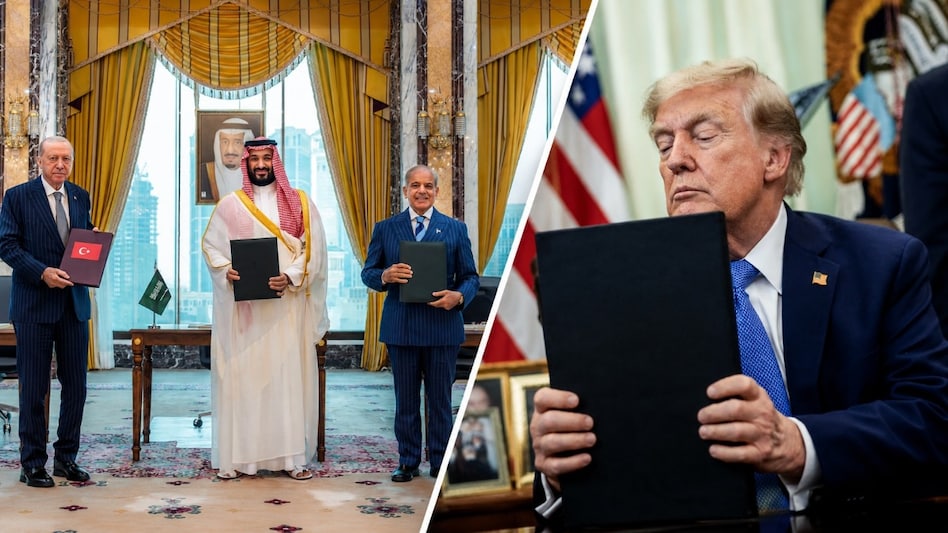
 Saudi Arabia, Pakistan and Turkey signs a defence agreement; Trump says it is a 'big, bold, and important first step'
US President Donald Trump has described the Saudi Arabia-Turkiye-Pakistan defence agreement as a “big, bold and important first step” and how these countries “will finally be able to defend themselves in a more meaningful way” even as India said it is examining the pact’s implications for its national security and regional peace and stability.
In a post on Truth Social on Sunday, Trump said he was “very happy” that Saudi Arabia, Turkiye and Pakistan had signed the Mecca Joint Defence Agreement, adding that it showed how the Middle East was coming together. “It shows how the Middle East is coming together, and how countries will finally be able to defend themselves in a more meaningful way. THIS IS A BIG, BOLD, AND IMPORTANT FIRST STEP — WOW,” Trump wrote, congratulating the leadership of the three countries.

 Jefferies' Christopher Wood sees gold at $10,000 'sooner or later'; likes India's small, midcaps
 NSE IPO fully subscribed on Day 2; QIB, NII quotas booked 1.3 times each
 Warren Buffett steps down as Chairman after 60 years: What changes at Berkshire Hathaway now
 Net direct tax rises 13% to over ₹12.12 lakh crore till Sept 17
 Satya Nadella highlights India’s AI talent, sees massive developer community emerging by 2030
 India IPO Boom: Foreign Investors Shift From Secondary To Primary | Jefferies Forum 2026
 ‘Self-Reliance Doesn’t Mean Everything Made In India’: Vikram Misri On Semiconductor Partnerships
  India Banks Lose Their Growth Edge? Jefferies' Chris Wood On Financials
 AI Boom: Why Foreign Money Chased Chip Stocks Instead Of India | Chris Wood, Jefferies
 Energy Is India’s Big Growth Theme, Says Jefferies’ Christopher Wood
 Sensex, Nifty post sixth weekly loss; TCS, Titan among top laggards, slip up to 4%
 How AI collapse could benefit Indian equity market; Jefferies' Christopher Wood explains
  Banks are no more secular growth story, prefer NBFCs: Chris WoodJefferies' Christopher Wood sees gold at $10,000 'sooner or later'; likes India's small, midcaps
 NSE IPO: Applying for short-term gains from share sale? Analyst says thisIndia IPO Boom: Foreign Investors Shift From Secondary To Primary | Jefferies Forum 2026 ‘Self-Reliance Doesn’t Mean Everything Made In India’: Vikram Misri On Semiconductor Partnerships India Banks Lose Their Growth Edge? Jefferies' Chris Wood On Financials AI Boom: Why Foreign Money Chased Chip Stocks Instead Of India | Chris Wood, JefferiesEnergy Is India’s Big Growth Theme, Says Jefferies’ Christopher Wood












